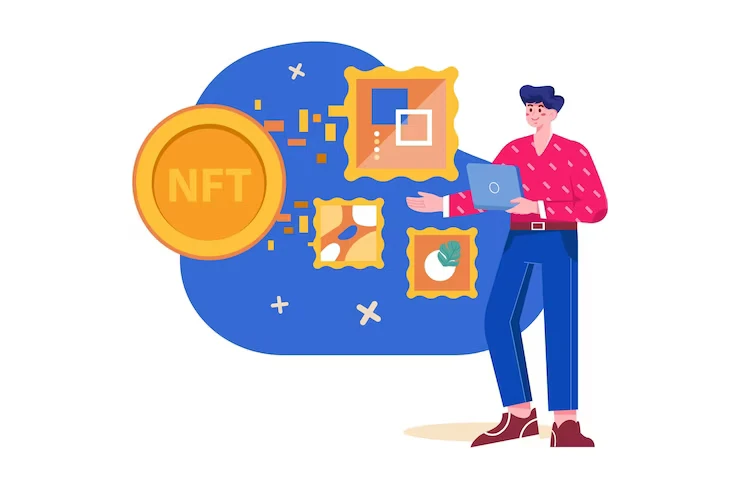

Introduction to NFT Marketplaces: A Game-Changer in the Digital World
In the fast-evolving landscape of the digital world, Non-Fungible Tokens (NFTs) have emerged as a revolutionary force, reshaping how we perceive ownership, authenticity, and value in the realm of digital assets. NFTs, unique cryptographic tokens that represent one-of-a-kind digital items or creations, have gained immense popularity and traction in recent years, propelling the rise of NFT marketplaces. These marketplaces have become virtual hubs where creators, collectors, and enthusiasts converge to buy, sell, and trade a vast array of digital assets, ranging from digital art and virtual real estate to music, virtual goods, and beyond. The allure of NFTs lies in their ability to provide verifiable proof of ownership and provenance through blockchain technology, making them distinctly different from traditional cryptocurrencies like Bitcoin or Ethereum. As we venture into the next decade, it becomes increasingly evident that NFT marketplaces are not just fleeting trends but transformative agents poised to leave an indelible mark on the way we interact with and perceive digital content and ownership. This article will delve into the future trends that are expected to shape the NFT marketplace landscape in the coming years, offering insights into the profound impact they may have on various industries and the broader implications for the digital economy as a whole.
Exploring the Evolution of NFT Marketplaces: A Historical Perspective
The evolution of NFT marketplaces can be traced back to the early days of blockchain technology, where the concept of unique digital assets began to gain traction. In 2012, the introduction of the colored coins protocol on the Bitcoin blockchain enabled users to create custom tokens representing unique assets, laying the foundation for what would eventually become NFTs. However, it was not until the launch of Ethereum in 2015 that the NFT marketplaces as we know them today began to take shape.
The advent of Ethereum's smart contract capabilities allowed developers to create and deploy NFTs on its blockchain. In 2017, the NFT ecosystem saw its first significant milestone with the launch of CryptoKitties, a blockchain-based game where users could collect, breed, and trade virtual cats, each represented as an NFT. The game's popularity led to a surge in interest in NFTs and highlighted the potential for unique digital assets on the blockchain.
As the concept gained momentum, more NFT marketplaces emerged, catering to different niches and asset types. In the art world, platforms like SuperRare and Rarible facilitated the buying and selling of digital art as NFTs, enabling artists to tokenize their creations and receive royalties from secondary sales. Other marketplaces like Decentraland and The Sandbox explored the virtual real estate market, allowing users to buy, sell, and develop virtual land and properties, creating a virtual economy backed by NFTs.
In the years that followed, the NFT market experienced both periods of rapid growth and occasional downturns, as it navigated challenges such as scalability issues and gas fees on the Ethereum network. However, these hurdles spurred innovation and encouraged the exploration of alternative blockchains to host NFTs, leading to the rise of marketplaces on networks like Binance Smart Chain and Flow.
As NFTs gained popularity in the mainstream, major brands and celebrities began to embrace the technology. Companies like NBA Top Shot introduced officially licensed NFTs featuring memorable basketball highlights, attracting a wide audience of sports enthusiasts and collectors. The music industry also saw experimentation with NFTs, with artists releasing exclusive music tracks and collectibles as blockchain-backed assets.
The historical journey of NFT marketplaces has been characterized by a continuous expansion of use cases beyond digital art and gaming. NFTs are now used to represent virtual items in video games, tickets to events, domain names, and even ownership of physical assets. The diversity of NFT applications has contributed to their growing acceptance and integration into various industries, signifying a broader shift in how we perceive and interact with digital content and ownership.
Looking ahead, the evolution of NFT marketplaces is expected to continue as blockchain technology matures and new advancements in scalability, interoperability, and user experience are realized. As more creators, brands, and collectors participate in the NFT ecosystem, the next decade holds the promise of further innovation, consolidation of standards, and an even more diverse range of unique digital assets permeating various facets of our digital lives.
Blockchain and NFTs: Understanding the Technology Behind the Trend
Blockchain technology is at the core of the NFT (Non-Fungible Token) trend, providing the foundational framework for creating, validating, and trading unique digital assets. Understanding the technology behind NFTs requires grasping the fundamentals of blockchain and its decentralized nature.
At its essence, a blockchain is a distributed and immutable ledger that records transactions across a network of computers. Unlike traditional centralized systems, where a single entity has control over data, blockchain operates on a peer-to-peer network, with each participant (node) having a copy of the entire transaction history. This decentralization ensures transparency, security, and resistance to censorship.
NFTs are a specialized form of cryptographic tokens built on blockchain networks, most commonly on Ethereum. These tokens differ from cryptocurrencies like Bitcoin or Ethereum because they represent distinct, indivisible, and irreplaceable assets, making each token unique and non-interchangeable. In contrast, cryptocurrencies are fungible, meaning one unit is interchangeable with another of the same value.
The uniqueness and ownership of NFTs are established and guaranteed through the use of smart contracts. Smart contracts are self-executing agreements with the terms of the contract directly written into code. In the case of NFTs, smart contracts define the rules and conditions of ownership, transfer, and royalties associated with the asset. These smart contracts are stored on the blockchain and executed automatically when specific conditions are met, ensuring the integrity and legitimacy of NFT transactions.
One of the key features of NFTs is their ability to prove provenance and authenticity. Each NFT contains metadata that provides a detailed record of the asset's origin, history, and characteristics. This metadata, along with the NFT's unique identifier, is permanently stored on the blockchain, making it publicly verifiable and impossible to alter or forge. As a result, artists, creators, and collectors can establish the originality and ownership of their digital assets with certainty.
The process of creating an NFT involves "minting" the token, which means generating a new unique entry on the blockchain for the specific asset. This process is typically conducted on NFT marketplaces or platforms that support the standards and infrastructure for creating NFTs. Once minted, the NFT can be bought, sold, or traded on various marketplaces, each with its own interface and user experience.
Ethereum's ERC-721 and ERC-1155 standards are among the most widely used for creating NFTs, defining the rules and functionalities that NFTs should adhere to on the Ethereum blockchain. However, as the NFT ecosystem grows, other blockchain networks, such as Binance Smart Chain, Flow, and Tezos, have introduced their own NFT standards, contributing to the overall expansion and adoption of NFT technology.
In summary, blockchain technology underpins the NFT development trend, providing the necessary infrastructure for creating unique and immutable digital assets. The decentralized nature of blockchain ensures transparency and security, while smart contracts enable the automatic execution of ownership rules. As blockchain technology continues to evolve and improve, NFTs are expected to see even greater adoption and integration across various industries, redefining how we interact with digital content and assets in the future.
Current State of NFT Marketplaces: Trends and Growth Patterns
As of my last update in September 2021, the NFT (Non-Fungible Token) marketplaces were experiencing a significant surge in popularity and growth. However, keep in mind that the NFT market is dynamic and subject to rapid changes. Below are some trends and growth patterns observed at that time:
Exponential Growth: The NFT market experienced explosive growth, with a substantial increase in the number of NFT projects, creators, and collectors. High-profile sales of digital art, virtual real estate, collectibles, and other unique assets garnered widespread media attention, attracting more participants to the NFT space.Digital Art Dominance: The most prominent category in the NFT market was digital art. Artists flocked to NFT platforms to tokenize their artwork, leveraging the technology's ability to provide provenance, scarcity, and royalty mechanisms. NFT art sales reached record-breaking figures, with some artworks selling for millions of dollars.Celebrity and Brand Adoption: NFTs saw growing acceptance and involvement from celebrities, musicians, athletes, and brands. Celebrities launched their own NFT collections, and major brands explored NFT collaborations and promotions to engage with their fan bases and explore new revenue streams.Gaming and Virtual Real Estate: The gaming industry embraced NFTs, integrating blockchain-based assets into video games, where players could own and trade virtual items. Additionally, virtual real estate marketplaces within decentralized virtual worlds gained popularity, allowing users to buy, sell, and develop virtual properties.Environmental Concerns: The surge in NFT activity on the Ethereum blockchain raised concerns about the environmental impact due to its energy-intensive consensus mechanism (proof-of-work). Some artists and collectors expressed eco-consciousness by supporting NFTs on more energy-efficient blockchains.NFT Marketplaces Proliferation: Numerous NFT marketplaces emerged, each offering unique features, user interfaces, and asset categories. Established platforms like OpenSea, Rarible, SuperRare, and NBA Top Shot continued to dominate, while new players entered the space with innovative approaches.Cross-Chain and Layer 2 Solutions: To address scalability and high gas fees on Ethereum, cross-chain bridges and layer 2 solutions were explored to facilitate the seamless transfer of NFTs between different blockchain networks, reducing transaction costs and enhancing user experience.DeFi Integration: Decentralized Finance (DeFi) protocols started integrating NFTs into their ecosystems, enabling NFT holders to use their assets as collateral, yield-generating assets, or liquidity providers, unlocking new opportunities for NFT utility and monetization.Fractional Ownership: The concept of fractional ownership of NFTs gained traction, allowing users to own fractions of high-value NFTs, making it more accessible for smaller investors to participate in the ownership of premium assets.It's important to note that the NFT market is highly speculative and subject to fluctuations. The trends and growth patterns mentioned above may have evolved or transformed since my last update. To gain the most current and accurate information, I recommend consulting up-to-date sources and market analysis.
The Rise of Digital Art: NFT Marketplaces Revolutionizing the Art Industry
The advent of NFTs has heralded a new era for digital art, propelling it into the forefront of the art industry. NFTs provide a unique solution to the long-standing challenges faced by digital artists, offering a way to prove ownership, authenticity, and scarcity of their creations. This revolution is made possible through NFT marketplaces, which serve as the primary platforms for artists to tokenize and trade their digital artworks as non-fungible tokens.
NFT marketplaces have played a pivotal role in reshaping the art industry, breaking down barriers for artists and collectors alike. Through the integration of NFT marketplace development services, artists can now create digital art pieces and convert them into NFTs with ease. These development services offer a range of functionalities, including smart contract implementation, token minting, and metadata management, ensuring that each NFT holds a unique identity and verifiable ownership history.
For artists, NFT marketplaces open up new opportunities for monetization and recognition. By tokenizing their digital art, creators can receive royalties from secondary sales, providing them with ongoing revenue streams and recognition for their work. Additionally, NFT marketplaces allow artists to connect directly with their audience, fostering a more intimate relationship between creators and collectors.
Collectors, too, benefit from NFT marketplaces as they gain access to an extensive array of digital artworks from artists across the globe. Owning an NFT means having a provably unique and scarce piece of art, a digital asset that can be securely stored and traded on the blockchain. The transparent nature of the blockchain ensures that each NFT's provenance is publicly accessible, providing collectors with confidence in the authenticity and value of their acquisitions.
To enable the seamless functioning of NFT marketplaces, NFT marketplace development services play a crucial role. These services encompass a range of technical aspects, such as building secure and scalable platforms, integrating blockchain protocols like Ethereum, implementing smart contracts to handle NFT ownership and transfers, and optimizing user interfaces for intuitive navigation and user experience.
With the rise of NFTs and digital art's transformation, NFT marketplace development services are witnessing increasing demand. NFT marketplaces are continuously evolving, exploring new blockchain networks, and seeking innovative ways to enhance interoperability, scalability, and environmental sustainability. Moreover, the incorporation of DeFi protocols into NFT marketplaces offers further possibilities, enabling fractional ownership and yield-generating opportunities for NFT holders.
In conclusion, NFT marketplaces have revolutionized the art industry, empowering digital artists and collectors through secure, transparent, and decentralized platforms. NFT marketplace development services have been instrumental in driving this transformation, offering creators and users the tools and infrastructure needed to navigate the world of digital art in the blockchain era. As the NFT ecosystem continues to evolve, these marketplaces are set to play an increasingly influential role in shaping the future of art and the broader digital economy.
The Role of DeFi in NFT Marketplaces: Enhancing Liquidity and Accessibility
DeFi (Decentralized Finance) has emerged as a powerful and complementary force in the world of NFT (Non-Fungible Token) marketplaces, introducing a range of financial services and protocols that enhance liquidity and accessibility for NFT holders and investors.
Fractional Ownership: DeFi protocols enable fractional ownership of NFTs, breaking down the barriers to entry for high-value assets. Fractionalization allows multiple users to pool their resources and collectively own a share of an NFT, making it more accessible to a broader audience. Fractional ownership enables smaller investors to participate in the ownership of premium NFTs that would otherwise be out of their financial reach.NFT Collateralization: DeFi platforms allow NFT holders to use their digital assets as collateral for borrowing loans or accessing liquidity. This innovation effectively unlocks the liquidity trapped in NFTs, enabling holders to leverage their valuable assets without the need to sell them outright. By collateralizing NFTs, users can access funds for various purposes, such as investment opportunities or personal expenses.NFT Yield Farming: Some DeFi platforms offer NFT yield farming, where users can stake their NFTs in liquidity pools to earn rewards in the form of cryptocurrencies. This incentivizes NFT holders to participate in DeFi ecosystems, earning additional income from their digital assets while contributing to the liquidity of the DeFi platform.NFT Marketplaces with DeFi Integration: Several NFT marketplaces are exploring DeFi integration to offer enhanced trading features and financial services. For instance, decentralized exchanges (DEXs) with DeFi functionality can provide automated market-making and liquidity pools, improving the efficiency of NFT trading and reducing price volatility.NFT Index Funds: DeFi protocols can create NFT index funds, which are diversified baskets of NFTs representing various categories or themes. These funds allow investors to gain exposure to a collection of NFTs rather than owning individual assets, reducing risk and simplifying portfolio management.NFT Lending and Borrowing: DeFi lending protocols allow users to lend their NFTs and earn interest or borrow NFTs by putting up collateral. This facilitates temporary ownership of rare or unique NFTs for specific use cases, such as displaying them in virtual galleries or participating in exclusive events.Interoperability and Cross-Chain Solutions: DeFi's focus on interoperability can extend to NFT marketplaces, allowing NFTs to be transferred seamlessly between different blockchain networks. This cross-chain compatibility expands the market reach of NFTs and improves liquidity by connecting diverse communities of users.By integrating DeFi features into NFT marketplaces, the NFT ecosystem becomes more dynamic, fostering liquidity, accessibility, and user engagement. DeFi solutions enable NFT holders to maximize the utility of their assets, provide investment opportunities for a broader audience, and enhance the overall vibrancy of the NFT market. As DeFi continues to evolve, its integration with NFT marketplaces is likely to play a pivotal role in reshaping the future of blockchain-based assets and decentralized finance.
Investing in NFTs: Strategies and Considerations for the Next Decade
Investing in NFTs can be an exciting opportunity, but like any investment, it comes with its risks and considerations. Here are some strategies and factors to keep in mind when considering NFT investments for the next decade:
Do Your Research: Before diving into the NFT market, conduct thorough research on the different projects, artists, and assets available. Understand the underlying technology, the use case of the NFT, and the potential for long-term value appreciation.Diversify Your Portfolio: As with any investment, diversification is crucial. Consider spreading your NFT investments across different categories, such as digital art, virtual real estate, collectibles, or gaming assets. Diversification helps mitigate risks and increases the likelihood of gaining exposure to valuable projects.Evaluate the Team and Project Roadmap: Assess the credibility and expertise of the team behind the NFT project. Look for a transparent roadmap and ongoing development plans that indicate the project's potential for growth and sustainability.Consider Scarcity and Rarity: NFTs derive their value from scarcity and rarity. Rare and unique assets tend to hold their value better over time. Consider investing in NFTs that have limited editions or are part of exclusive collections.Verify Ownership and Provenance: Ensure that the NFT you are considering to invest in has verified ownership and a clear chain of provenance. Authenticity is essential in the NFT market, and owning NFTs with well-documented history can add value to your investment.Assess the Community and Demand: Look into the community surrounding the NFT project. Active and engaged communities can drive demand for the NFT, contributing to its potential for appreciation. Pay attention to social media, forums, and discussions related to the NFT project.Beware of Market Speculation: The NFT market can be volatile, with prices subject to significant fluctuations. Avoid investing solely based on hype or short-term speculation. Instead, focus on the underlying value and utility of the NFT.Understand Gas Fees and Platform Costs: NFT transactions on the Ethereum blockchain incur gas fees, which can be substantial during periods of high network activity. Factor these costs into your investment decisions and consider alternative blockchain networks with lower transaction fees.Long-Term Holding vs. Trading: Decide on your investment strategy early on. Some investors prefer to buy and hold NFTs for the long term, believing in the appreciation of value over time. Others engage in active trading, capitalizing on short-term price movements. Be aware of the risks associated with each approach.Stay Updated on Market Trends: The NFT market is continually evolving. Stay informed about the latest trends, technological advancements, and regulatory developments in the NFT space. Being knowledgeable will help you make informed investment decisions.Investing in NFTs can be a rewarding experience, but it requires careful consideration and a long-term outlook. As the NFT market continues to mature, the next decade holds the potential for exciting developments, and strategic investments can position you to take advantage of these opportunities.
The Role of AI and Virtual Reality in Enhancing NFT Marketplaces
The combination of AI (Artificial Intelligence) and Virtual Reality (VR) technology has the potential to revolutionize NFT (Non-Fungible Token) marketplaces, enhancing user experiences, enabling new functionalities, and unlocking unique opportunities for creators and collectors. Here are some key ways AI and VR can enhance NFT marketplaces:
AI-Driven Curation and Recommendations: AI algorithms can analyze user preferences, interactions, and historical data to curate personalized NFT collections for individual users. By understanding user interests, AI can present relevant artworks, virtual real estate, or gaming assets, improving the overall browsing and discovery experience.Automated Content Verification: AI can play a crucial role in verifying the authenticity and originality of NFT assets. By analyzing the metadata, image content, and provenance data, AI algorithms can detect potential copyright infringements, counterfeit assets, or plagiarism, ensuring a higher level of trust and legitimacy within the marketplace.Virtual Reality Galleries and Showrooms: VR technology can enable immersive experiences for NFT collectors and art enthusiasts. Virtual galleries and showrooms allow users to explore and interact with NFT artworks or virtual real estate in a lifelike environment, enhancing the sense of ownership and connection to the digital assets.AI-Generated Art and Collectibles: AI-powered generative algorithms can create unique and one-of-a-kind digital art pieces or collectibles, which can be tokenized as NFTs. This fusion of AI-generated content and blockchain-based ownership can provide novel and exclusive assets for collectors, contributing to the expansion of creative possibilities within the NFT ecosystem.AI-Enhanced Virtual Real Estate Development: In virtual real estate marketplaces, AI can assist in the design and development of virtual properties. AI algorithms can optimize layouts, aesthetics, and environmental elements, enhancing the overall experience of virtual property ownership.AI-Driven Pricing and Valuation: AI can help assess the value of NFTs based on factors such as rarity, historical sales data, and market trends. AI-driven pricing models can provide more accurate and data-driven valuations, benefitting both buyers and sellers in making informed decisions.Virtual Reality Gaming and Experiences: VR technology can bridge the gap between NFT gaming assets and immersive gameplay experiences. NFT gaming assets, such as characters or items, can be brought to life within VR gaming environments, adding value and utility to these assets.AI-Powered Predictive Insights: AI can offer predictive insights into market trends and asset performance, assisting investors and collectors in making strategic decisions. By analyzing historical data and real-time market movements, AI can identify potential opportunities and risks in the NFT market.The integration of AI and VR in NFT marketplaces presents an exciting frontier for innovation, enriching the overall user experience, and fostering new possibilities for creators and investors. As these technologies continue to advance, their synergistic collaboration has the potential to transform the NFT market, making it more immersive, efficient, and intelligent in the years to come.
Emerging Trends: Fractional Ownership and NFT Bundles
Emerging trends in the NFT (Non-Fungible Token) market include fractional ownership and NFT bundles, two innovative concepts that are reshaping how users interact with and invest in digital assets.
Fractional Ownership of NFTs:Fractional ownership allows multiple individuals to collectively own a portion of an NFT, dividing its value into tradable shares. This trend addresses the high cost barrier associated with acquiring premium NFTs, making ownership of valuable assets more accessible to a broader audience.Key aspects of fractional ownership:
a. Increased Liquidity: By breaking down an NFT into fractional shares, investors can buy and sell smaller portions of the asset, increasing liquidity in the NFT market.
b. Diverse Investment Opportunities: Fractional ownership enables investors to diversify their portfolios by holding stakes in multiple high-value NFTs, spreading risk and increasing exposure to potential appreciation.
c. Governance and Decision-Making: Fractional ownership platforms often implement governance mechanisms where token holders can participate in decision-making processes related to the NFT, such as when to sell or manage the asset.
d. Revenue Sharing: Fractional ownership platforms may distribute revenue from NFT royalties, secondary sales, or usage rights among the token holders, providing an additional incentive for investors.
NFT Bundles:NFT bundles involve grouping multiple NFTs together into a single package for sale or trading. These bundles can consist of related assets, themes, or curated collections, creating a unique selling proposition for collectors and investors.Key aspects of NFT bundles:
a. Curation and Themes: NFT bundles allow creators, artists, or collectors to curate thematic collections, enhancing the storytelling and narrative aspect of their offerings.
b. Enhanced Value Proposition: Bundling NFTs can create synergies and add value, making the collection more appealing than individual NFTs sold separately.
c. Limited Edition Bundles: Some platforms release limited edition NFT bundles, creating a sense of exclusivity and urgency among collectors.
d. Versatility in Trading: NFT bundles can be traded as a single unit, or individual assets within the bundle can be fractionalized and traded separately, providing greater flexibility in the secondary market.
Both fractional ownership and NFT bundles are gaining popularity as investors seek more diversified and inclusive participation in the NFT market. These trends foster a broader engagement within the NFT ecosystem, enticing both seasoned collectors and newcomers alike with innovative investment opportunities and unique asset curation. As the NFT market continues to evolve, fractional ownership and NFT bundles are expected to play significant roles in shaping the future of blockchain-based asset ownership and trading.
Conclusion: Embracing the Future of NFT Marketplaces
In conclusion, the future of NFT (Non-Fungible Token) marketplaces holds immense promise and potential for creators, collectors, and investors alike. These revolutionary digital assets have already reshaped the art industry, gaming, virtual real estate, and various other domains, establishing a new paradigm for ownership, authenticity, and value in the digital world.
As the NFT ecosystem continues to evolve, several key trends are expected to drive its growth and adoption. NFT marketplaces will witness further innovation, with the integration of technologies like AI and virtual reality enhancing user experiences and enabling new functionalities. DeFi integration will offer enhanced liquidity and accessibility, empowering NFT holders to leverage their assets in a decentralized financial ecosystem.
Fractional ownership and NFT bundles will democratize access to premium assets and curate unique collections, attracting a broader audience to the NFT market. Legal and regulatory considerations will evolve to provide a secure and transparent environment for creators and investors, ensuring the protection of intellectual property and consumer rights.
The NFT marketplaces of the future will be characterized by a diverse range of digital assets, reflecting the creativity and imagination of artists, game developers, and creators worldwide. These marketplaces will thrive as centers of innovation and community engagement, fostering collaboration and interaction among enthusiasts across borders.
As we embrace the future of NFT marketplaces, it is essential to approach this burgeoning landscape with awareness and knowledge. Understanding the underlying technology, conducting thorough research, and diversifying investments will be critical in navigating the dynamic nature of the NFT market.
The potential of NFTs to transform industries, empower creators, and redefine ownership in the digital age is undeniable. Embracing this future means embracing the possibilities and opportunities that arise as we navigate the ever-changing landscape of blockchain-based assets.
In this exciting era of digital innovation, NFT marketplaces are poised to continue reshaping the way we perceive, interact with, and invest in digital assets. By embracing this transformative journey, we participate in building a decentralized, inclusive, and creative future where the boundaries of ownership and expression are expanded, forever changing the landscape of the digital economy.



Sign in to leave a comment.