

The Government e-Marketplace (GeM) has become a central procurement platform for government departments, PSUs and ministries in India. As the platform continues to grow, one of its most essential compliance requirements is the GeM Vendor Assessment. This assessment ensures that only credible, verified and quality-oriented sellers are allowed to participate in government procurement. For many new and existing sellers, understanding the importance, process, eligibility and benefits of the GeM Vendor Assessment is crucial for achieving long-term success on the portal.
This article provides a detailed, SEO-optimized guide covering every major aspect of the GeM Vendor Assessment, helping sellers achieve compliance and unlock full selling privileges on the platform.
What Is GeM Vendor Assessment?
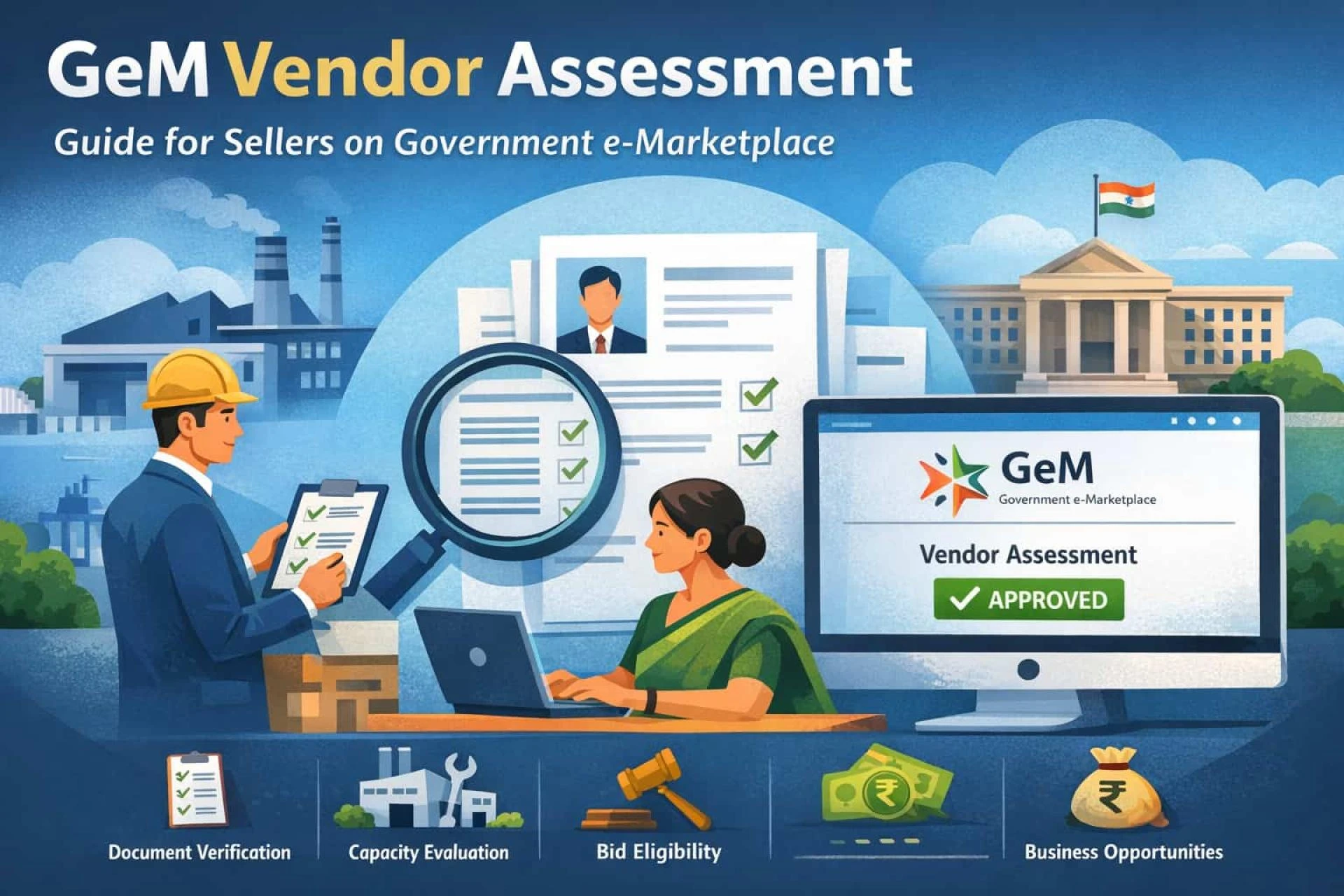
GeM Vendor Assessment is a formal verification and quality evaluation process conducted through a third-party agency, Quality Council of India (QCI) or its authorized partners. It validates a seller’s business credentials, production capacity, financial capability, quality standards and overall reliability.
With this assessment, the GeM portal ensures that only trustworthy suppliers can offer goods and services to government buyers. The assessment is mandatory for many product categories, especially those listed under the “Brand Listing” and “Made in India” segments.
In simple terms, the assessment boosts your business credibility and proves that you meet the quality benchmarks expected by government buyers.
Why Is GeM Vendor Assessment Important?
There are several reasons why sellers must complete the vendor assessment at the earliest. Some key reasons include:
1. Eligibility for Product Upload
Without GeM Vendor Assessment, many sellers are restricted from uploading products or catalogues. Completion of the assessment unlocks full product listing rights on the portal.
2. Increased Buyer Trust
Government buyers prefer verified sellers. After assessment approval, your profile receives a “Verified” mark that enhances your authority on the portal.
3. Higher Order Possibility
Verified sellers receive more visibility, higher preference in bidding, and increased chances of winning government orders.
4. Compliance with GeM Guidelines
The GeM Vendor Assessment is mandatory in many categories. Non-compliance may lead to rejection of products or limitations on bidding.
5. Enhanced Brand Value
Passing the assessment reflects your company’s professionalism, quality control measures and reliability.
Types of GeM Vendor Assessment
There are two major types:
1. Product-Specific Vendor Assessment
This assessment validates a specific product you wish to sell on the GeM portal. It includes:
- Product quality standards
- Compliance with technical specifications
- Manufacturing or trading capabilities
- Certifications, testing and documentation
This is necessary for sellers listing branded or technical products.
2. Generic Vendor Assessment
This is a basic business verification applicable to sellers who do not require product-specific approvals. It includes:
- Business registration
- Office verification
- Quality and capacity verification
- Documentation checks
This assessment is ideal for new sellers or service providers who want to activate selling privileges.
Eligibility Criteria for GeM Vendor Assessment
To apply for the assessment, the seller must have:
- Valid business registration (Proprietorship, Partnership, Pvt Ltd, LLP etc.)
- Active GeM seller account
- PAN and GST registration
- Documents proving business existence, infrastructure and capacity
- Brand authorization documents (if applicable)
Manufacturers, service providers, traders, resellers and OEMs are all eligible to undergo the assessment.
Documents Required for GeM Vendor Assessment
The documentation requirement may vary depending on the nature of your business, but commonly required documents include:
- Incorporation certificate or business registration
- PAN card
- GST certificate
- Declaration form
- List of machinery and equipment (for manufacturers)
- Factory license / Trade license
- Product specifications and testing reports
- Trademark certificate (if brand registration is needed)
- Proof of office or manufacturing location
- Financial statements
- Quality management certificates (if available)
Submitting accurate and complete documents increases the chances of fast approval.
Step-by-Step GeM Vendor Assessment Process
Here is a clear stepwise breakdown of the assessment procedure:
Step 1: Login to GeM Seller Dashboard
Enter your username and password, navigate to the “Vendor Assessment” section.
Step 2: Choose the Type of Assessment
Select product-specific or generic vendor assessment based on your business needs.
Step 3: Submit Required Documents
Upload mandatory documents such as business registration, GST, PAN, product details and quality certifications.
Step 4: Payment of Assessment Fee
Pay the assessment fee online through the GeM portal. The fee may vary depending on category and quantity.
Step 5: Physical or Video Verification
QCI or its partner agency conducts:
- Office verification
- Manufacturing unit verification
- Product verification
- Technical capability assessment
Verification may be physical or virtual depending on the category.
Step 6: Assessment Result
After successful verification, QCI uploads the assessment report on the GeM portal.
Step 7: Approval & Certification
Once approved, your GeM account will display “Vendor Assessed” status, unlocking full selling rights.
Common Reasons for Rejection in GeM Vendor Assessment
Many sellers face rejection due to avoidable mistakes. Some common reasons include:
- Incomplete documentation
- Incorrect product specifications
- Lack of proof of manufacturing capability
- Mismatch between documents and actual business operations
- Poor infrastructure or capacity
- Non-compliance with GeM guidelines
Ensuring proper documentation and preparation avoids unnecessary delays and rejections.
Benefits of Completing GeM Vendor Assessment
A successful assessment comes with multiple benefits:
Higher Visibility
Your seller profile becomes more visible to buyers, increasing the chances of receiving direct purchase orders.
Priority in Bidding
Government buyers prefer assessed vendors because they offer reliability and quality assurance.
Unlocking “Brand Listing”
Manufacturers and brand owners can list products under their brand name after assessment.
Long-Term Compliance
Once approved, the assessment remains valid for a specific period, ensuring uninterrupted selling.
Competitive Advantage
Being assessed gives you an advantage over non-assessed sellers who are restricted by the platform.
Who Should Opt for GeM Vendor Assessment?
The following sellers must or should strongly consider completing the assessment:
- Manufacturers wanting to list branded products
- OEMs (Original Equipment Manufacturers)
- Sellers listing technical, critical or high-value products
- Traders and resellers needing business verification
- Service providers wanting to increase credibility
Completing the assessment early helps sellers build strong buyer trust.
How Long Does the Assessment Take?
The typical timeline ranges from 7 to 25 days, depending on:
- Category of product
- Verification method
- Availability of QCI assessor
- Document accuracy
Submitting complete and accurate documents can significantly speed up the process.
Conclusion
The GeM Vendor Assessment plays a vital role in ensuring trust, transparency and quality in government procurement. Whether you are a manufacturer, trader or service provider, completing the assessment is essential for unlocking full selling rights on the GeM portal. It not only boosts your credibility but also enhances your visibility, bidding opportunities and chances of winning orders.
By understanding the process, preparing accurate documentation and aligning your business with the required standards, you can easily pass the assessment and position your business for long-term success on the Government e-Marketplace.
If you want to scale your business in government procurement, completing the GeM Vendor Assessment should be your first priority.



























Sign in to leave a comment.