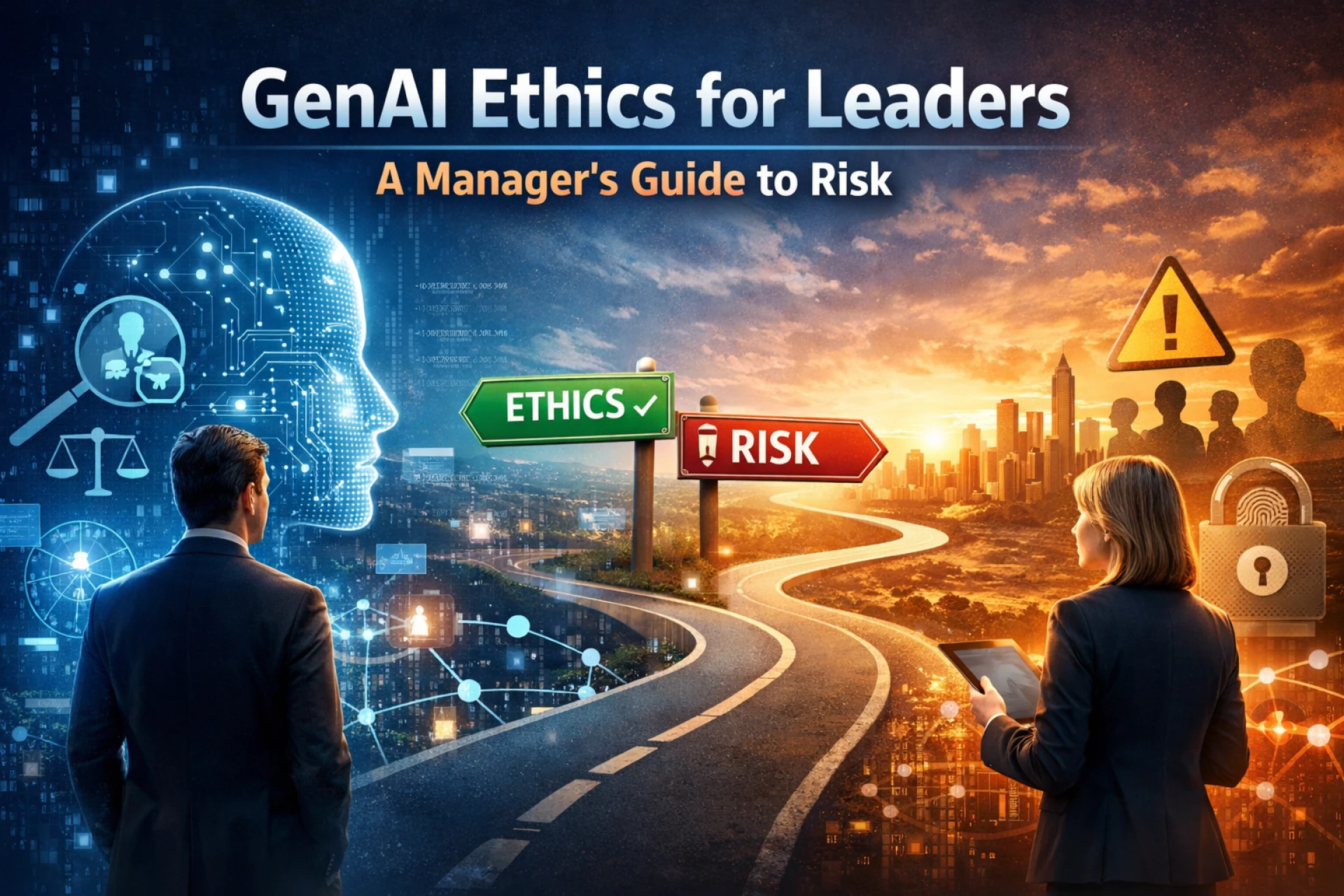

Most workplaces these days are abuzz with talk of artificial intelligence. But as someone in management, you may find the hype around generative AI overwhelming, even a bit risky. Potential is everywhere, but authentic leadership is in dealing with those risks, and particularly ethics. And even though you may have thought that ethical concerns in AI are mere techno-speak, or simply not a business issue, you are not alone.
Why Managers Need To Think Differently About GenAI
Back when spreadsheets and email were “new tech,” companies made mistakes—sometimes big ones—by ignoring data integrity and privacy. Generative AI is a much larger leap. If left unchecked, it can create issues ranging from subtle bias to embarrassing headlines. That’s why a Generative AI course for managers is not just a trendy credential; it’s a practical shield against reputational risk.
From local businesses to global corporations, the same questions pop up: “How do we keep AI ethical and useful?” and “Who’s responsible when things go wrong?” As a manager, your role is not just crucial but a key driver in ensuring AI systems are used ethically and responsibly. You are an active participant in shaping the ethical landscape of AI in your organization.
Spotting the Hidden Risks (and Rewards)
The most obvious ethical risk is bias. GenAI systems, no matter how “neutral” they seem, reflect the data given to them—faults and all. Managers who’ve taken a well-designed Gen AI course for managers recognize bias before it hits the wall. If a recruitment tool struggles with specific demographics or a marketing bot comes across as tone-deaf, the proper training helps you act early rather than apologize later.
Data privacy is another big concern. Who can see what? Can an employee accidentally leak sensitive data through a GenAI chatbot or content generator? Questions like these are front and center in any credible agentic AI course. When you understand the mechanics and ethics, you’re better positioned to spot “invisible” risks, such as unintended consequences of AI decisions, the potential for AI to reinforce societal biases, or the ethical implications of AI's impact on employment. These are the types of risks that may not be immediately apparent but can have significant long-term effects.
How Human Choices Shape AI Outcomes
Even the most intelligent AI doesn’t make choices—people do. Consider an agentic AI, a constructed agent designed to behave with a certain degree of autonomy. It sounds like science fiction, but it is present and is transforming industries, including healthcare and finance. The issue? Without a guiding hand, even advanced agentic AI frameworks can miss the point.
That’s why managers who undergo in-depth training—such as Generative AI training programs specifically tailored to leadership roles—are more effective and confident. They set clear standards for how GenAI behaves and feel prepared to handle ethical challenges. They don’t leave ethics to chance.
A Personal Story From the Frontlines
A colleague of mine once tried to deploy a GenAI-powered help desk at his retail company. Great idea, right? Well, the tool started giving advice that sounded…off. Customers noticed. The team had skipped the risk review (thinking AI meant “set and forget”). Eventually, managers who had completed a Gen AI course for managers stepped in and quickly rewrote the guidelines. That course? It made the difference between a costly PR blunder and a clever course correction.
Making Ethics Practical (Not Just Theoretical)
Many leaders worry that prioritizing ethics might slow progress, but in reality, ethical AI practices drive sustainable business success and customer trust.
Here’s how managers put ethical risk management into practice:
- They demand transparency from AI vendors and set rules for in-house tools.
- They check outputs by involving employees from diverse backgrounds.
- They use feedback loops: catch mistakes, learn, retry.
- They update their guidelines as new ethical challenges arise.
No magic formula—just a habit built through training and real-world feedback. Actively seeking and listening to feedback from employees, customers, and industry experts helps you feel involved and confident in managing AI's ethical implications and risks.
What Agentic AI Frameworks Really Do
Some people think frameworks are for lawyers and compliance teams. But the reality is That Agentic AI frameworks keep everyone accountable without stifling creativity. They set boundaries—like “don’t use personal data in outputs” or “review all automated recommendations in healthcare.” These aren’t just rules. They're roadmaps. They ensure innovation and responsibility not only coexist, but thrive together.
Tips For Managers Starting Out
If you’re just stepping into the world of GenAI, here’s some advice:
- Start with a Generative AI course for managers rather than diving into complex code. Learn the concepts first.
- Select agentic AI course modules that focus on real-world business scenarios—role-plays, case studies, not just theory.
- Join forums with managers learning about GenAI. You’ll hear real stories (including failures) that textbooks won’t mention.
- Ask challenging questions: Would I be comfortable justifying this decision in front of the media? Or what is the worst that can happen should this AI fail? By asking these questions, you're taking a proactive approach to ethical risk management, putting you in control of the process.
Balancing Progress and Principle
Every organization faces the pressure to “do more with AI.” But only those with leaders who truly “get” ethical risk management will thrive long-term. If you blend business drive with moral clarity, you’re already ahead of most of your peers. That’s why so many forward-thinking firms are sending staff for Generative AI training programs aimed at management.
So, as you look ahead, remember: Ethics isn’t the side dish. It’s the main course. The world doesn’t need more unchecked innovation. It requires leaders who guide that innovation with wisdom—and a willingness to ask the hard questions.



























Sign in to leave a comment.