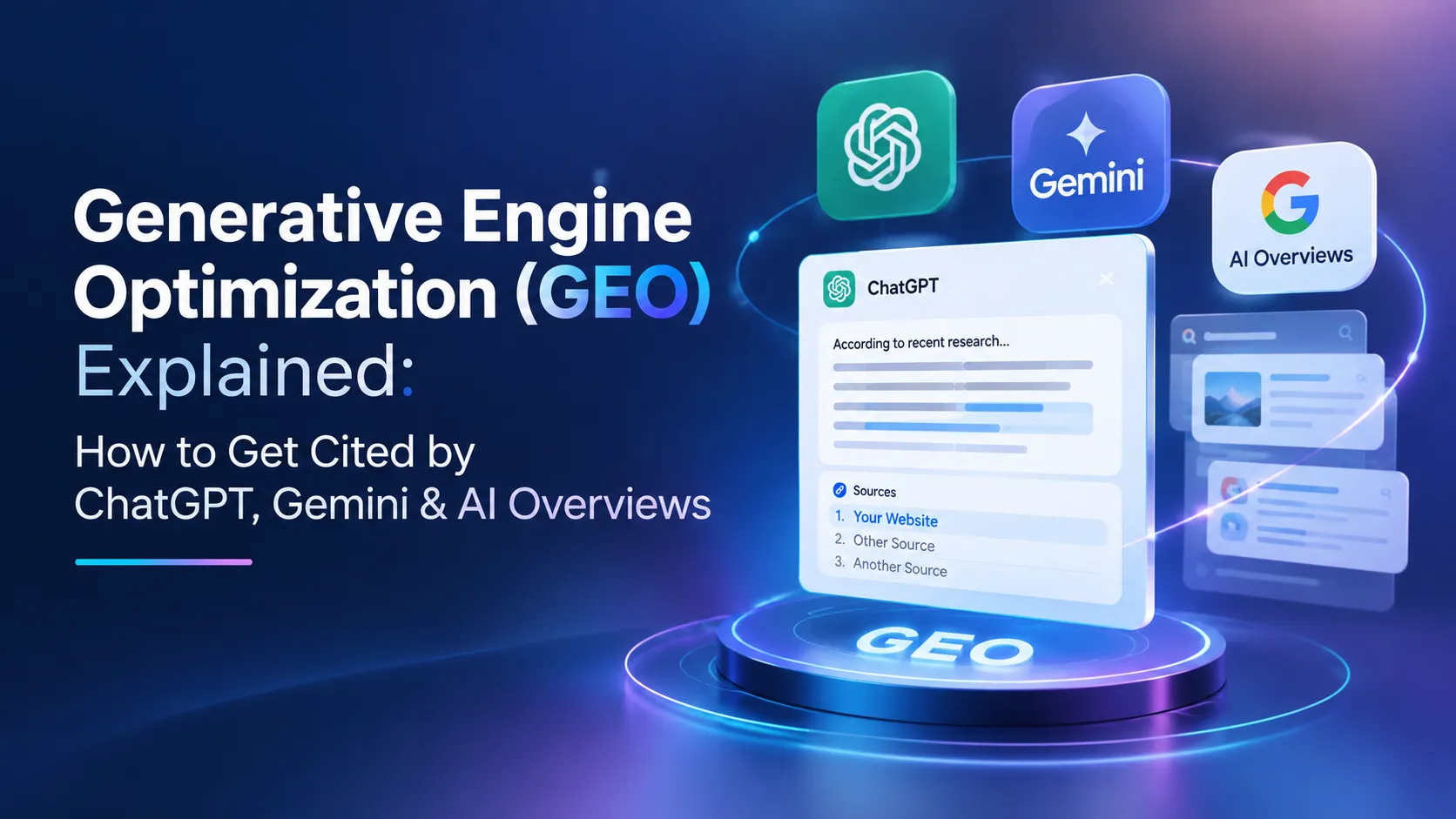

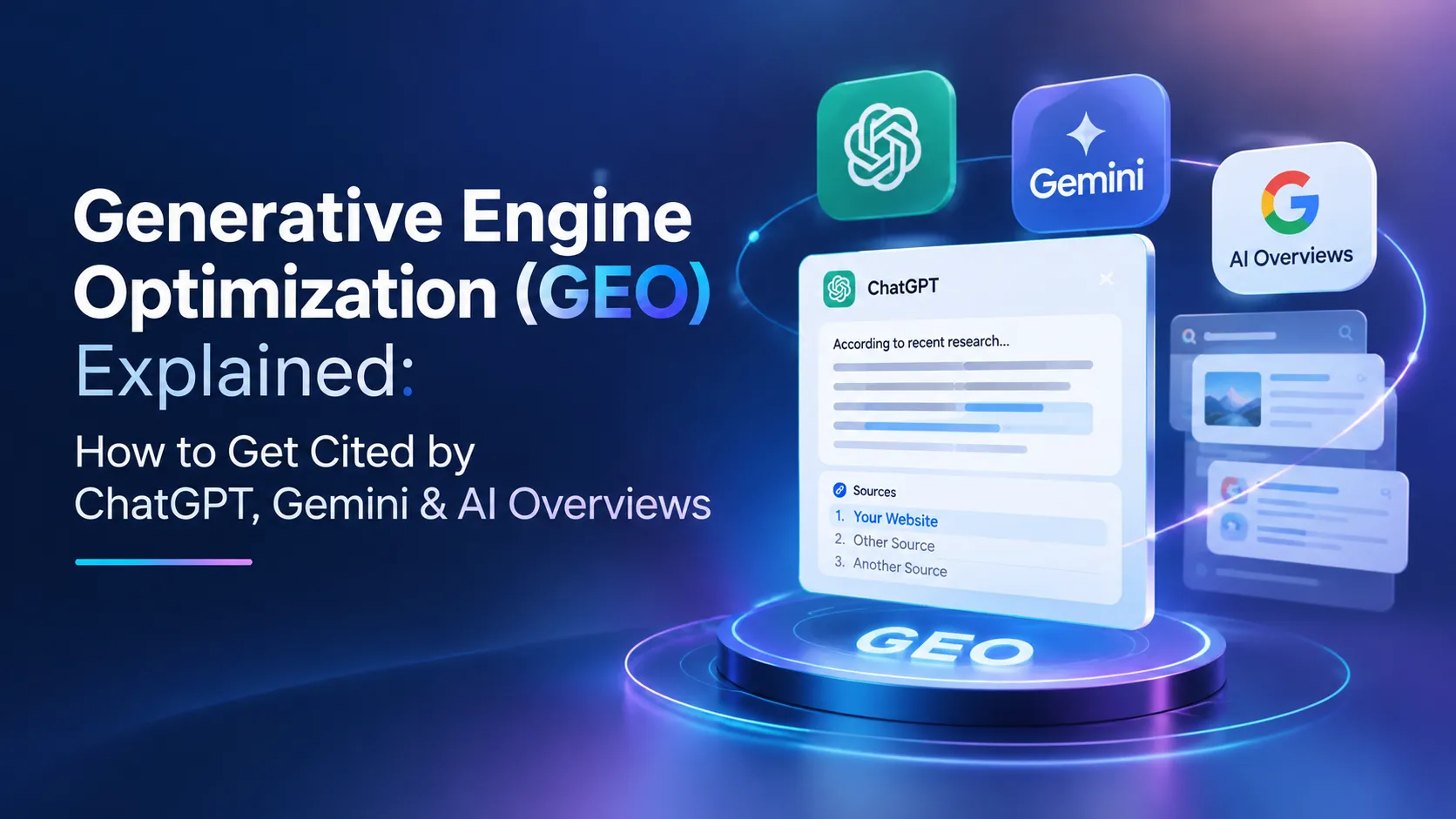
The way people discover information online is changing. Traditional search engines present users with a list of links, while AI-powered platforms increasingly provide direct answers, summaries, and recommendations.
For marketers, this shift creates a new challenge: how can brands become visible when customers rely on artificial intelligence to find information?
This is where Generative Engine Optimization (GEO) becomes important.
What Is Generative Engine Optimization?
Generative Engine Optimization is the practice of improving online content so that AI-powered search platforms can discover, understand, and potentially cite it in their generated responses.
Platforms such as ChatGPT, Google AI Overviews, Gemini, and Perplexity are changing how people search for products, services, companies, and industry insights.
Traditional Search Engine Optimization (SEO) focuses on improving visibility in search engine results. GEO extends this objective by helping content become a useful and credible source for AI-generated answers.
Rather than focusing exclusively on rankings and website traffic, marketers must also consider brand mentions, citations, content credibility, and visibility across AI-driven discovery platforms.
Why GEO Matters for Digital Marketing in 2026
Consumers increasingly expect quick, relevant answers instead of browsing multiple websites. As AI-powered discovery develops, businesses need to rethink how they communicate their expertise and establish trust online.
GEO can help marketers address three important priorities.
1. Improving brand visibility: When AI platforms reference a company's content in relevant answers, the brand may gain exposure even when users do not immediately visit its website.
2. Building credibility: Clear explanations, verifiable information, relevant research, and credible third-party mentions can help establish a stronger online presence.
3. Adapting to changing customer journeys: From initial research to product comparisons, AI-assisted discovery is influencing how customers evaluate brands and make decisions.
However, appearing in AI-generated answers is not guaranteed. Results vary by platform, query, source availability, and the quality of competing content.
Five Practical Ways to Improve GEO
Businesses can begin strengthening their AI search visibility by focusing on the following practices.
Create helpful, answer-focused content. Address the audience's questions directly. Use clear headings, concise explanations, and detailed answers that make information easy to understand.
Support claims with credible sources. Include relevant research, verifiable statistics, expert insights, and links to authoritative references. Avoid unsupported claims and outdated information.
Strengthen topical authority. Publish useful content around the subjects most relevant to your industry. Cover related questions and connect articles where doing so helps readers explore a topic further.
Maintain a technically accessible website. Ensure important pages can be crawled, indexed, and rendered properly. Use descriptive titles, logical page structures, and relevant internal links.
Build a credible presence beyond your website. Contribute expert articles, participate in industry discussions, and earn genuine mentions from relevant publications. Third-party visibility can complement your owned content and strengthen brand recognition.
GEO should not be treated as a replacement for SEO. A sustainable strategy combines both approaches with useful content, technical accessibility, and consistent measurement.
Measuring GEO Performance
AI visibility requires a broader measurement approach than conventional keyword rankings alone.
Marketing teams can track whether their brands appear in answers to relevant questions across AI platforms. They can also monitor AI referral traffic, branded searches, third-party mentions, and conversions from visitors who discover their content through AI-assisted search.
Testing the same questions periodically across different platforms can reveal where a brand is gaining visibility and where its content needs improvement.
Because AI responses change over time, marketers should evaluate patterns across multiple prompts and dates instead of relying on a single result.
The Future of AI-Driven Marketing
GEO is part of a wider transformation in digital marketing, where artificial intelligence is influencing content discovery, customer experience, advertising, and decision-making.
For marketing leaders, the challenge is not simply adopting new AI tools. It is understanding how these technologies affect customer behaviour, business strategy, brand trust, and measurable growth.
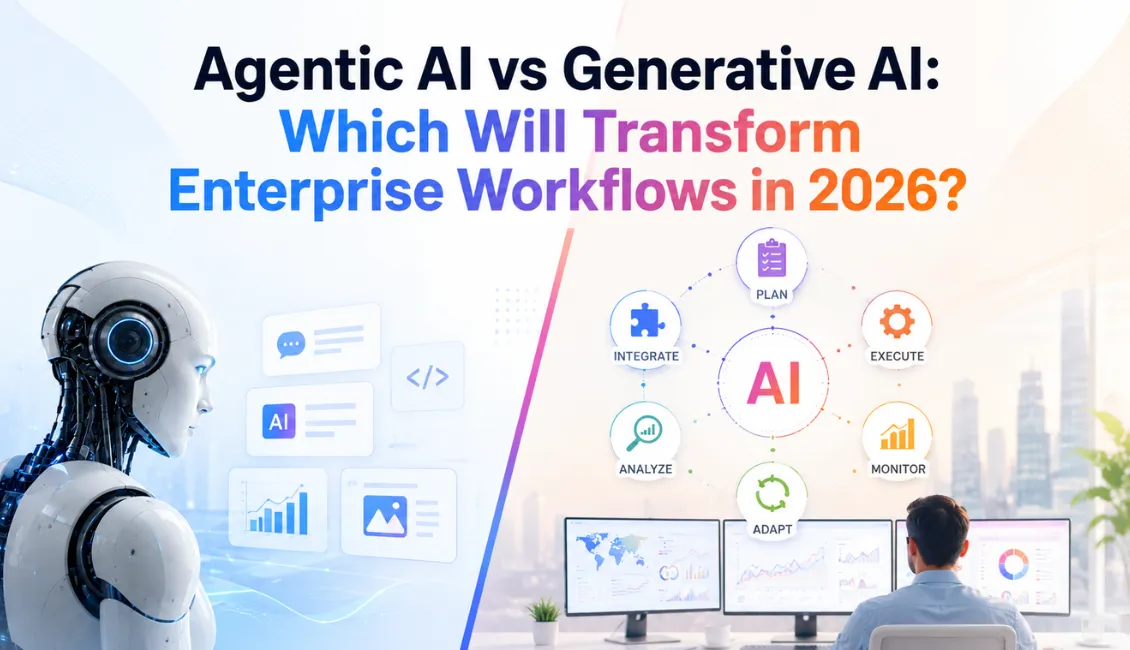
These developments also raise important questions about the future of search, zero-click customer journeys, AI-powered marketing operations, and the growing role of autonomous AI agents.
The 8th Digital Marketing, Advertising & Technology Confex 2026 (DMAT Confex 2026) will bring together marketing, advertising, and technology professionals to explore these emerging challenges under the theme Beyond Automation: Building the Agentic Marketing Enterprise.
Scheduled for 5 December 2026 in Singapore, the conference will feature discussions on Generative Engine Optimization, AI-first discovery, zero-click customer journeys, and the future of digital advertising.
For professionals looking to understand the next phase of marketing transformation, these conversations offer an opportunity to exchange insights, explore new strategies, and connect with industry leaders.
Read the GEO guide: https://digitalconfex.com/generative-engine-optimization-geo/
As AI continues to reshape online discovery, businesses that combine credible information, strong digital foundations, and a clear understanding of customer needs will be better positioned to adapt.






















Sign in to leave a comment.