

Quick Answer
Georgia apartment building insurance covers the physical building, liability claims from tenants and visitors, and the rental income you'd lose if a covered event shuts down units. Most Georgia lenders won't fund or renew a mortgage on a multifamily property without proof of this coverage, plus specific compliance paperwork. Moore Multifamily writes multifamily property insurance exclusively for apartment owners across Georgia and handles the lender compliance side too, so nothing holds up your closing.
What Is Multifamily Property Insurance?
Multifamily property insurance is a type of commercial insurance built specifically for apartment buildings and other multi-unit residential properties. It isn't the same as a homeowner's policy for a single house, and it isn't a generic commercial policy borrowed from an office or retail template either.
A true multifamily policy is priced and structured around how apartment buildings actually work: several units under one roof, shared systems like roofs and parking lots, multiple tenants, and rental income that depends on the building staying safe and open. If you own an apartment building in Georgia a 12-unit property in Gainesville or a 300-unit complex outside Atlanta this is the coverage your lender, your tenants, and your bottom line are all counting on.
What Does Insurance for Apartment Buildings Cover?
A solid insurance for apartment building policy is really several coverages working together. The core pieces usually include:
- Property coverage — Pays to repair or rebuild after damage from fire, wind, hail, water, theft, or vandalism. Ask for coverage based on true replacement cost, not market value rebuilding always costs more than buying.
- General liability — Covers injury claims, slip-and-falls, and other legal risks that come with tenants, guests, and shared spaces. Most lenders require a minimum liability limit before they'll close or renew a loan.
- Loss of rents — Replaces rental income you lose while units are being repaired after a covered claim, so a bad storm doesn't turn into a cash-flow problem too.
- Ordinance or law coverage — Helps cover the extra cost of rebuilding an older property to meet current building codes.
- Umbrella or excess liability — Adds a layer of protection above your general liability limits, often required for larger complexes and portfolios.
Which combination makes sense depends on the building's age, size, location, and how it's financed.
Why Apartment Building Insurance Matters in Georgia
Georgia's weather and growth create a specific risk profile for multifamily property owners. A few things carriers and lenders pay close attention to:
Severe Weather
Regular thunderstorms, damaging hail, and the remnants of Gulf and Atlantic hurricanes bring wind and water claims statewide, especially in southern and coastal Georgia.
Rapid Growth
Metro Atlanta, Gainesville, and Savannah have added apartment units quickly, meaning more competition for reliable coverage from carriers who understand multifamily risk.
Liability Exposure
More units and residents mean more everyday opportunities for injury claims a wet stairwell, a broken gate latch, a pool without proper signage.
Aging Properties
Many Georgia apartment communities were built decades ago, which can mean higher replacement costs and a real need for ordinance-or-law coverage.
None of this makes Georgia a hard place to insure a multifamily property. It just means the policy needs to be built by someone who understands apartment buildings in this state, not adapted from a generic commercial template.
What Affects the Cost of Multifamily Property Insurance?
There's no single number that applies to every apartment building, but a few factors consistently move the price of multifamily property insurance up or down:
- Building age, construction type, and roof condition
- Number of units and total square footage
- Location proximity to the coast, flood zones, and local claims history
- Claims history on the property and with the current owner
- Coverage limits and deductible choices
- Safety features like fire sprinklers, security systems, and updated electrical or plumbing
Because so much depends on the specific property, the most reliable way to know your real cost is a quote built around your building, not a generic estimate.
Mortgage and Lender Requirements for Apartment Insurance
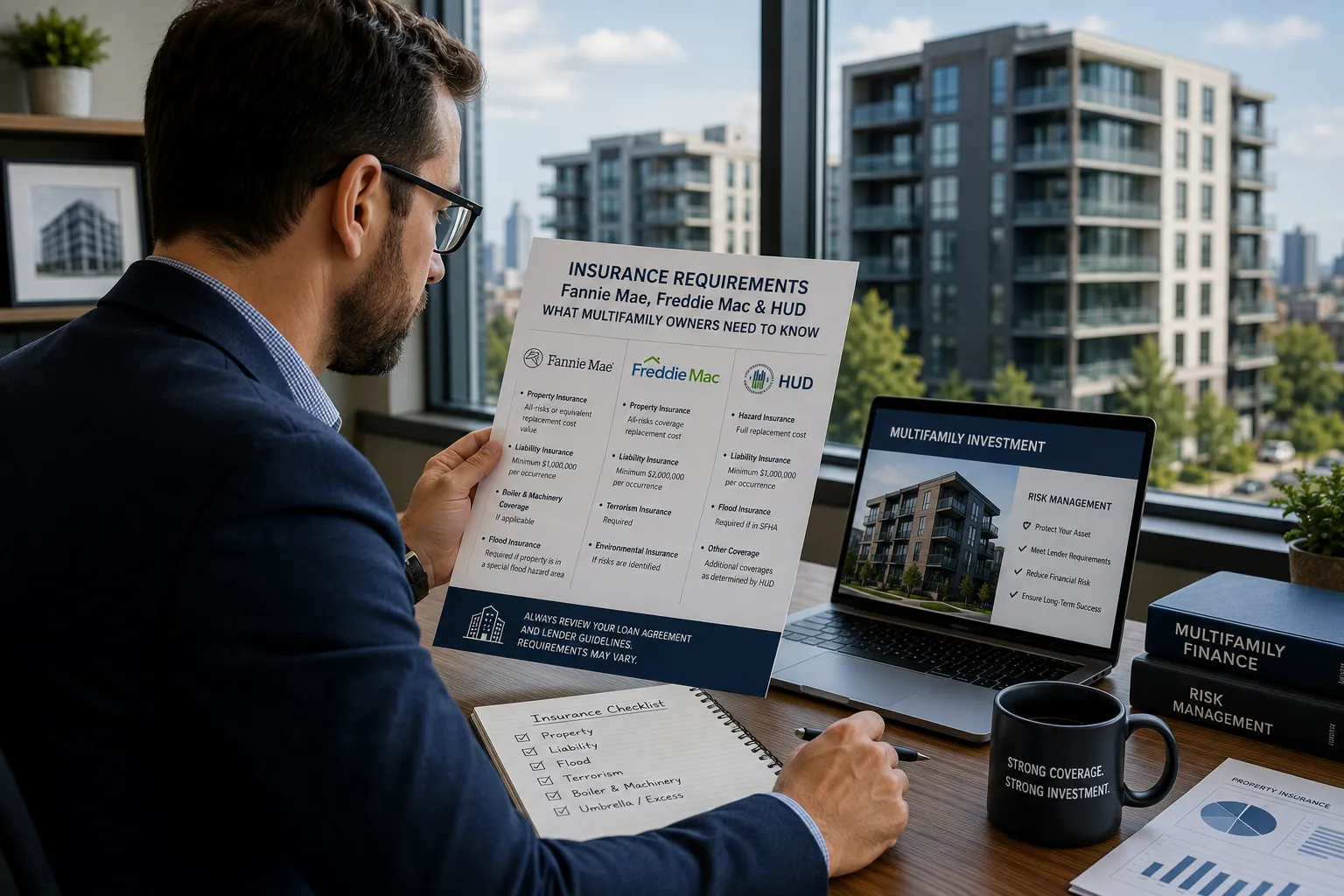
Most apartment buildings are bought or refinanced with a mortgage, and lenders don't release that kind of money without insurance conditions attached. If you're financing a multifamily property in Georgia, expect your lender and, on government-backed loans, agencies like Fannie Mae or Freddie Mac to require specific coverage limits, endorsements, and paperwork before they'll close or renew.
Common lender requirements include:
- Minimum property and liability coverage limits
- The lender listed as an Additional Insured or Loss Payee
- A Waiver of Subrogation endorsement
- Proof of insurance and policy declarations delivered on the lender's timeline
This is where insurance compliance and mortgage compliance overlap. A missing endorsement or the wrong paperwork is one of the most common reasons a closing gets delayed. If you're working with a mortgage broker, loop in your insurance agent early mortgage broker compliance requirements and insurance requirements usually need to line up before underwriting signs off. Owners managing larger portfolios sometimes bring in dedicated mortgage compliance companies to track deadlines across every property, but for a single building or a handful of them, an agent who already understands lender compliance can usually handle it directly.
Moore Multifamily works through this process for apartment owners across Georgia, matching policies to Fannie Mae, Freddie Mac, and individual lender requirements before they become a closing-day problem. See how Lender Compliance works →
Choosing the Right Multifamily Insurance Partner in Georgia
A few questions worth asking before you choose an insurance partner for your apartment building:
- Do they work with multifamily properties specifically, or is this a small slice of a general commercial book of business?
- Can they explain coverage in plain language, without leaning on jargon to move the conversation along?
- Do they understand lender and mortgage compliance requirements, including Fannie Mae and Freddie Mac standards?
- How fast can they turn around a quote, and will you talk to the same person throughout?
Moore Multifamily was built around these questions. The agency works exclusively with apartment owners and real estate investors across Georgia and the Southeast, typically turns around quotes within 24–48 hours, and connects owners directly with an experienced agent instead of a call center.
Frequently Asked Questions
What is multifamily property insurance?
Multifamily property insurance is a type of commercial insurance built for apartment buildings and other multi-unit residential properties. It typically combines property coverage for the building itself, general liability coverage for injury and legal claims, and loss-of-rents coverage to protect income if units become unusable after a covered event.
What does Georgia apartment building insurance typically cover?
Most policies include property coverage for fire, wind, hail, water damage, theft, and vandalism, plus general liability for tenant and visitor injuries. Many Georgia policies also add loss-of-rents coverage and, for older buildings, ordinance-or-law coverage to help with code-related rebuilding costs.
How much does apartment building insurance cost in Georgia?
Cost depends on the building's age, construction, location, number of units, claims history, and the coverage limits chosen. Because these factors vary so much from property to property, the most accurate way to get a number is a quote built around the specific building rather than a general estimate.
Is general liability included in multifamily property insurance?
General liability is usually offered as part of a multifamily insurance package, but it can also be structured as a separate policy alongside property coverage. Most lenders require a minimum general liability limit before approving or renewing a mortgage on an apartment building.
Do lenders require specific insurance for a mortgage on an apartment building?
Yes. Lenders typically set minimum coverage limits and may require endorsements like Additional Insured status or a Waiver of Subrogation. Loans backed by Fannie Mae or Freddie Mac often carry their own specific insurance requirements on top of what the lender asks for directly.
How is multifamily insurance different from a standard landlord policy?
A standard landlord policy is usually built for a single rental home or a small property with just a few units. Multifamily property insurance is built for larger apartment communities, with coverage limits, endorsements, and lender-compliance features designed around the way apartment buildings and their financing actually work.
























Sign in to leave a comment.