
Glasses, contact lenses and vision correction surgery can all help improve your eyesight. The right option depends on your prescription, eye health, lifestyle and personal preferences.
Some people only need vision correction for certain activities, while others need it throughout the day. Your choice can also change as your eyesight changes over time.
What causes blurred vision?
Refractive errors can make your vision blurry because light doesn't focus correctly on the retina. Common refractive errors include nearsightedness, farsightedness and astigmatism.
Presbyopia is another common vision change. It happens as the eye becomes less able to focus on nearby objects with age. This can make reading or seeing things up close more difficult.
Glasses, contact lenses and some types of eye surgery can correct certain refractive errors. The type of correction you need depends on your eyes and prescription.
Glasses
Glasses use prescription lenses to change the way light enters the eye. Your eye doctor determines the lens power you need during an eye examination.
There are different types of prescription glasses. Single-vision lenses correct either near or distance vision. Multifocal lenses can correct more than one type of vision in the same lens.
Glasses are easy to put on and remove and don't require the cleaning and handling needed with contact lenses. Some people also enjoy choosing frames that suit their style.
They can be less convenient for certain activities, though. Frames may slip during exercise, fog up in some conditions or get in the way during sports.
Contact lenses
Contact lenses are thin lenses worn directly on the eye. Like glasses, they correct the way light enters the eye so you can see more clearly.
Soft contact lenses are commonly used and come in different replacement schedules, including daily and monthly lenses. Other types are available for specific prescriptions and eye conditions.
Contacts can be useful for sports and other activities where glasses may get in the way. They also don't change your appearance or limit your peripheral vision with a frame.
They require more care than glasses. You need to handle and store them correctly and follow the recommended replacement schedule. Poor contact lens hygiene can increase the risk of eye infections. Some people may also find contacts uncomfortable, particularly if they have dry eyes or certain eye conditions.
Laser eye surgery
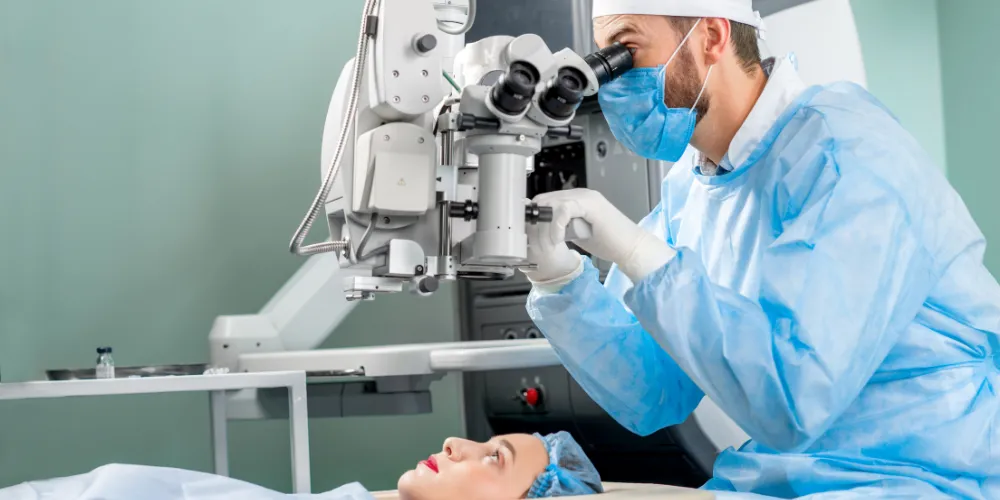
Laser eye surgery is another option for people who want to reduce their dependence on glasses or contact lenses. The procedure uses laser technology to reshape the cornea and correct certain refractive errors.
LASIK is one type of laser vision correction. It can correct nearsightedness, farsightedness and astigmatism. PRK is another option and may be considered for people who aren't suitable for LASIK, including some patients with thinner corneas.
Laser surgery isn't suitable for everyone. Your surgeon will assess your eyes, prescription and general health before deciding whether treatment is appropriate. Stable vision and healthy eyes are among the factors considered during an evaluation.
Which vision correction option is right for you?
The right type of vision correction for you depends on a variety of factors:
- Day-to-day needs: Do you need to improve your eyesight for all activities or only for certain things, like reading or driving? If you only need vision correction for some tasks, glasses may be more practical. Contact lenses or surgery might be a better option if you need vision correction for most activities.
- Eye health: Not all vision correction options are suited for all refractive errors. Your eye doctor will check your eyes and prescription before recommending a treatment. Laser vision correction may not be suitable if you have certain eye conditions or other factors that affect your eligibility.
- Overall health: Some health conditions can affect whether vision correction surgery is safe. Contact lenses also need careful handling and cleaning to avoid infection. This may be more difficult if you're managing another health condition.
- Lifestyle: Your job, sports and hobbies can influence your choice. Contact lenses may be more convenient for some sports, while glasses may be easier if you only need vision correction at certain times.
- Personal preferences: Your preference also plays a role. Some people like the look and style of glasses. Others find glasses inconvenient or don't like the feeling of frames on their nose and ears.
What happens as your vision changes?
Your vision can change even when your current glasses or contact lenses work well. Presbyopia, for example, can make close-up vision more difficult as you get older.
This can affect people who have had laser vision correction as well. Correcting distance vision doesn't stop age-related changes from occurring.
Regular eye examinations can help identify changes in your vision and check your overall eye health. Your eye doctor can also tell you when you need a new prescription or whether another form of vision correction may be appropriate.
When should you discuss your options with an eye doctor?
You don't have to choose between glasses, contacts or surgery without knowing whether you're suitable for each option. An eye examination can assess your prescription and eye health and give you a clearer idea of what is available.
Glasses may be the simplest choice for some people. Contact lenses may work better for others who want freedom from frames. For people who want to reduce their dependence on both, laser vision correction may be worth discussing.
Your eye doctor can explain the benefits and limitations of each option based on your individual needs. This gives you the information you need to decide which form of vision correction fits your eyesight and everyday life.





















Sign in to leave a comment.