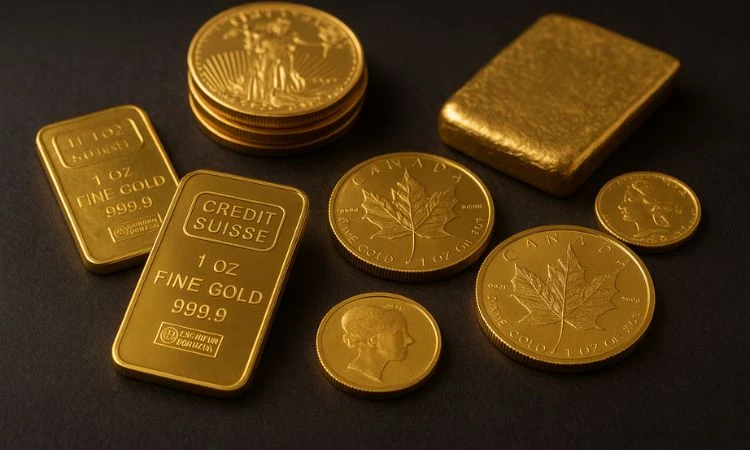

Gold has always had a strong presence in investment landscape. Some people buy it to protect their savings, some enjoy the security of holding a physical asset, and others treat gold trading like any other financial investment. Whatever your reason, a Gold Bullion Exchange acts as a safe, transparent, and reliable place to buy, sell, or store gold.
But how do these exchanges actually work? How is gold priced? What makes gold a trusted asset? And is now even a good time to buy?
Below is a clean, reader-friendly guide that answers the most important questions people commonly ask before stepping into a gold exchange.
What Exactly Is a Gold Bullion Exchange?
A gold bullion exchange is a regulated environment where people can trade physical gold—whether it's coins, bars, rounds, or scrap jewellery. Unlike jewellery stores, exchanges focus solely on precious metals, making pricing and evaluation far more transparent and investment-driven.
How Do Exchanges Handle and Authenticate Gold?
When you bring in gold, the first step is always verification. The staff checks hallmarks, weighs the item with precision scales, and uses tools like electronic testers or XRF analyzers to determine purity. This ensures both the buyer and seller deal with accurate, trustworthy information before any transaction takes place.
How Is Gold Priced at a Gold Exchange?
Gold pricing starts with one universal number: the global spot price. This price fluctuates every minute based on international markets. In exchanges calculate your gold’s value by combining:
- Today’s spot price
- The purity level (e.g., 14K, 22K, 24K)
- The weight of your gold
- A small premium (for bars/coins) or refining cost (for scrap gold)
The result is a clear, real-time price that reflects exactly what your gold is worth in the moment.
Why Does Gold’s Price Change So Often?
Gold responds to global events. When inflation rises, when stock markets dip, or when there’s uncertainty in the world, investors often move toward gold. This increase in demand pushes prices upward. When stability returns, gold can move sideways or cool down slightly.
That’s why one day’s buying price can differ from the next.
What Types of Gold Can You Buy ?
Most exchanges offer an extensive selection. You’ll find Canadian Maple Leafs, American Eagles, Krugerrands, and bars ranging from small 1-gram pieces to large 1-kilogram units. Whether you're starting small or building a long-term portfolio, there’s a product for every level of investor.
Can You Buy Gold Online?
Yes. Many dealers now offer fully online purchases with live pricing. Customers can order bullion online and choose between in-store pickup or fully insured shipping. Online buying is convenient, but always verify that you’re working with an accredited, reputable dealer.
How Does Selling Gold Work?
Selling gold is quick and straightforward. You bring in your items, the exchange verifies them, and you receive a live-price offer. If you accept, you’re paid immediately via e-transfer, bank deposit, or cash. Most transactions take only a few minutes.
Do You Need Identification to Buy or Sell Gold?
Yes—exchanges typically require government ID. This helps prevent fraud and supports compliance with anti-money-laundering regulations. For larger transactions, additional information may be requested, but for everyday sales or purchases, a single ID is enough.
Is It Safe to Trade Gold at Bullion Exchange?
Absolutely. Reputable exchanges follow strict regulations, use high-level security systems, and rely on professional testing tools. They also provide transparent pricing, ensuring you always know exactly what you're paying or receiving.
Do Exchanges Offer Secure Storage?
Many do. Professional vault storage is becoming increasingly popular among investors who prefer not to keep large amounts of gold at home. These vaults offer bank-grade security, insurance, and easy access when needed.
Is It the Right Time to Buy Gold?
This is one of the most common questions—and the answer depends on your goals rather than market timing alone.
Gold has a long history of holding value, especially during economic uncertainty. If your goal is long-term stability, then gold remains a solid choice regardless of small price fluctuations. If you're looking for short-term gains, you may want to monitor daily price movements more closely.
In recent years, gold has shown resilience despite inflation, currency shifts, and global instability. For many investors, these factors make it a reasonable time to consider buying—especially if the goal is to diversify or protect a portion of savings.
In other words: gold is less about timing the market and more about strengthening financial security.
How Do Gold Exchanges Make Money?
Instead of massive markups, bullion exchanges typically operate on modest margins. Their revenue comes from the buy-sell price spread, small premiums on mint products, refining deductions, and sometimes storage fees. This is why bullion is often more transparently priced than jewellery.
Conclusion: Why Gold Bullion Exchanges Matter
A trusted gold bullion exchange offers something rare in today’s investment world—simplicity, transparency, and physical value. Whether you're curious about gold for the first time or adding to an established portfolio, an exchange in Vancouver helps you trade with confidence.
You get accurate purity testing, real-time pricing, secure transaction handling, and access to high-quality bullion products. Most importantly, you gain a tangible asset that has proven its worth across generations.



























Sign in to leave a comment.