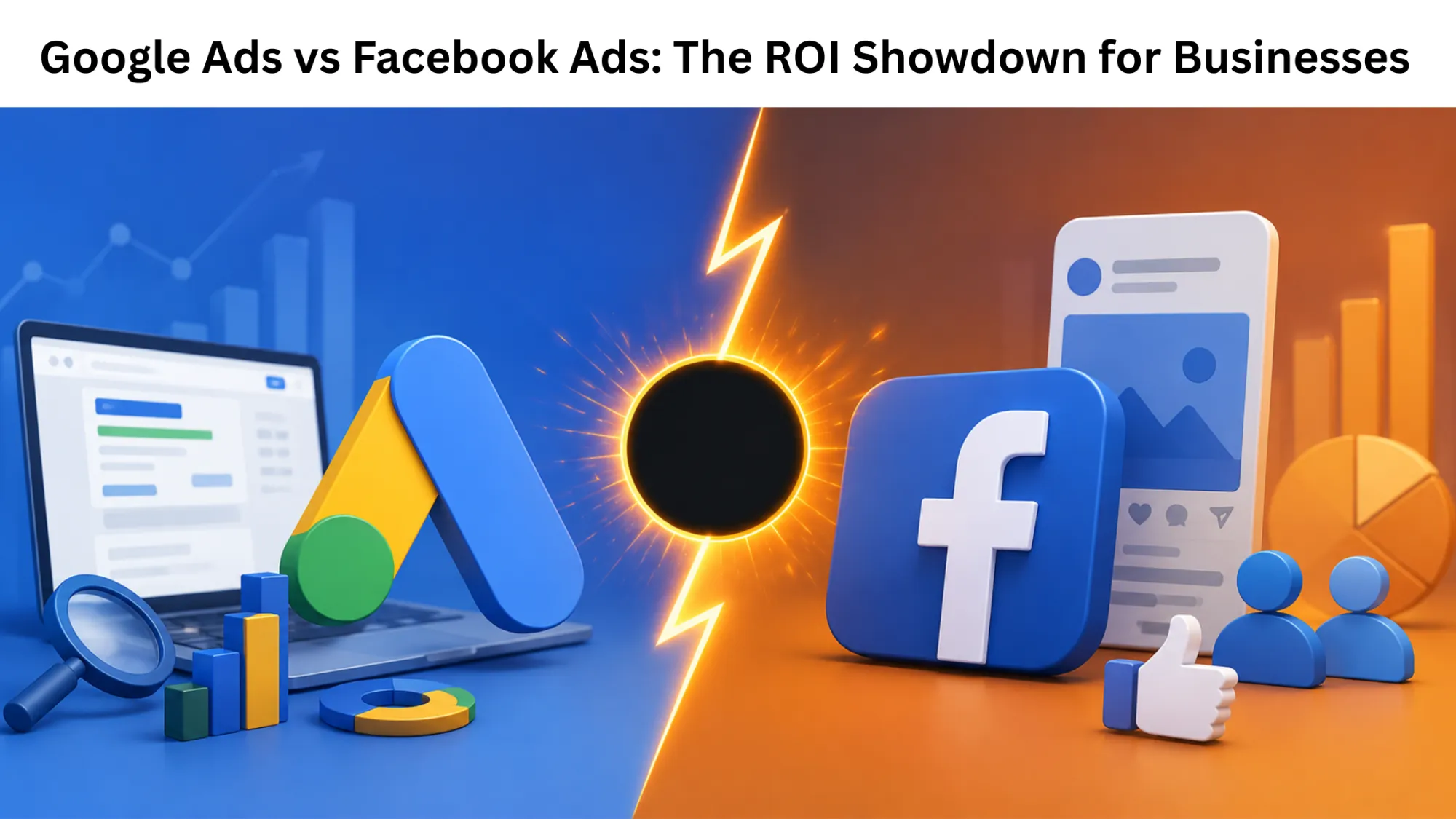

Every business owner reaches a point in the digital road where they have to ask: “Where should I actually spend my marketing budget?” Splitting your hard-earned cash blindly between the two tech giants is a fast track to burning through capital with very little to show for it.
The digital advertising space is more competitive than ever. You cannot afford a trial-and-error approach. To get a true return on investment (ROI), you need to understand that Google and Facebook are not competing for the same audience. Instead, they serve two entirely different types of consumer behavior.
If you want to stop guessing and start scaling, you need a real plan. Some companies hire a specific type of paid advertising agency to help with this, but knowing the basic differences yourself is the first step to getting the most money back. Let's talk about the Google Ads Vs. Facebook Ads return on investment battle.
The Core Difference: Intent vs. Awareness
Before looking at metrics like click rates or costs, you have to understand consumer psychology. The primary difference between these platforms comes down to one concept: Intent.
- Google Ads = Demand Capture (Users looking for you)
- Facebook Ads = Demand Generation (You are looking for users)
Google is built on Inbound Intent marketing. When someone goes to Google, they have a problem and are actively hunting for a solution. They are typing specific phrases because they want to buy, hire, or learn right now.
Facebook uses Interruption marketing. People log on to Facebook and Instagram to see what their friends are up to or to watch videos and look at memes. They aren't trying to buy a plumbing service or some software. Your ad has to interrupt their scroll and convince them that your ad has something they want to buy.
Deep Dive into Google Ads: Capturing Active Buyers
Google Ads is the number one platform for marketing using search engines. Google Search Ads are unbeatable when it comes to fast conversions, as these ads are text-based and displayed at the top of the list when a user performs a Google search.
How It Works
What is great about Google Ads is that you can target your ideal customers with the keywords you select. An example of this would be if your business were a commercial roofing company, you would pick keywords like "emergency roof repair near me" in your paid ads. After a leak, a business owner would search for that, see your ad, and most likely call.
Why the ROI is High
The conversion rate on Google is typically much higher than on social media because you are catching the buyer at the exact moment of peak relevance. You do not need to educate them on why they need a roof repair; they already know they do.
The Strategic Trade-Off
Since those customers are just about to make a purchase, there is a lot of competition for top keyword spots. Along those lines, high-intent keywords typically have a high cost per click. Most small companies rely on the speedy and valuable traffic paid search offers, but they have to be monitored carefully.
Many entrepreneur-owners debate whether they should buy paid ads or work on the organic growth (SEO) for their company. They are trying to see which one brings them customers faster and which one gives them authority in the market for a longer period of time.
Deep Dive into Facebook Ads: Building Audiences from Scratch
Facebook Ads (managed through Meta Business Suite) approach advertising from a completely visual and demographic angle. Instead of targeting what a user is typing right now, Facebook targets who the user is.
How It Works
Meta has tons of data based on their users, including their interests, big life events, and demographics. This makes it possible to create really specific target profiles. For example, if you sell baby skincare, you can target parents who live in a specific suburban zip code and have a baby. You can even target parents who have a baby and are interested in holistic healthcare.
Why the ROI is High
Facebook shines brightest when it comes to visual products, e-commerce, lifestyle brands, and innovations that people do not know exist yet. If you invented a brand-new type of ergonomic desk chair, no one is searching for it on Google because they don’t know it’s an option.
Facebook allows you to show a stunning video demonstrating the chair’s benefits directly to remote workers.
Furthermore, Facebook's average cost-per-click is historically lower than Google's, allowing you to get more eyes on your brand for less initial spend.
Which Platform Delivers Better ROI For You?
The ultimate winner of the ROI showdown depends entirely on your business model, your budget, and what you sell.
Choose Google Ads First If:
- Your services are urgent: If you are a locksmith, an accountant during tax season, or a local medical clinic, people need you immediately. They won't wait to stumble across you on social media.
- You have a high-ticket B2B offer: Business buyers look for software solutions and professional consultations via search engines.
- You have a smaller budget but need fast sales: You can target a few highly specific buyer-intent keywords to secure immediate revenue.
Choose Facebook Ads First If:
- Your product is highly visual or emotional: Ads that have high-quality images and videos will do great if your business sells clothing, home decor, fitness programs, or food.
- You want to build a community: Facebook is excellent for retargeting past website visitors, nurturing leads with content, and turning casual viewers into loyal brand advocates over time.
- You need to create demand: If your product solves a problem people don't realize they have, you need to show it to them visually.
The Ultimate Hybrid Strategy
At the end of the day, Google Ads and Facebook Ads can't be compared in terms of which is better or worse. What's more important is knowing how you can use them both to your advantage and grow your business. The best return on investment will always stem from a combination of both ads.
For example, you can pay for Google Ads to get people who are ready to buy from you now. Then, to continue your brand presence for users who are aware but not ready to purchase, you can pay for Facebook Ads to retarget those same users.
Running ads on two large platforms is tricky since it requires a lot of watching, testing, and number crunching. One mistake with the ads, and your money disappears within days. Getting a pro for Google Ads management is worth it. They’ll make your ads target the right people, filter out the unwanted keywords, and spend your budget on the ads that get the most potential customers.
Don’t take a risk with your ads. Look at your business goals and choose the platform that your customers use. You’ll get a lead stream you can rely on.






















Sign in to leave a comment.