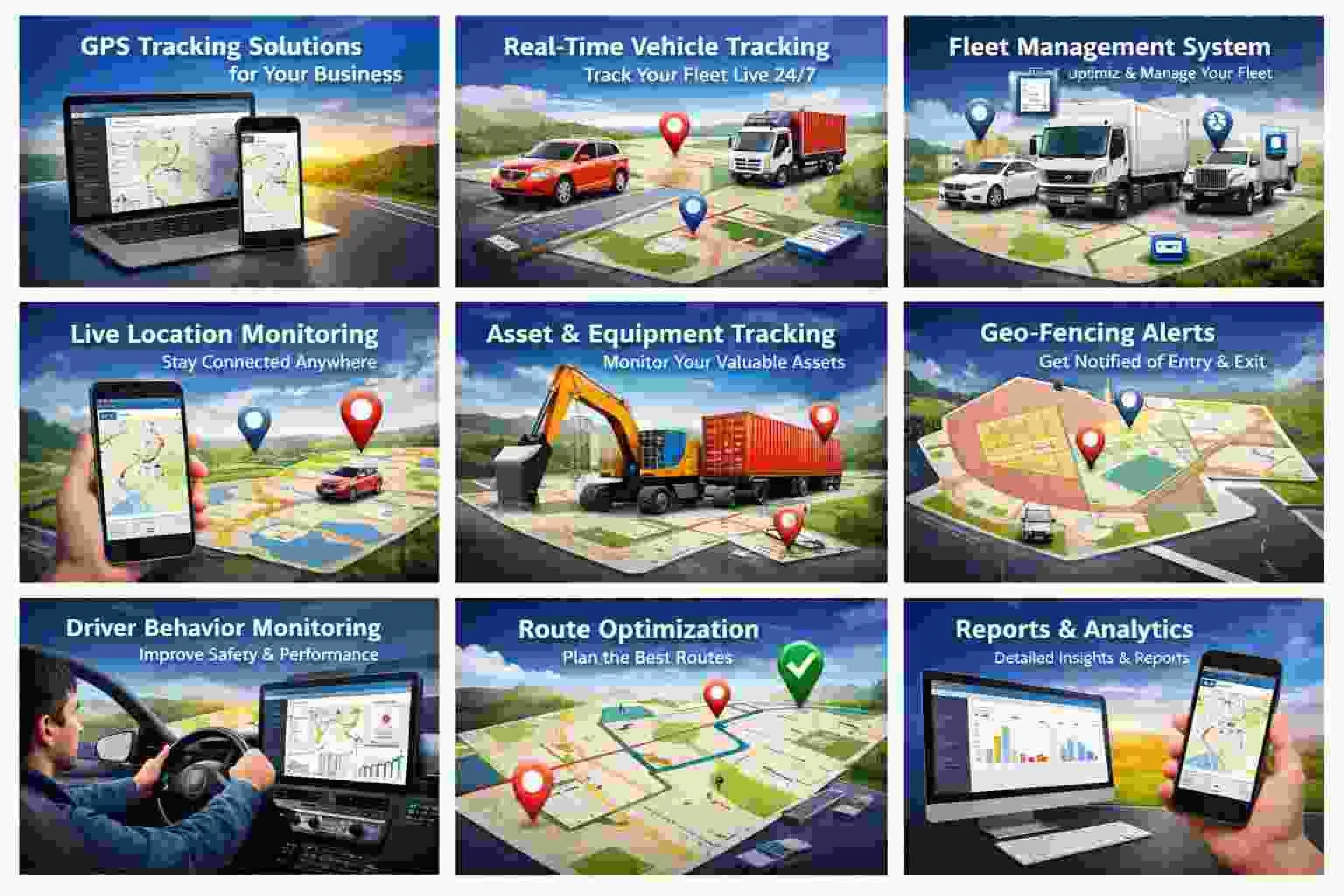
Many people use the terms “GPS tracker” and “GPS device” interchangeably. While they are closely related, there are differences in functionality and usage. Understanding these differences helps businesses choose the right solution.
What is a GPS Tracker?
A GPS tracker is primarily designed for real-time location monitoring. It sends live updates to a tracking platform and is commonly used for vehicles, assets, or personal tracking.
Features of GPS Tracker
- Real-time tracking
- Geo-fencing alerts
- Speed monitoring
- SOS alerts
- Route history
What is a GPS Device?
A GPS device is a broader term that refers to any hardware using GPS technology. Some GPS devices focus on navigation, while others focus on tracking.
Features of GPS Device
- Satellite signal reception
- Location calculation
- Navigation guidance (in some devices)
- Data storage
- Tracking capabilities (in advanced models)
Key Differences
| Feature | GPS Tracker | GPS Device |
|---|---|---|
| Purpose | Real-time tracking | Tracking or navigation |
| Data Transmission | Live updates | May or may not transmit live data |
| Use Case | Fleet & security | Navigation or tracking |
| Alerts | Yes | Depends on model |
Which One Should You Choose?
If you need:
- Live monitoring
- Theft prevention
- Fleet management
Then a GPS tracker is ideal.
If you need:
- Navigation assistance
- Basic location recording
Then a GPS device may suffice.
Business Applications
Fleet companies, logistics providers, and delivery businesses typically require advanced GPS trackers integrated with fleet management software.
Conclusion
Both GPS trackers and GPS device use satellite technology, but their applications differ. Choosing the right solution depends on your operational needs, whether for security, navigation, or full fleet management.


Sign in to leave a comment.