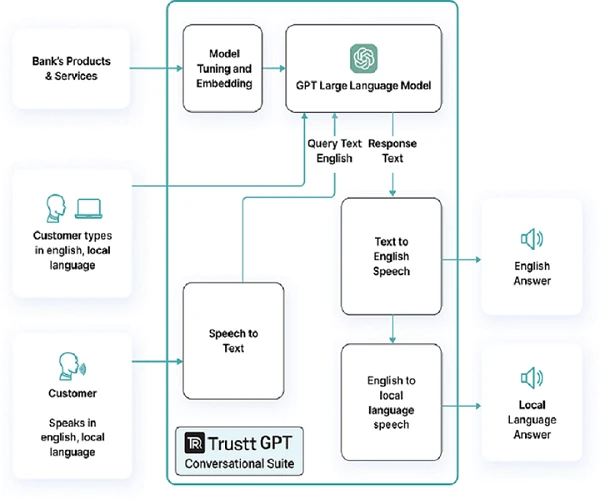

In the rapidly evolving world of banking and financial services, staying ahead of the curve is paramount. GPT for Banking, powered by Generative Pre-trained Transformers (GPT), is one of the most significant breakthroughs making waves in the industry. These AI-driven systems are revolutionizing the way banks interact with customers, manage data, and make informed decisions.
Understanding GPT in Banking
GPT for Banking, short for Generative Pre-trained Transformer, is an advanced natural language processing model powered by artificial intelligence. It has been trained on massive datasets to understand and generate human-like text, making it a valuable tool for various applications, including customer service, data analysis, and compliance.
Enhancing Customer Service
One of the primary areas where GPT for Banking shines in the banking sector is customer service. These AI models can be integrated into chatbots and virtual assistants, providing customers with 24/7 support for their inquiries and concerns. GPT-driven chatbots can answer questions, provide account information, and even assist with transactions, delivering a more seamless and responsive customer experience.
Data Analysis and Insights
GPT for Banking's natural language processing capabilities are also invaluable for data analysis. Banks deal with vast amounts of unstructured data, including customer feedback, market news, and regulatory documents. GPT can sift through this data, extracting valuable insights, trends, and sentiment analysis. This aids banks in making informed decisions about investments, risk management, and customer preferences.
Compliance and Regulatory Support
Staying compliant with ever-changing financial regulations is a critical concern for banks. GPT for Banking can assist in this aspect by parsing and summarizing complex regulatory documents, helping banks interpret and implement necessary changes. It can also assist in automating compliance checks, reducing the risk of human error, and ensuring adherence to regulations.
Enhanced Fraud Detection
GPT for Banking can bolster a bank's fraud detection capabilities by analyzing transaction data and identifying unusual patterns or anomalies. Its ability to process large volumes of data quickly and accurately can help banks detect fraudulent activities in real time, reducing financial losses and protecting customer assets.
The Future of GPT for Banking
As GPT for Banking technology continues to evolve, its role in the banking sector is expected to expand further. Banks are exploring applications like personalized financial advice, automated document generation, and enhanced risk assessment. The potential benefits in terms of cost savings, efficiency, and improved customer experiences are driving the adoption of GPT for Banking across the industry.
Conclusion
The adoption of GPT for Banking in the banking sector represents a transformative leap into the future of financial services. By harnessing the power of artificial intelligence and natural language processing, banks can provide superior customer service, gain deeper insights from data, ensure compliance, and enhance security.
In a landscape where innovation is key to competitiveness, GPT for Banking is proving to be a powerful ally for banks striving to meet the evolving needs of their customers and the demands of an increasingly digital world. As GPT for Banking technology continues to mature, its impact on the banking industry is only set to grow, reshaping the way we bank and manage our finances.
























Sign in to leave a comment.