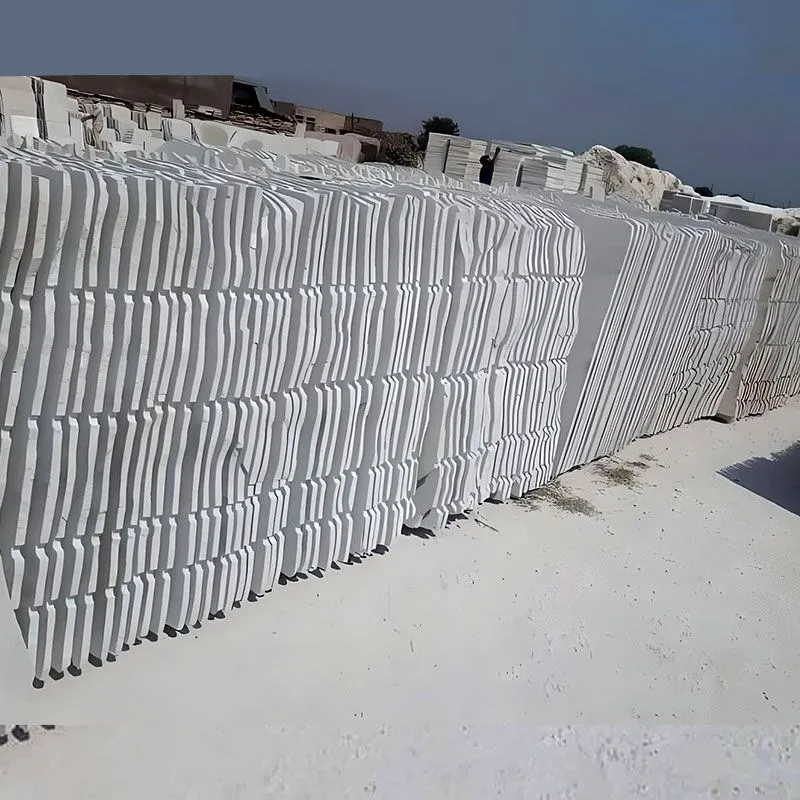

Granite stone and sandstone are two of the most popular paving materials on the market, and they are usually always on the minds of anybody planning a new driveway, garden paving, or patio project. Customers are often concerned with the longevity, style, texture, and adaptability of their paving, and understanding the strengths and drawbacks of both granite and sandstone in these areas would provide them with the necessary insight to choose either.
What is Sandstone?
Simply explained, sandstone is sand that has been bonded together to form rock; this is obvious when looking closely at a piece. But, beyond that simple description, there is a fascinating composition of silt, matrix, and cement that, with more research, may offer a wealth of geologic information.
Sandstone is a clastic sedimentary rock because its sediment particles are mineral clasts and rock fragments. It is mostly made up of medium-sized sand particles which makes it a medium-grained clastic sedimentary rock.
Gwalior Sandstone
Gwalior Mint Sandstone is a beautiful and robust natural stone with a cream-colored surface and mint-colored texture. This stunning stone, also known as Mint Natural SandStone and Gwalior Greenish White, is from Gwalior in Madhya Pradesh, a state in Central India. This sandstone is beautiful, sturdy, and easy to install and maintain.
Because of its physical and chemical features, homeowners, designers, and architects all over the globe like it for flooring, paving, lining, wall fixing, patios, and a variety of other décor ideas. Gwalior Sandstone is a low-variation stone that is easy to cut which makes it a popular medium for stone handicrafts.
Uses of Sandstone
Sandstone contains inherent clefts in its blocks, which are opened manually with a hammer. This stone is available in a variety of finishes, each with its own set of qualities. For example, an honed polish creates a beautiful and warm appearance, but the surface is prone to cracking, and experts do not advocate making smooth sandstone paving slabs.
Uses of Granite
Granite is a natural volcanic rock composed of crystalline quartz and orthoclase. High-density granite blocks are often split by jigsaws to create granite paving slabs. Cutting and splitting granite stone is difficult since it has no layers. As a result, granite paving slabs are difficult to break, which is particularly desirable when a durable surface is required. Sandstone is a sedimentary rock made of quartz sand, silica, calcium carbonate, and iron oxide.
Sandstone vs Granite
When it comes to external applications, both granite and sandstone as natural sandstones receive high marks. For regions where the weather is famously unpredictable, both stones might be appropriate. Granite and sandstone are popular pavement materials due to their low water absorption. This makes them appropriate for places with frequent rain.
Granite stone provides us with diverse textures in different hues that are formed up of different minerals and under different cooling processes, which is why they are extensively utilized as a paving material.
Sandstone also comes in a wide range of colors and designs, as well as mosaic-style pavement with various laying patterns. When selecting stone pavement, it is important to consider how the stone will look after it has been wet, and both sandstone and granite stone appear to have distinct possibilities for being used as paving materials during rain while still maintaining the elegant aspect that they have had previously.
Conclusion
Finally, when it comes to choosing between sandstone and granite as a paving material, there are advantages and disadvantages to each.
Sandstone has a consistent size and is frequently smooth and rounded, whereas granite is a highly hard, crystalline, volcanic rock composed primarily of quartz and is widely used as a construction stone.
Granite and sandstone are both employed in interior and exterior architectural projects, and they make excellent paving materials. Customers should have no reservations about using this elegant and magnificent stone for their pavement because it is simple and convenient to utilize.










Sign in to leave a comment.