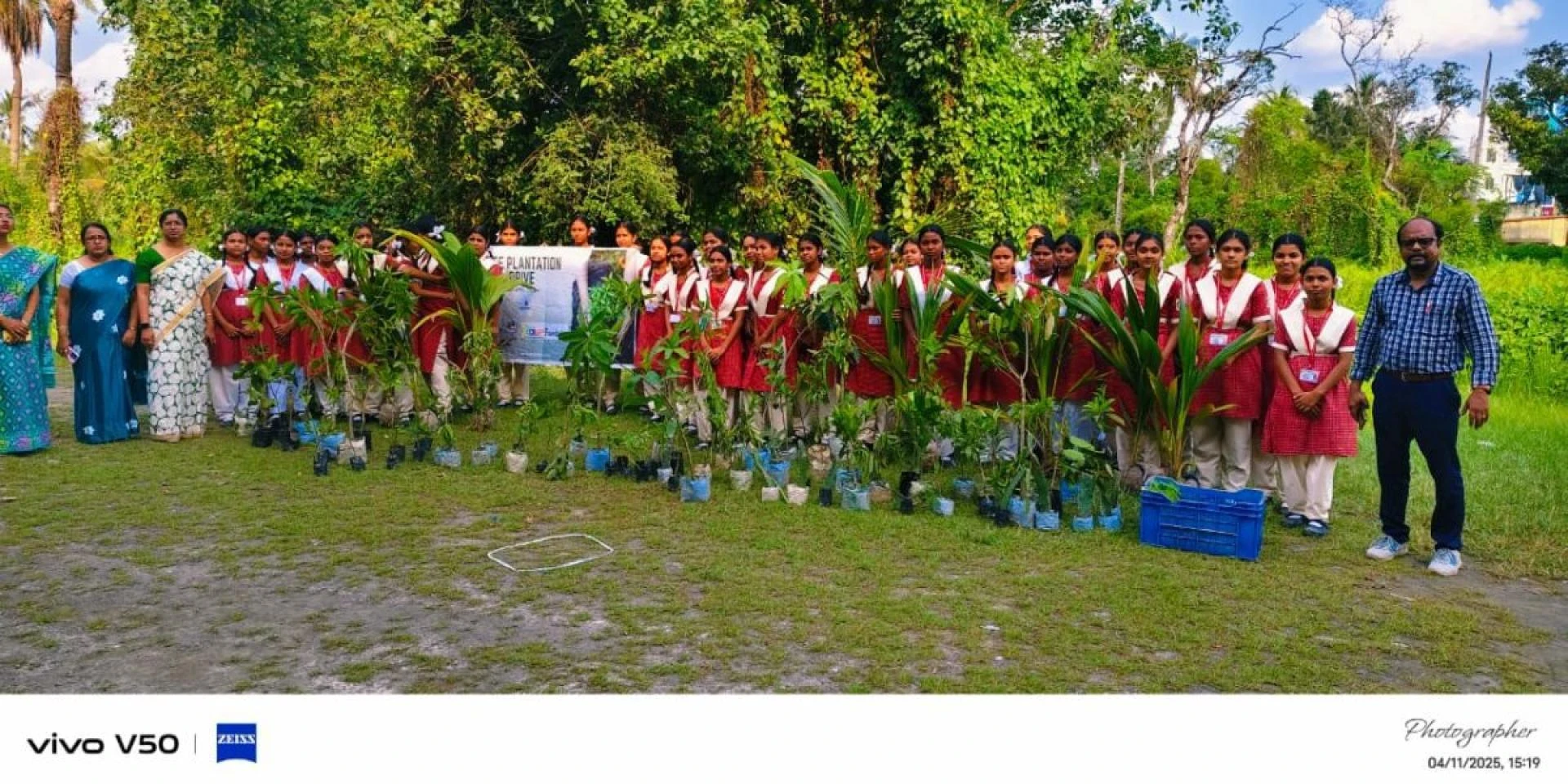

In an inspiring step toward a more sustainable future, Mukti—an NGO dedicated to holistic rural development in the Sundarbans—organized a large-scale plantation drive across four schools in the South 24 Parganas district of West Bengal. The initiative, aptly titled “Green Tomorrow Begins Today,” reflects Mukti’s commitment to environmental conservation and education through community involvement and youth empowerment.
As climate change continues to impact the fragile ecosystem of the Sundarbans, the importance of grassroots environmental action cannot be overstated. Through this plantation drive, Mukti seeks not only to restore green cover but also to plant the seeds of environmental responsibility in young minds.
Schools Involved in the Green Initiative
The plantation drive was conducted across the following four schools:
- Purba Sridharpur High School
- Jogendranagar Shishu Niketan
- Sonatikari Free Primary School
- Bhetkhali Vidyapith
Each school became a hub of energy and enthusiasm as students, teachers, local volunteers, and Mukti members came together for the common cause of environmental restoration. The goal was simple yet powerful: to build a greener tomorrow by making environmental education tangible, visible, and lasting.
Planting with Purpose
Over 600 saplings were planted during this initiative. Mukti prioritized the use of native and fruit-bearing species, including mango, jackfruit, guava, jamun, neem, and banyan—chosen not only for their adaptability to the local climate but also for their long-term ecological and nutritional benefits.
These trees, once matured, will:
- Improve air quality
- Enhance biodiversity
- Provide shade and food
- Prevent soil erosion
- Reduce the local impact of extreme weather
Each planted sapling represents a step toward restoring the environment while simultaneously fostering a sense of ownership and ecological duty among the students.
Student Engagement: Learning Beyond the Classroom
A distinguishing feature of the plantation drive was the active role played by students. Mukti encouraged every student to personally plant and name their sapling, promising to care for it throughout the year. This symbolic adoption turned a one-day event into a year-round environmental lesson.
In addition to the planting activity, interactive sessions were held in each school on topics such as:
- Climate change and its effects on the Sundarbans
- The role of trees in the ecosystem
- Composting and organic gardening
- Benefits of native plant species
These sessions helped students connect textbook concepts with real-world environmental issues, making learning more immersive and impactful.
Community Participation: A Collective Effort
Mukti’s plantation drive was not limited to schools alone. Parents, local panchayat members, and women from self-help groups (SHGs) joined hands with the students to contribute labor, resources, and moral support. This multi-stakeholder collaboration ensured that the initiative was deeply rooted in community values.
Local residents appreciated Mukti’s inclusive approach. Mrs. Sushmita Das, a parent and SHG member, remarked:
“This initiative has brought the community together. Watching our children plant trees and take responsibility gives us hope for the future.”
By involving multiple generations, Mukti created a ripple effect that went beyond school boundaries.
Formation of Green Clubs in Schools
To ensure long-term care for the planted saplings, Mukti facilitated the formation of Green Clubs in each participating school. These student-led clubs are responsible for:
- Daily or weekly watering of saplings
- Maintenance and protection of plant beds
- Monitoring plant health
- Organizing future eco-awareness campaigns
Green Clubs also act as peer educators, encouraging other students to respect and nurture the environment. Teachers will supervise the clubs and provide support, ensuring that the responsibility becomes a habit and not a chore.
Challenges and Sustainability Measures
Although the plantation drive was a success, challenges such as water scarcity, grazing by animals, and high summer temperatures were anticipated. Mukti addressed these by:
- Installing protective fences around saplings
- Educating students on mulching techniques
- Collaborating with local authorities to ensure water availability
Moreover, Mukti is working on a digital tracking system where students and teachers can log the growth of each tree, creating a living record of the project’s progress.
Future Plans
Buoyed by the enthusiastic response, Mukti plans to expand the initiative to 15 more schools over the next academic year. Plans are also underway to integrate environmental modules into the existing school curriculum, ensuring that sustainability is not just an activity but a mindset.
The NGO also aims to introduce:
- Rainwater harvesting systems
- Organic composting pits
- Botanical gardens within school campuses
- Student-led eco-fairs and exhibitions
These activities are part of a broader vision to make every school in the Sundarbans a model of eco-conscious living and learning.
Conclusion: Growing Today for a Greener Tomorrow
With the “Green Tomorrow Begins Today” plantation drive, Mukti has demonstrated how small, collective efforts can lead to meaningful environmental change. By empowering students and engaging communities, the NGO has created a model for sustainable education that other rural regions can replicate.
As the saplings planted today grow into strong, sheltering trees, they will stand as living monuments to community unity, environmental awareness, and youth leadership. Through this initiative, Mukti is not just greening the landscape—it’s transforming mindsets and building a future where humans and nature coexist in harmony.
Let me know if you'd like this adapted for a press release, blog, or translated to another language.




























Sign in to leave a comment.