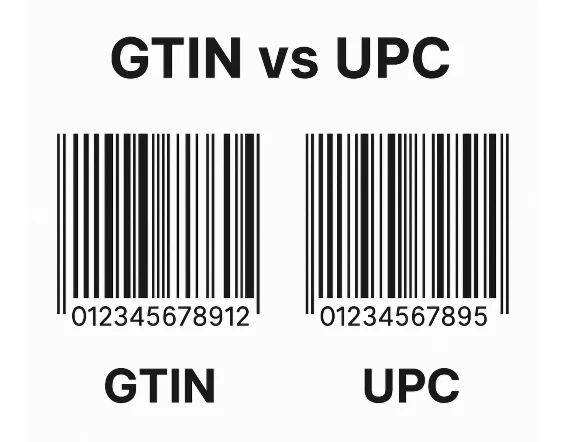

In the world of eCommerce and product management, understanding the difference between GTIN and UPC can be crucial. Whether you're a seller listing products online or a manufacturer managing inventory, using the correct product identifiers helps ensure accurate listings, better searchability, and smoother operations. In this blog, we’ll break down what GTIN and UPC are, how they differ, and why both matter in today’s digital commerce landscape.
What is a GTIN?
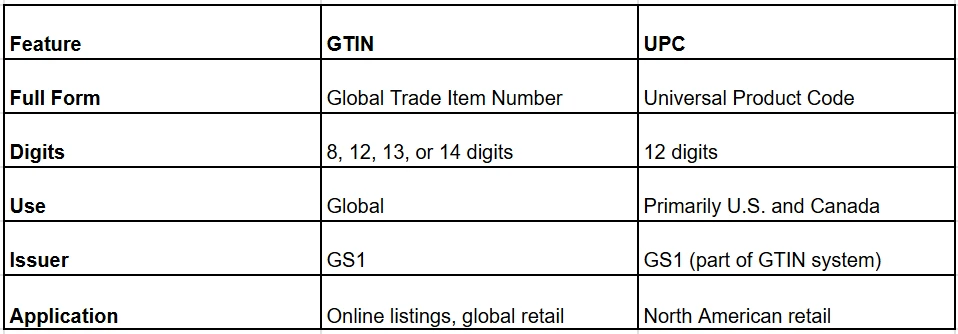
GTIN stands for Global Trade Item Number. It is a globally recognized standard used to identify products and services in a consistent manner across marketplaces, retailers, and supply chains. GTINs can come in various formats depending on the country and type of product. Common forms of GTINs include:
- GTIN-12 (commonly known as UPC in the U.S.)
- GTIN-13 (also known as EAN in Europe)
- GTIN-14 (used for grouped products or cartons)
- GTIN-8 (used for smaller retail items)
All of these are issued and managed by GS1, a global not-for-profit organization that develops supply chain standards.
What is a UPC?
A UPC (Universal Product Code) is a specific type of GTIN that’s used predominantly in the United States and Canada. It consists of 12 numeric digits and is used to uniquely identify individual retail products. The UPC barcode format is the most commonly seen on packaging in North America.
So, in simpler terms: all UPCs are GTINs, but not all GTINs are UPCs.
GTIN vs UPC: Key Differences
Why GTIN and UPC Matter for Online Sellers
Most online marketplaces such as Amazon, Google Shopping, and Walmart require GTINs to accurately list products. Without a proper identifier, your product could be suppressed, difficult to find, or flagged as incomplete. Platforms like Google specifically request a valid GTIN to match your product with others in the marketplace and deliver better ad performance.
Incorrect or missing identifiers can hurt your product visibility and conversion rates. For instance, Google’s GTIN requirements clearly outline which products need them and what formats are accepted.
Likewise, Amazon enforces strict policies for GTINs and provides UPC guidelines for sellers to avoid listing errors and duplicate content.
Final Thoughts
While GTIN and UPC are closely related, understanding their distinctions can save time, ensure compliance, and enhance the effectiveness of your product listings. If you're a global seller, aim to use the appropriate GTIN format for your products, especially when dealing with multiple countries and platforms.
Being precise with product identifiers is more than a technicality—it’s a key component of successful online retail.



























Sign in to leave a comment.