

Automation in healthcare simplifies administrative tasks, reduces errors, and optimizes resources, leading to significant cost savings. By streamlining processes like billing, scheduling, and compliance, hospitals can focus more on patient care while improving efficiency and financial sustainability.
1. Adopting AI-Powered Billing System
Many healthcare organizations still rely on outdated, manual processes for scheduling, billing, and patient record management.
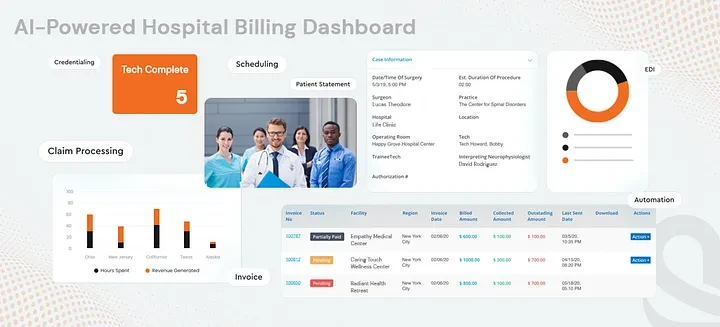
AI-powered billing systems revolutionize healthcare by automating key billing tasks, ensuring faster, more accurate claims. With AI’s ability to assign medical codes, detect errors, and submit claims in real-time, healthcare organizations can reduce claim rejections and improve billing efficiency. Integrated with Electronic Health Records (EHR) and cloud services, it streamlines data management and enables real-time tracking, while minimizing manual labor and compliance issues.
The result? Faster billing cycles, improved accuracy, and significant cost savings.
Key Benefits:
- 99% accuracy rate
- 60% faster processing
- 3X more billing data handling
- 28% reduction in manual labor
- 25% savings in staffing and training costs
2. Smart Patient Scheduling and Communication
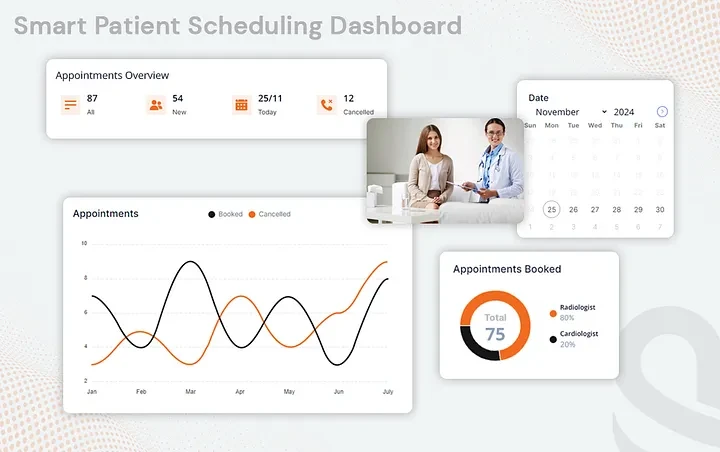
Smart patient scheduling platforms streamline appointment booking and reduce administrative tasks. With self-scheduling and automated reminders via SMS, email, or app notifications, patients can easily book, reschedule, or cancel appointments — reducing no-shows and enhancing convenience. Integrated with Electronic Health Records (EHR), the system updates appointments in real-time and automatically fills canceled slots with waitlist management. 24/7 access and mobile app check-ins improve accessibility, while customizable rules and payment system integration optimize operations.
Key Benefits:
- 30% reduction in no-show rates with automated reminders
- 10% more bookings due to flexible scheduling
- Real-time EHR integration for up-to-date information
- 38% increase in patient satisfaction with automated reminders
3. Robotic Process Automation (RPA) for Repetitive Tasks
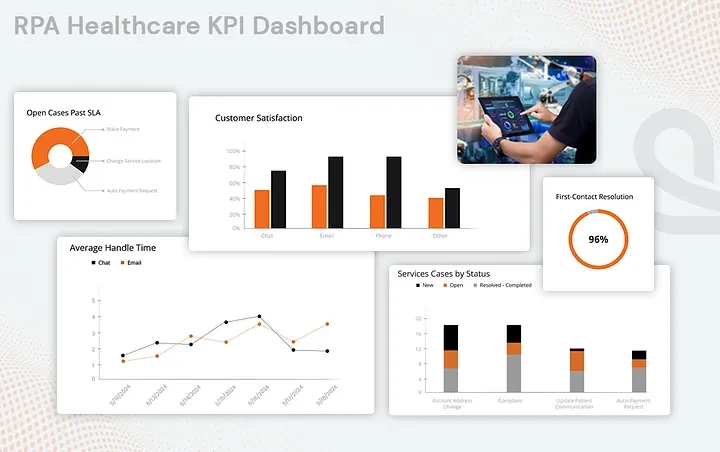
Robotic Process Automation (RPA) uses software robots, or “bots,” to mimic human actions and handle repetitive tasks like data entry, billing, and scheduling. These bots integrate seamlessly with existing systems like Electronic Health Records (EHR), enabling faster task completion without major system changes. By capturing and processing data from multiple sources, RPA improves efficiency and accuracy, allowing healthcare providers to focus on higher-value work.
Key Benefits:
- Round-the-clock operation for improved task completion
- Quick setup, usually within a week or two
- 50% faster decision-making with quicker financial analysis
- Scalable to handle larger volumes of tasks without added manpower
4. Automation in Compliance and Reporting
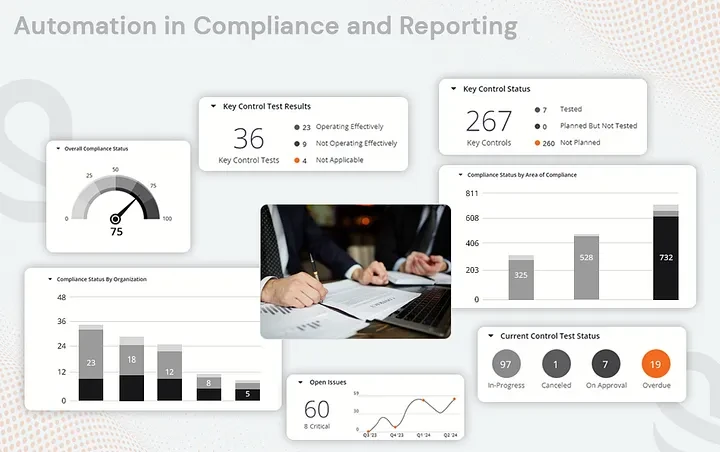
Automation in healthcare simplifies compliance by automatically adapting to regulatory changes. When new guidelines are issued, the system updates compliance rules and workflows without manual intervention. AI-powered tools validate data against standards like HIPAA and CMS, ensuring patient records and billing are always in line with regulations. Additionally, automated systems track actions, creating detailed audit trails for transparency and quick access during regulatory audits.
Key Benefits:
- 100% adherence to regulatory deadlines, avoiding penalties
- 32% faster audit response time with real-time data
- 60% improvement in regulatory adaptability
- 80% faster risk identification for proactive management





























Sign in to leave a comment.