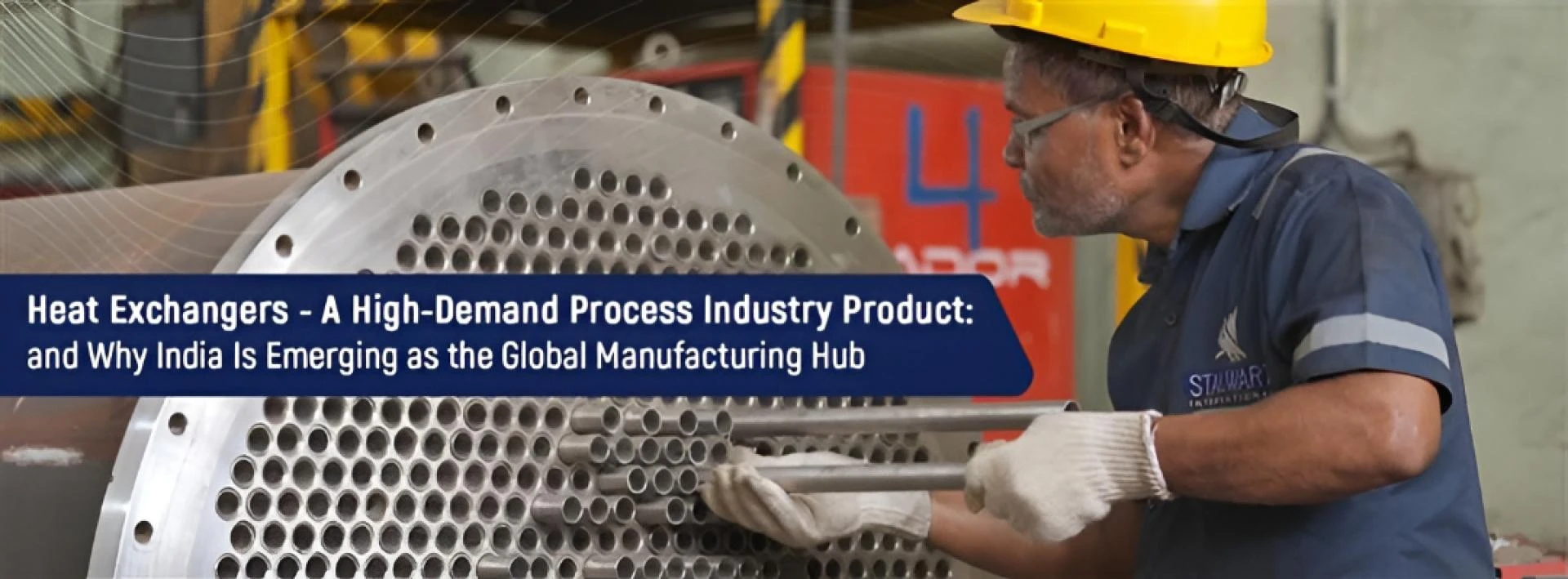

In today’s industrial landscape, Heat Exchangers have become a critical component across multiple industries, including oil & gas, chemical processing, pharmaceuticals, food processing, and power generation. These systems are not just equipment—they are essential for energy efficiency, safety, and operational performance.
Because of their importance, Heat Exchangers are considered a High-Demand Product in global markets. However, exporting them is not as simple as manufacturing and shipping. It involves strict compliance with international standards, certifications, and regulations.
If you think exporting is just about price competitiveness, you’re already making a mistake. The global market doesn’t reward cheap—it rewards certified, compliant, and reliable products.
Companies like Stalwart International - Chemical Process Equipment Manufacturer & Global Exporter understand this well. Their global success isn’t accidental—it’s built on compliance, certifications, and consistent quality standards.
This article breaks down the key certifications required to export Heat Exchangers worldwide, without unnecessary theory—just practical, actionable insights.
Why Certifications Matter for Heat Exchangers Export
Let’s be blunt—without certifications, your product is dead on arrival in international markets.
Here’s why:
- Legal Requirement: Most countries won’t even allow entry without proper certifications
- Quality Assurance: Buyers trust certified manufacturers over uncertified ones
- Risk Reduction: Certifications ensure safety under high pressure and temperature
- Market Access: Certifications open doors to high-value markets like Europe and the USA
Since Heat Exchangers are a High-Demand Product, the competition is intense. Certifications are what separate serious exporters from amateurs.
Understanding the Global Demand for Heat Exchangers
The demand for Heat Exchangers is growing rapidly due to:
- Industrial expansion
- Energy efficiency requirements
- Sustainability initiatives
- Growth in chemical and pharmaceutical sectors
This consistent demand makes Heat Exchangers a High-Demand Product, but also a highly regulated one.
So don’t confuse demand with easy opportunity. High demand means higher scrutiny.
Major Certifications Required for Exporting Heat Exchangers
1. ASME Certification (American Society of Mechanical Engineers)
This is non-negotiable if you’re targeting the US or global markets.
- Required for pressure vessels and Heat Exchangers
- Ensures design, fabrication, and inspection standards
- ASME “U” Stamp is widely recognized
If your product doesn’t have ASME certification, forget about serious international buyers.
2. CE Marking (European Conformity)
For entering the European market, CE marking is mandatory.
- Confirms compliance with EU safety standards
- Covers Pressure Equipment Directive (PED)
- Required for all pressure-related Heat Exchangers
No CE mark = no entry into Europe. Simple as that.
3. ISO Certifications (ISO 9001, ISO 14001, ISO 45001)
These certifications prove your company is not running chaos internally.
- ISO 9001: Quality Management
- ISO 14001: Environmental Management
- ISO 45001: Occupational Health & Safety
These are not optional if you want to be taken seriously as a High-Demand Product exporter.
4. PED Certification (Pressure Equipment Directive)
This is directly linked to CE marking but deserves separate attention.
- Mandatory for pressure equipment in Europe
- Ensures safe operation under pressure
- Covers design, manufacturing, and testing
Since Heat Exchangers operate under pressure, PED compliance is critical.
5. TEMA Standards (Tubular Exchanger Manufacturers Association)
TEMA is not always mandatory, but it’s highly respected.
- Defines design standards for shell and tube Heat Exchangers
- Improves product reliability
- Preferred by industrial buyers
If you ignore TEMA, you’re signaling lower quality standards.
6. API Standards (American Petroleum Institute)
Essential for oil & gas sector exports.
- Covers safety and performance requirements
- Required for petrochemical and refinery applications
- Enhances credibility in energy markets
Since oil & gas is a major segment for Heat Exchangers, this certification adds serious value.
7. EAC Certification (Eurasian Conformity)
Required for exports to Russia, Kazakhstan, and nearby regions.
- Confirms compliance with regional safety standards
- Mandatory for industrial equipment
- Covers pressure vessels and Heat Exchangers
8. CRN (Canadian Registration Number)
For exporting to Canada:
- Mandatory for pressure equipment
- Ensures safety compliance
- Required for each province
Skipping this means zero access to Canadian markets.
Material and Testing Certifications
Beyond design certifications, testing is where most exporters fail.
1. Mill Test Certificate (MTC)
- Verifies material composition
- Confirms quality of raw materials
2. Non-Destructive Testing (NDT)
Includes:
- Radiography testing
- Ultrasonic testing
- Dye penetrant testing
These tests ensure that Heat Exchangers meet safety standards without damaging the equipment.
Documentation Requirements for Export
Certifications alone are not enough. Documentation must be airtight.
Key documents include:
- Technical Data Sheets
- Design Calculations
- Inspection Reports
- Quality Assurance Plans
- Welding Procedure Specifications (WPS)
If your documentation is weak, your shipment will be delayed—or rejected.
Role of Stalwart International in Global Exports
Stalwart International - Chemical Process Equipment Manufacturer & Global Exporter has built its reputation by mastering certifications and compliance.
Instead of cutting corners, they focus on:
- Meeting global certification standards
- Delivering consistent product quality
- Ensuring full documentation compliance
- Serving industries where Heat Exchangers are a High-Demand Product
That’s the difference between companies that survive locally and those that scale globally.
Common Mistakes Exporters Make
Let’s call out the mistakes directly:
1. Ignoring Certification Requirements
You can’t “figure it out later.” Certification comes first, not after production.
2. Choosing Cost Over Compliance
Cheap manufacturing without certification is useless internationally.
3. Poor Documentation
Even certified products fail due to incomplete paperwork.
4. Lack of Market Research
Different countries require different certifications. One-size-fits-all doesn’t work.
How to Build a Strong Export Strategy
If you want to export Heat Exchangers successfully, follow this:
Step 1: Identify Target Market
- USA → ASME
- Europe → CE + PED
- Canada → CRN
Step 2: Get Required Certifications
Don’t delay this. It takes time and investment.
Step 3: Ensure Quality Manufacturing
Certifications mean nothing if your quality is inconsistent.
Step 4: Prepare Documentation
Everything must be clear, structured, and complete.
Step 5: Partner with Experts
Companies like Stalwart International - Chemical Process Equipment Manufacturer & Global Exporter succeed because they don’t guess—they follow proven systems.
Future Trends in Heat Exchanger Exports
The future isn’t forgiving. It’s getting stricter.
Key trends:
- Increased focus on energy efficiency
- Stricter environmental regulations
- Digital monitoring and smart systems
- Higher demand in emerging markets
This means Heat Exchangers will remain a High-Demand Product, but compliance requirements will only increase.
Conclusion
Exporting Heat Exchangers is not just about manufacturing—it’s about meeting global standards, ensuring safety, and building trust.
Certifications like ASME, CE, ISO, and PED are not optional—they are entry tickets to the global market.
If you ignore them, you’re not competing—you’re disqualified.
Companies like Stalwart International - Chemical Process Equipment Manufacturer & Global Exporter prove that success in exporting comes from discipline, compliance, and consistency.
And here’s the hard truth:
If you’re not willing to invest in certifications and quality, you shouldn’t even think about exporting.
























Sign in to leave a comment.