

What Are Heavy Metals in Food and Why Is Detection Important?
Heavy metals are naturally occurring elements that can pose serious health risks when consumed in excess through contaminated food. The most common heavy metals found in food include Arsenic (As), Lead (Pb), Mercury (Hg), and Cadmium (Cd) . These toxic elements enter the food supply through multiple pathways: soil contamination from natural mineral deposits, water pollution from industrial discharge, agricultural processes such as pesticide and fertilizer use, and atmospheric deposition from industrial emissions.
The detection of heavy metals in food is not merely a regulatory formality—it is a critical public health measure. Chronic exposure to even low levels of heavy metals can lead to neurological damage, kidney dysfunction, developmental disorders in children, and various forms of cancer. Regulatory frameworks established by the Codex Alimentarius Commission (CAC), as well as authorities in the European Union, the United States, Japan, and other major markets, set maximum permissible concentrations for heavy metals in different food categories. This makes accurate detection an essential component of food safety compliance, consumer health protection, and quality assurance throughout the supply chain.
Common Heavy Metal Detection Methods for Food Analysis
Atomic Absorption Spectrometry (AAS)
Atomic Absorption Spectrometry is one of the most widely used analytical techniques for heavy metal determination in food samples. The fundamental principle involves measuring the absorption of characteristic electromagnetic radiation by ground-state atoms in the vapor phase. When a light source emitting the characteristic wavelength of the target element passes through atomized sample vapor—generated by flame or electrothermal heating—the ground-state atoms absorb specific wavelengths. Under controlled conditions, the absorbance value correlates directly with the concentration of the element in the sample, following the Beer-Lambert law.
Flame AAS is suitable for higher concentration ranges and elements such as Pb, Cd, Cu, Zn, Fe, and Mn. The digested sample is directly aspirated into the flame, where atoms formed absorb the characteristic radiation. Graphite Furnace AAS offers enhanced sensitivity for trace analysis, making it ideal for detecting ultra-trace levels of heavy metals in complex food matrices. The choice between flame and graphite furnace methods depends on the target element, required detection limit, and sample matrix complexity.
Atomic Fluorescence Spectrometry (AFS)
Atomic Fluorescence Spectrometry is a highly sensitive analytical technique particularly well-suited for the detection of hydride-forming elements such as As, Hg, Se, and Sb. The principle involves the reduction of these elements by potassium borohydride (KBH₄) under acidic conditions to form volatile hydrides (arsine, bismuthine, stibine, hydrogen selenide) or mercury vapor. These gaseous species are transported by argon carrier gas into the atomizer, where they are atomized in an argon-hydrogen flame. The ground-state atoms are excited by radiation from a hollow cathode lamp and emit characteristic atomic fluorescence when returning to the ground state. The fluorescence intensity is proportional to the element concentration within a certain range.
AFS offers distinct advantages: high sensitivity, low detection limits, and excellent selectivity for trace element analysis. The detection limits for As, Se, Pb, Bi, Sb, Te, and Sn are below 0.01 μg/L, while Hg and Cd can be detected below 0.001 μg/L. This makes AFS particularly valuable for analyzing elements that are difficult to detect by conventional flame AAS due to their poor atomization efficiency or high excitation energies.
ICP-Based Methods for Heavy Metal Analysis
Inductively Coupled Plasma Optical Emission Spectrometry (ICP-OES) and Inductively Coupled Plasma Mass Spectrometry (ICP-MS) represent advanced multi-element analysis technologies commonly used in reference laboratories. These methods offer simultaneous multi-element detection across a wide dynamic range. However, they require significantly higher capital investment, more complex operation, and higher maintenance costs compared to AAS and AFS. For routine food safety testing laboratories, AAS and AFS often provide the optimal balance of performance, cost-effectiveness, and operational simplicity.
Heavy Metal Detection Applications in Different Food Products
Dairy Products and Milk Testing
Goat milk contains beneficial components such as calcium, but it may also contain heavy metals such as arsenic (As), lead (Pb), mercury (Hg), and cadmium (Cd). Heavy metal content is a standard indicator in the quality control system for dairy products. Major markets set specific limits for these elements in liquid milk and other dairy products. Testing laboratories should be familiar with the requirements of their target export destinations.
Grain and Agricultural Product Testing
Rice, wheat, vegetables, and fruits are susceptible to heavy metal contamination from soil and irrigation water. Arsenic accumulation is a particular concern in rice grown in regions with naturally high soil arsenic content or contaminated irrigation sources. Monitoring cadmium contamination in crops aims to address its nephrotoxic effects. Lead contamination is associated with leafy vegetables grown along roadsides or near industrial areas. Regular testing verifies that agricultural products meet regulatory standards.
Seafood and Aquatic Product Testing
Fish, shrimp, and shellfish are known bioaccumulators of mercury, particularly methylmercury, which forms in aquatic environments through microbial methylation of inorganic mercury. Larger predatory fish at the top of the food chain tend to have the highest mercury concentrations. AFS is used for mercury detection at low regulatory thresholds due to its sensitivity. The detection of total mercury in seafood requires complete digestion of organic matter followed by cold vapor generation or hydride generation AFS analysis.
How to Choose the Right Heavy Metal Detection Instrument for Food Testing
Based on Target Elements
The selection of analytical instrumentation should be driven primarily by the target elements and required detection limits. For elements that form volatile hydrides—As, Hg, Se, and Sb—Atomic Fluorescence Spectrometry offers superior sensitivity and should be the method of choice. For non-hydride-forming elements such as Pb, Cd, Cu, Zn, Fe, and Mn, the atomic absorption spectrometer (AAS) is one of the most widely used analytical instruments. For laboratories requiring comprehensive multi-element screening, ICP-OES or ICP-MS may be warranted, though these methods represent a significantly higher investment.
Based on Detection Sensitivity Requirements
Trace analysis at sub-μg/L levels demands high-sensitivity techniques such as graphite furnace AAS, AFS, or ICP-MS. When detection limits in the low ppb range are required for elements like As and Hg, AFS provides excellent performance with lower operating costs than ICP-MS. For routine quality control where concentrations are typically higher (mg/L range), flame AAS offers sufficient sensitivity with superior throughput and lower per-sample costs.
Based on Sample Throughput and Laboratory Needs
Laboratories with high sample volumes benefit from instruments with dual-channel detection capabilities, which allow simultaneous measurement of two elements in the same run, effectively doubling productivity. Automated features such as intermittent flow injection, automatic dilution of high-concentration samples, and online standard curve correction reduce manual intervention and improve consistency. The choice between single-channel and dual-channel systems should consider not only current sample loads but also projected future demand and available personnel resources.
Introducing the AFS-680 Atomic Fluorescence Spectrometer — A Reliable Solution for As/Hg Detection
Product Overview
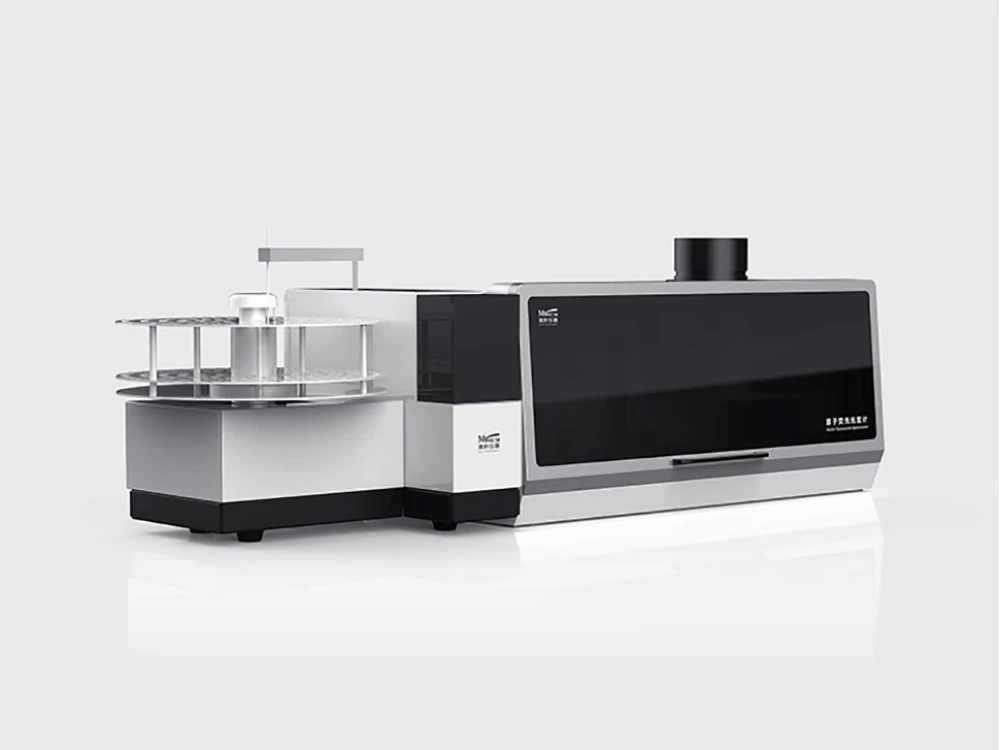
The AFS-680 Atomic Fluorescence Spectrometer from Shanghai Macylab Instruments Co., Ltd. is a sophisticated analytical instrument designed for the accurate determination of hydride-forming elements in complex sample matrices. The instrument supports simultaneous dual-channel measurement of two elements, making it suitable for trace analysis of arsenic, mercury, selenium, tin, lead, bismuth, antimony, tellurium, germanium, cadmium, zinc, and gold—covering 12 elements critical for food safety testing.
Key Instrument Features
The AFS-680 employs coding technology for hollow cathode lamps, allowing automatic lamp identification and real-time monitoring of lamp status and service life—eliminating manual setup errors and ensuring consistent performance. The intermittent flow injection system alternates sample and blank introduction, effectively avoiding cross-contamination between samples and maintaining measurement accuracy.
The instrument integrates a multi-functional reaction module that combines hydride generation, gas-liquid separation, and waste liquid removal into a single unit. This integrated design effectively reduces bubbles generated during inorganic arsenic testing that could otherwise compromise results, simplifies the tubing configuration, reduces potential failure points, and facilitates easy installation and maintenance.
A new throttle-type gas path design enables controlled gas supply with on-demand shutoff capability, significantly reducing argon consumption and lowering operational costs. The closed quartz atomizer features an external argon-hydrogen flame observation window for real-time visual monitoring of flame conditions. The atomizer employs a dual-layer quartz tube structure where both inner and outer layers are supplied with argon—the outer layer forms a protective shield that isolates the flame from air, preventing ground-state atoms of the target elements from colliding with oxygen and nitrogen, thereby minimizing fluorescence quenching effects and improving sensitivity.
Technical Specifications
The AFS-680 delivers impressive analytical performance: detection limits for As, Se, Pb, Bi, Sb, Te, and Sn are below 0.01 μg/L, while Hg and Cd are below 0.001 μg/L; the precision (RSD) is ≤ 0.7%; and the linear range exceeds three orders of magnitude, accommodating a wide concentration range without the need for frequent sample dilution. The instrument uses a high-efficiency gusher-flow two-stage chemical gas-liquid reaction separation device, ensuring more complete chemical reactions and superior gas-liquid separation—particularly advantageous for complex samples such as rock, ore, and soil matrices encountered in agricultural testing.
Application Case — Heavy Metal Detection in Goat Milk
This case demonstrates the AFS-680’s performance in determining arsenic and mercury content in goat milk, validating the applicability of this solution in international food testing scenarios.
Sample pretreatment follows established protocols: 1.0–4.0 g (accurate to 0.001 g) of milk or dairy product is placed in a digestion vessel with glass beads, 30 mL of nitric acid, and 10 mL of sulfuric acid for milk (5 mL for dairy products). After condensing tube installation, the mixture is heated gently to complete digestion while running a blank test in parallel.
After treatment, arsenic and mercury in the sample are reduced by potassium borohydride (KBH₄) in an acidic medium to volatile hydrides and mercury vapor, which are carried by argon carrier gas into the atomizer. Under the irradiation of a dedicated hollow cathode lamp, ground-state atoms are excited to high-energy states and emit characteristic fluorescence upon deactivation. The fluorescence intensity correlates with element content.
Instrument parameters for this analysis: photomultiplier negative high voltage at 240 V; mercury hollow cathode lamp current at 30 mA; atomizer temperature at 300 °C; carrier gas flow rate at 500 mL/min; and shielding gas flow rate at 1000 mL/min.
Interference and elimination: Elements that form hydrides with potassium borohydride in acidic media can interfere with each other. Adding a thiourea + ascorbic acid solution effectively eliminates these mutual interferences. Transition metal elements such as copper above certain concentrations can also interfere, but the thiourea + ascorbic acid solution eliminates most of these effects. The dual-layer quartz atomizer further minimizes physical interference by providing a protective argon shield.
The standard curve was established with a correlation coefficient (r) of 0.9996, confirming excellent linearity. The instrument detection limit was determined as 0.0076 μg/L, with a method detection limit of 0.012 μg/L. Recovery testing using spiked samples yielded a recovery rate of 106% , well within the acceptable range for food analysis (typically 80–120%), confirming the accuracy and reliability of this method for goat milk analysis.
Conclusion: Advancing Food Safety with Robust Heavy Metal Detection Technology
The determination of heavy metals in food is a key component of food safety testing programs. AAS and AFS complement each other in food analysis. AAS is used for non-hydride-forming metals (Pb, Cd, Cu, and Zn), while AFS is used for hydride-forming elements (As, Hg, Se, and Sb).
The AFS-680 offers reliable, sensitive, and efficient heavy metal analysis for food safety labs. Its performance characteristics for goat milk—linearity, limit of detection, and recovery—fall within the acceptance criteria for routine quality control and compliance testing. As food safety standards evolve, reliable instrumentation is necessary for laboratories committed to public health protection. If you are interested in the AFS-680, please feel free to contact us for more information and a quote.



























Sign in to leave a comment.