
The successful execution of HEDIS Audit depends on strict adherence to standards set by NCQA for providing high-quality healthcare services. The increasing importance of accurate reporting along with transparency in health care requires payers and providers to start their preparation in advance for industry-specified data compliance. The blog delivers a strategic plan for audit preparation alongside NCQA standard upholding procedures.
What Is a HEDIS Audit?
Health plans execute HEDIS Audits as thorough assessments to confirm the precision of Healthcare Effectiveness Data and Information Set (HEDIS) submission records. Health plans perform these audits to prove the reliability of Quality performance data they send to NCQA. The auditing procedure helps health plans generate reliable information regarding healthcare results across regions of preventive care and chronic disease treatment as well as behavioral health services.
Why NCQA Guidelines Matter
The NCQA develops and upholds the institutional regulations which control HEDIS Audit administration. NCQA guidelines specify every step of data collection and management and reporting procedures. Meeting NCQA regulations creates trust relationships with both oversight bodies and program participants together with health service users.
Organizations which violate NCQA guidelines risk financial consequences combined with audit failures in addition to detrimental impacts on their accreditation standing. Audits function as reputation management tools because they deliver more benefits than regulatory compliance alone.
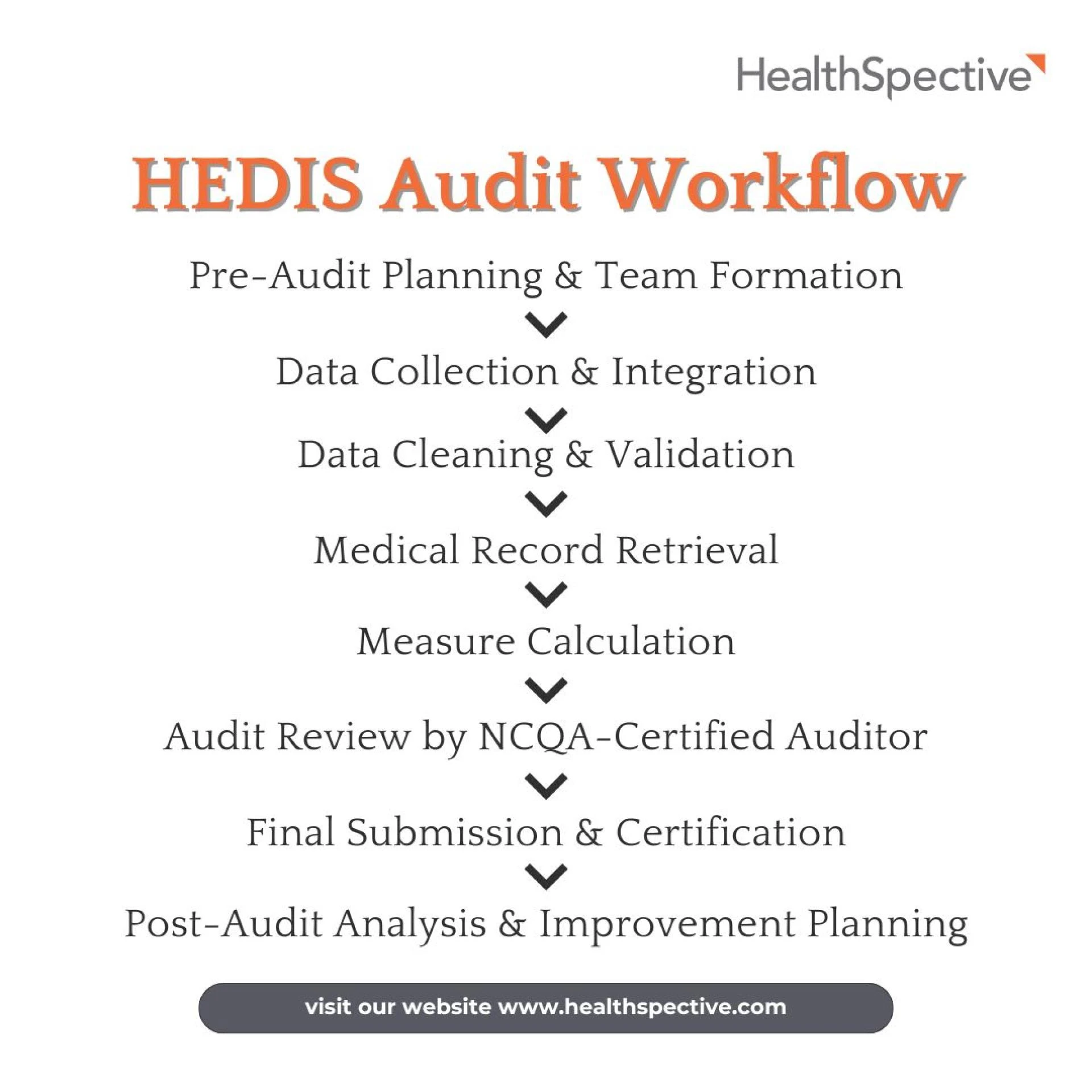
Key Elements of HEDIS Audit Readiness
Your organization requires these steps to prepare itself:
1. Familiarize yourself with the guidelines that NCQA HEDIS Compliance Audit™ provides
Study the National Committee for Quality Assurance (NCQA) technical specifications as well as audit requirements that apply to the present year. Such documents contain complete specifications regarding measurement procedures and sampling protocols as well as documentation requirements.
2. Strengthen Your Data Management Systems
The organization should build data management systems that utilize central security features to maintain consistent data extraction with reporting outputs. Healthcare organizations need data warehouse systems which should integrate with EHR databases. Well-structured infrastructure systems provide improved capabilities to fulfill HEDIS data submission requirements and compliance standards.
3. Internal audits should take place prior to the scheduled official examination.
Running internal mock audits stands as a highly successful method to get ready for a HEDIS Audit. By conducting mock audits your team can detect both documentation deficiencies alongside data irregularities which allows them to fix them before the actual audit occurs.
4. Ensure Staff Are Properly Trained
Staff members involved in coding and Healthcare professionals must demonstrate thorough knowledge of HEDIS reporting standards together with NCQA requirements. The staff needs updated training along with information about new reporting measures that get added to protocols.
Importance of Accurate HEDIS Reporting
The failure to report HEDIS metrics properly results in audit failure which leads to poor star ratings and loss of accreditation. Accurate data collection at the appropriate time proves essential to show the actual quality level of care delivered.
HEDIS data reporting demands accurate and complete submissions which must also be ready for audits because incorrect submissions could affect both reimbursement rates and public reporting.
Tools and Technologies That Help
- HEDIS software solutions that automate measure calculations.
- Data validation tools that flag discrepancies before submission.
- Audit-ready dashboards for real-time monitoring of quality metrics.
These tools not only save time but also reduce the risk of human error—key in a successful HEDIS Audit.
Final Thoughts
A successful HEDIS audit initiation demands strategic planning as well as team alignment together with strong data systems. NCQA guidelines provide your organization with the knowledge to approach audits confidently because they ensure excellent patient care delivery. The combination between consistent training sessions and accurate data collection and early internal audits will help you achieve this goal.
You should begin preparing for the upcoming audit cycle at this moment. The commitment to audit readiness continues throughout the entire year as an ongoing dedication to transparent quality outcomes.





















Sign in to leave a comment.