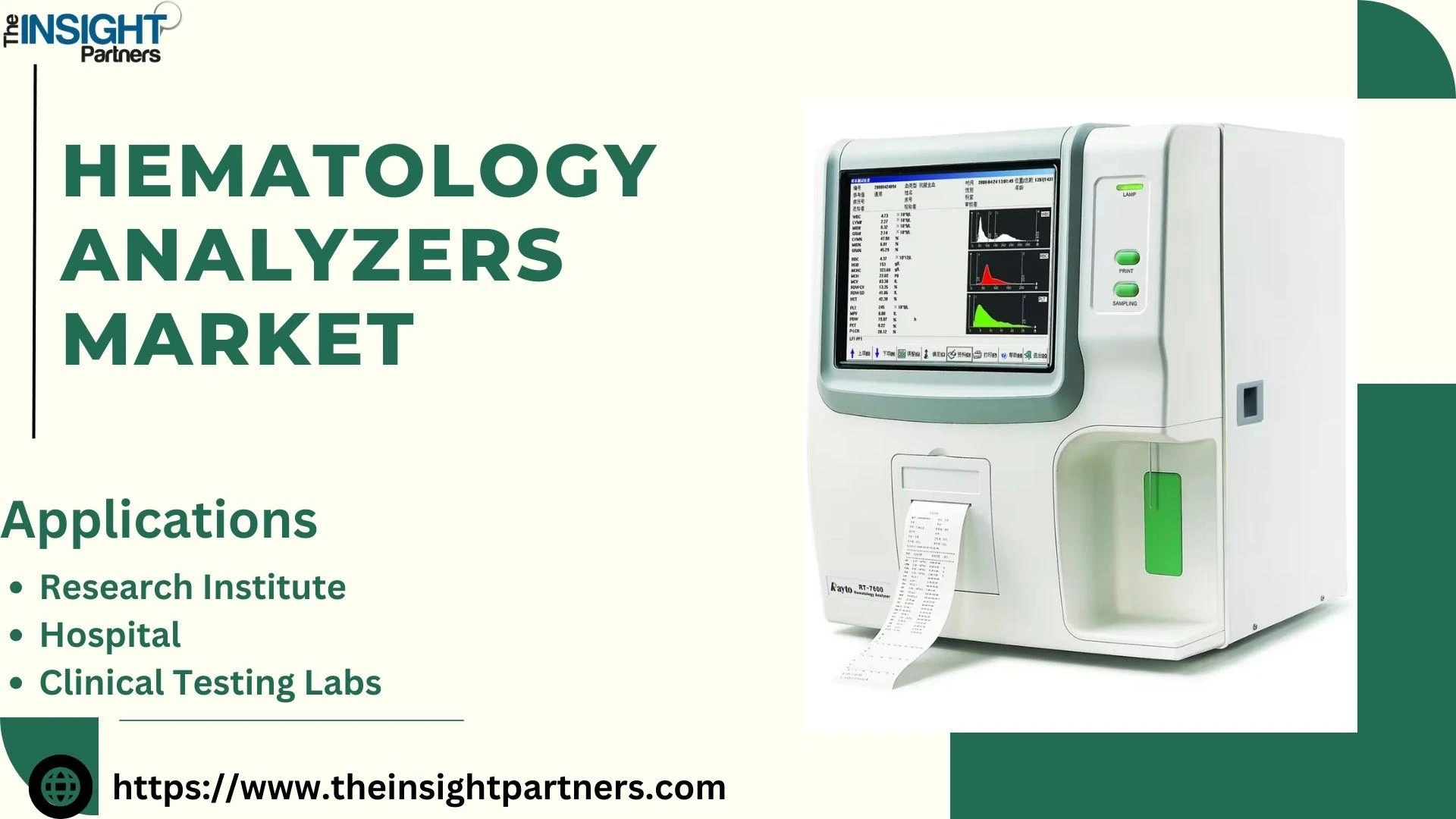
The Hematology Analyzer market is undergoing tremendous development as healthcare organizations more and more turn to automated instruments for the analysis of blood. The analyzers are used in the diagnosis and monitoring of conditions like anemia, infection, and blood diseases by measuring blood components accurately. As hematological diseases increase and the demand for accurate diagnostic equipment grows, the market for hematology analyzers keeps growing. This blog discusses major market trends, challenges, and the future of the hematology analyzer market.
Major Market Trends
1. Growing Use of Automated Hematology Analyzers
Automation is transforming laboratory diagnostics, and hematology analyzers are no different. Automated systems offer quick and highly precise results, minimizing manual errors and enhancing workflow efficiency. Laboratories and hospitals are increasingly adopting fully automated analyzers to address the increasing demand for high-throughput blood analysis.
2. Convergence of AI and Data Analytics
Artificial intelligence (AI) and data analytics are revolutionizing hematology analyzers by increasing diagnostic precision and predictive power. AI-based hematology analyzers help identify irregularities in blood samples, allowing pathologists to make better decisions. The incorporation of intelligent technology is likely to propel the industry further.
3. Increasing Demand for Point-of-Care Testing (POCT)
Demand for point-of-care hematology analyzers is increasing as healthcare professionals look for on-site, quick blood testing systems. POCT devices are most useful in emergency departments, rural healthcare facilities, and outpatient clinics where on-site blood analysis is needed for rapid diagnosis and decision-making.
4. Improvements in Multiparameter Testing
Present hematology analyzers are equipped with sophisticated features, which enable analysis of various blood parameters simultaneously. These analyzers give comprehensive information about red cells, white cells, and platelets, and improve the general efficiency of hematology testing along with early diagnosis of diseases.
Market Segmentation
By Type
· 3-and5-part Hematology Analyzers
· Point-of-Care
· Fully Automated
By Applications
· Research Institute
· Hospital
· Clinical Testing Labs
Key Players
· Abbott Laboratories
· Beckman Coulter
· Bio-Rad Laboratories
· Boule Diagnostics AB
· HORIBA
· Mindray Medical International Limited
· Nihon Kohden Corporation
· Roche Diagnostics
· Siemens AG
Geography
· North America
· Europe
· Asia-Pacific
· South and Central America
· Middle East and Africa
Challenges of the Hematology Analyzer Market
1. Steep Price Tag of Sophisticated Hematology Analyzers
Although automation and integration of AI improve the efficiency of hematology analyzers, the expense of such sophisticated instruments is a burden for small labs and medical centers. Budget considerations might restrict the use of premium analyzers, particularly in emerging economies.
2. Regulatory Compliance and Quality Standards
Hematology analyzers are subject to stringent regulatory controls to guarantee precision and patient safety. Conformity to various international and regional standards may be complicated and time-consuming, which may slow product introduction and market growth for manufacturers.
3. Requirement for Experienced Technicians
Even with automation, hematology analyzers need skilled professionals to run, read results, and maintain. A lack of qualified laboratory technicians and pathologists can affect the effective utilization of these analyzers, especially in rural or underserved regions.
4. Risk of Data Security Breaches
As digital connectivity becomes more and more integrated in hematology analyzers, the issues of data security and patient privacy are emerging. It is essential for healthcare organizations implementing digital hematology solutions to ensure stringent cybersecurity protocols for safeguarding patient data.
Future Outlook
The future of the Hematology Analyzer market is bright, with ongoing developments in automation, AI incorporation, and POCT technologies. The manufacturers are likely to concentrate on creating cost-efficient and easy-to-use analyzers in order to reach a wider set of healthcare facilities.
Personalized medicine and precision diagnostics are also expected to propel innovation in hematology analyzers, supporting more precise and effective treatment regimes. Furthermore, increased focus on remote diagnostics and telemedicine has the potential to increase the utility of hematology analyzers in home healthcare facilities.
Partnerships among medical device manufacturers, research organizations, and healthcare delivery organizations will play a critical role in advancing technologies and increasing availability of high-quality diagnostic solutions to all parts of the world.
Conclusion
The Hematology Analyzer market is changing at a fast pace with the driving force of technological advancements, rising automation, and growing demand for efficient and precise blood analysis. Though issues like high costs, regulatory issues, and the requirement for skilled professionals remain, continuous research and development in AI and digital healthcare are likely to drive market growth. As the healthcare systems of the globe continue to evolve, hematology analyzers will continue to be a staple of diagnostic medicine, enhancing patient care and accelerating laboratory processes.
About Us:
The Insight Partners is a one-stop industry research provider of actionable intelligence. We help our clients in getting solutions to their research requirements through our syndicated and consulting research services. We specialize in industries such as Semiconductor and Electronics, Aerospace and Defense, Automotive and Transportation, Biotechnology, Healthcare IT, Manufacturing and Construction, Medical Devices, Technology, Media and Telecommunications, Chemicals and Materials.






















Sign in to leave a comment.