
High performance polyamides (HPAs) are rapidly emerging as a cornerstone in the field of advanced materials. Known for their exceptional mechanical properties, thermal stability, and chemical resistance, these materials are finding applications across various high-tech industries. As we look to the future, the role of HPAs in driving innovation and sustainability in material science becomes increasingly evident.
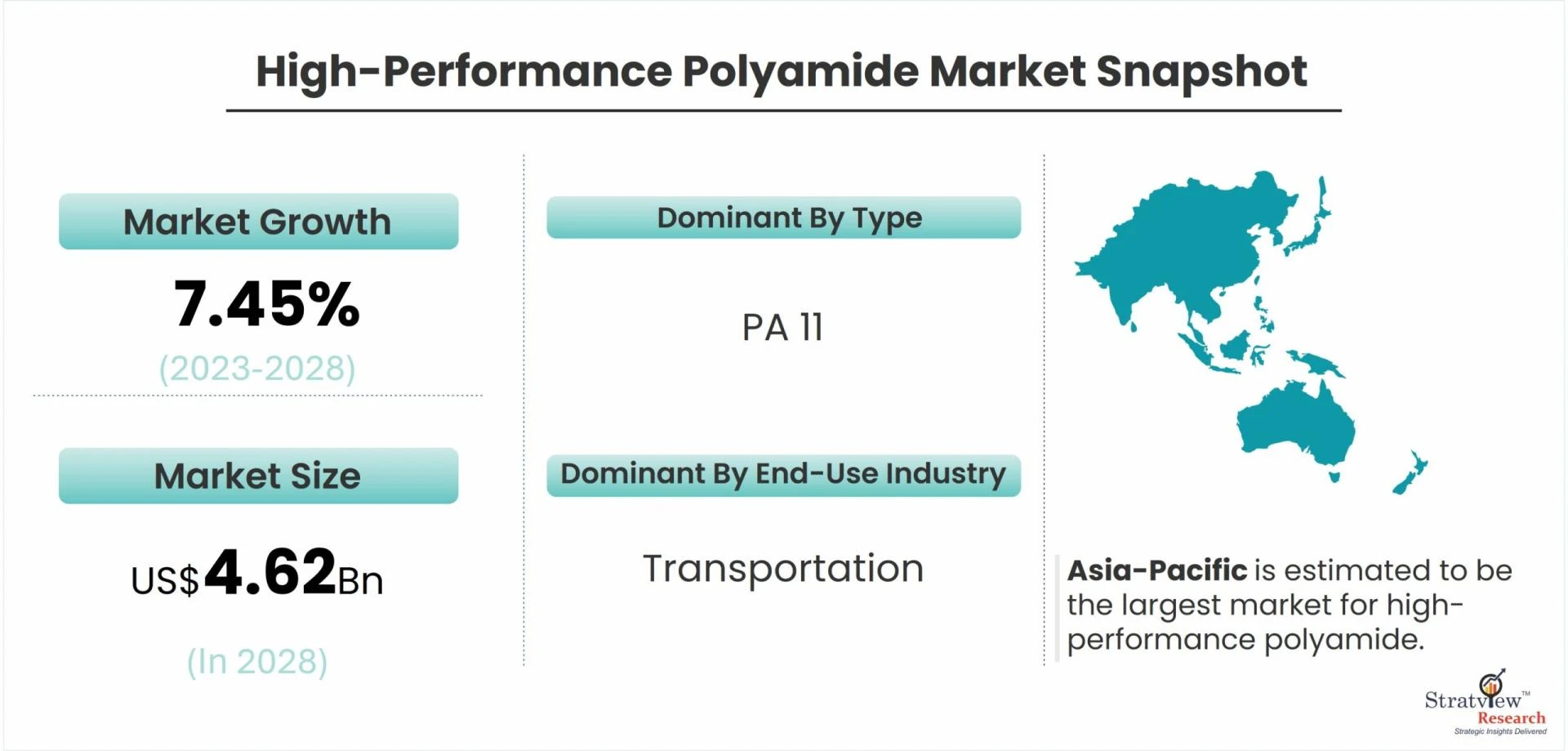
According to Stratview Research, the high-performance polyamide market was estimated at USD 3 billion in 2022 and is likely to grow at a CAGR of 7.45% during 2023-2028 to reach USD 4.62 billion in 2028.
Superior Mechanical Properties
One of the standout features of high performance polyamides is their superior mechanical strength. These materials offer remarkable tensile strength, impact resistance, and durability, making them ideal for demanding applications. Whether in automotive components, aerospace engineering, or industrial machinery, HPAs provide the robustness needed to withstand rigorous conditions. Their ability to maintain structural integrity under stress is unparalleled, positioning them as a preferred choice for engineers and designers seeking reliable performance.
Thermal Stability and Chemical Resistance
High performance polyamides exhibit excellent thermal stability, capable of withstanding high temperatures without significant degradation. This property is particularly valuable in the automotive and aerospace sectors, where materials are exposed to extreme heat. Additionally, HPAs are resistant to a wide range of chemicals, including oils, solvents, and fuels. This chemical resistance extends their usability to industries such as electronics and healthcare, where materials must endure harsh environments without compromising functionality.
Innovations and Technological Advancements
The ongoing research and development in the field of high performance polyamides are paving the way for remarkable innovations. Advanced manufacturing techniques, such as 3D printing and nanotechnology, are being integrated with HPAs to create customized solutions with enhanced properties. For example, the incorporation of nanofillers into polyamide matrices can significantly improve their mechanical and thermal characteristics, leading to the development of next-generation materials with superior performance metrics.
Sustainability and Environmental Impact
As industries strive towards sustainability, high performance polyamides are gaining attention for their potential to reduce environmental impact. Many HPAs are derived from renewable resources and are recyclable, aligning with the global push towards eco-friendly materials. Moreover, their durability and longevity reduce the need for frequent replacements, leading to less material waste over time. Companies that prioritize sustainability are increasingly adopting HPAs to meet both performance and environmental goals.
Diverse Applications Across Industries
The versatility of high performance polyamides is reflected in their wide range of applications. In the automotive industry, HPAs are used to manufacture lightweight yet strong components, contributing to improved fuel efficiency and reduced emissions. In the electronics sector, these materials are essential for producing durable and heat-resistant parts, such as connectors and housings. The healthcare industry benefits from HPAs in the form of biocompatible and sterilizable medical devices. The construction industry also relies on HPAs for producing robust and weather-resistant materials.
Market Growth and Future Prospects
The global market for high performance polyamides is poised for significant growth. Factors such as increasing demand for lightweight materials, advancements in manufacturing technologies, and the rise of electric vehicles are driving this expansion. Emerging economies in Asia, particularly China and India, are expected to be major contributors to market growth due to their booming automotive and electronics sectors. As industries continue to evolve, the demand for materials that combine high performance with sustainability will only increase, solidifying the future of HPAs in advanced material science.
Conclusion
High performance polyamides represent the future of advanced materials, offering a unique combination of mechanical strength, thermal stability, and chemical resistance. As technological advancements and sustainability considerations shape the material science landscape, HPAs are set to play a pivotal role. With their diverse applications and growing market potential, high performance polyamides are not just materials of the future—they are materials that are redefining the possibilities of today.


























Sign in to leave a comment.