

High-Speed Rotary Indexer: A Simple Guide to How It Works and Why It Matters
Introduction
Some production lines don't just need accuracy — they need speed, and lots of it. That's exactly where a high-speed rotary indexer earns its place.
Think about a bottling plant filling hundreds of containers a minute, or an electronics line assembling tiny components at breakneck pace. Behind that speed is usually a rotary indexer built specifically to handle rapid, repeated motion without losing precision.
This guide explains what a high-speed rotary indexer is, how it works, and what to consider before choosing one for your production line. We'll keep it simple and practical, without drowning you in technical jargon.
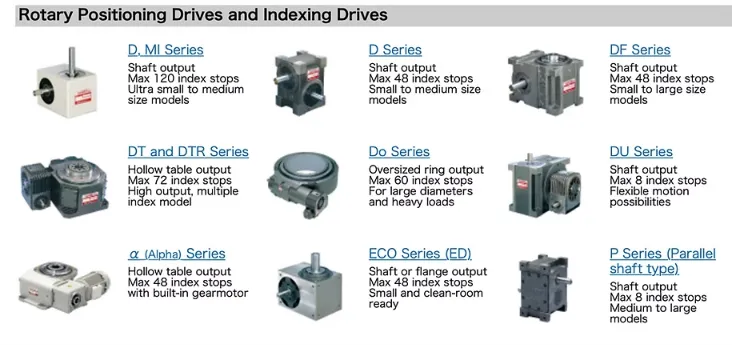
What is a High-Speed Rotary Indexer?
A high-speed rotary indexer is a mechanical device engineered to move a table or shaft through fast, repeated indexing cycles while still maintaining precise, repeatable positioning.
Unlike standard indexers built for moderate speeds, this version uses reinforced components, optimized cam profiles, and often lighter materials to reduce inertia. That combination lets it index quickly without sacrificing accuracy or stability.
Direct answer: A high-speed rotary indexer is a mechanical positioning device designed to perform rapid, repeatable index-and-dwell cycles at high cycle rates, commonly used in packaging, assembly, and electronics manufacturing where speed and precision both matter.
You'll typically find these indexers in:
- High-volume bottling and capping lines
- Electronics and semiconductor assembly
- Automated pick-and-place systems
- Cosmetic and pharmaceutical packaging
- Rapid inspection and sorting stations
Wherever a production line needs to hit high output numbers without sacrificing quality, a high-speed rotary indexer is usually part of the setup.
Benefits of a High-Speed Rotary Indexer
Why do manufacturers specifically seek out high-speed models instead of standard indexers? Here's what makes the difference.
1. Higher production throughput Faster cycle times mean more parts processed per minute, which directly boosts overall output without adding extra stations.
2. Maintained positioning accuracy at speed Despite the faster motion, precision-engineered cam profiles keep each index step landing exactly where it should.
3. Reduced vibration through optimized design Advanced cam curves and balanced components minimize shock and vibration, even during rapid acceleration and deceleration.
4. Compact footprint for high output Because these indexers pack more cycles into less time, manufacturers often need fewer stations to hit the same production target.
5. Built for continuous demanding use High-speed indexers are typically constructed with reinforced bearings and hardened materials to handle the extra mechanical stress of rapid cycling.
| Benefit | Real-World Impact |
|---|---|
| Higher throughput | More output without added stations |
| Accuracy at speed | Consistent quality, fewer defects |
| Reduced vibration | Less wear, smoother operation |
| Compact footprint | Space-efficient production layouts |
| Reinforced build | Reliable performance under heavy cycling |
How Does a High-Speed Rotary Indexer Work?
Here's the process broken down into simple steps.
Step 1 — Continuous input rotation A motor drives the input shaft at a constant, often elevated, rotational speed compared to standard indexers.
Step 2 — The cam guides rapid motion A specially profiled cam, engineered for high-speed cycling, engages with rollers on the output turret, guiding them through a precisely calculated path.
Step 3 — The output table indexes quickly This motion rotates the output table by a fixed angle in a fraction of the time a standard indexer would take, while still landing precisely on target.
Step 4 — A brief but firm dwell occurs Once the index completes, the table locks into position for a short dwell period, just long enough for the required task to happen.
Step 5 — The rapid cycle repeats This fast index-and-dwell pattern repeats continuously, allowing the machine to hit high cycle counts per minute.
Voice search answer: A high-speed rotary indexer works by using an optimized cam profile to rapidly move an output table into position, then briefly lock it in place before repeating the cycle at a fast, consistent rate.
A helpful way to picture it? Think of a fast-spinning carousel that still stops exactly where it needs to, every single time, even while moving much quicker than a regular one.
Why Choose Deceler?
Speed alone isn't enough — a high-speed indexer also needs to hold accuracy and survive the mechanical stress of constant rapid cycling.
Deceler engineers its high-speed rotary indexers with a few key priorities:
- Optimized cam profiles designed specifically for rapid, low-vibration cycling
- Reinforced components built to withstand continuous high-speed operation
- Custom speed and station configurations tailored to your production targets
- Ongoing technical support to help fine-tune performance as your line scales
The goal is a system that keeps up with your production demands without compromising precision.
Common Mistakes to Avoid
Even experienced teams run into avoidable problems when using high-speed rotary indexers. Watch out for these:
- Ignoring inertia calculations — Failing to account for load inertia at high speeds leads to excessive wear and inaccurate positioning.
- Skipping vibration analysis — Not testing for resonance or vibration issues can cause premature component failure.
- Inadequate lubrication frequency — High-speed operation demands more frequent lubrication than standard indexers require.
- Underestimating load requirements — Choosing an indexer that isn't rated for your actual load and speed combination shortens its lifespan significantly.
- Poor alignment during installation — Even small misalignments become bigger problems at high cycle rates, causing noise and inaccuracy.
Avoiding these mistakes early prevents costly downtime and unnecessary part replacements later.
Frequently Asked Questions
1. What is a high-speed rotary indexer used for?
It's used in high-volume production environments like bottling, electronics assembly, and packaging, where machines need to position parts quickly and accurately at fast cycle rates.
2. How fast can a high-speed rotary indexer cycle?
Cycle speeds vary by design and application, but high-speed models are specifically engineered to perform significantly more index cycles per minute than standard indexers.
3. Does higher speed reduce positioning accuracy?
Not if the indexer is properly engineered. Optimized cam profiles and reinforced components allow high-speed indexers to maintain precise, repeatable accuracy.
4. What's the difference between a standard and a high-speed rotary indexer?
A high-speed rotary indexer uses reinforced components and optimized cam designs to handle faster cycling, while standard indexers are built for moderate-speed applications.
5. How long does a high-speed rotary indexer last?
With proper lubrication and load management, a well-built high-speed indexer can operate reliably for years, even under continuous demanding production cycles.
6. Why is vibration a concern with high-speed indexers?
At higher speeds, vibration can cause wear, noise, and reduced accuracy over time, which is why cam profile design and component balancing matter so much.
7. How do I choose the right high-speed rotary indexer?
Consider your required cycle speed, load capacity, index angle, and available space, then match these to the manufacturer's performance specifications.
Conclusion
A high-speed rotary indexer gives manufacturers the ability to move fast without sacrificing the accuracy their production line depends on.
It combines rapid cycling with precise, repeatable positioning, making it essential for industries where output speed directly affects profitability. Whether you're scaling up a packaging line or upgrading an electronics assembly process, understanding how a high-speed rotary indexer works helps you make a confident, informed choice.
If you're planning a high-output production upgrade, working with a team like Deceler that understands both speed and precision can make that transition much smoother.






























Sign in to leave a comment.