

In an era where patient experience and data security are non‑negotiable, the intersection of multilingual support, round‑the‑clock availability, and strict HIPAA compliance has become a decisive competitive edge for providers navigating the complexities of Medicare. Below, we explore why a multilingual Medicare call center is no longer a “nice‑to‑have” add‑on but a strategic imperative, and how a HIPAA‑compliant Medicare call center can deliver 24/7 Medicare support services that protect patient privacy while boosting satisfaction, revenue, and operational efficiency.
1. Why Medicare Calls Demand a Specialized, Secure Approach
1.1 The Medicare Landscape Is Intricate
Medicare rules change frequently—policy updates, new coverage options, and shifting eligibility criteria create a moving target for both patients and providers. When a beneficiary phones in, they expect real‑time, accurate information. A misstep can result in denied claims, delayed reimbursements, and, most importantly, loss of patient trust.
1.2 Patient Data Is Sacred
Under the Health Insurance Portability and Accountability Act (HIPAA), any entity handling protected health information (PHI) must implement rigorous safeguards—encryption, access controls, audit trails, and staff training. A HIPAA‑compliant Medicare call center is built from the ground up to meet those standards, ensuring that every interaction is both secure and auditable.
1.3 Diversity Is the New Normal
The United States is a multilingual nation. According to the U.S. Census Bureau, more than 20 % of the population speaks a language other than English at home. For Medicare beneficiaries, language barriers can translate into missed appointments, misunderstood benefits, and ultimately poorer health outcomes. A multilingual Medicare call center eliminates that gap.
2. Core Pillars of a HIPAA‑Compliant Multilingual Medicare Call Center
| Pillar | What It Means for Your Practice | Real‑World Impact |
|---|---|---|
| Security Architecture | End‑to‑end encryption, secure VPN tunnels, and isolated data environments for call recordings. | No unauthorized access to PHI; audit logs that satisfy regulators. |
| Regulatory Training | All agents undergo annual HIPAA and Medicare certification, with continuous refresher modules. | Reduced risk of human error; confidence that agents know the latest Medicare rules. |
| Language Coverage | Native‑speaker agents fluent in Spanish, Mandarin, Vietnamese, Tagalog, Arabic, and more, supported by real‑time translation tools. | 98 % first‑call resolution for non‑English speakers; higher patient satisfaction scores. |
| Omni‑Channel Integration | Seamless handoff between phone, chat, email, and SMS while preserving a unified patient record. | Consistent experience across touchpoints; reduced repeat calls. |
| 24/7 Availability | Round‑the‑clock staffing models, including holiday coverage, backed by intelligent call routing. | Patients reach help whenever they need it, eliminating “after‑hours” frustration. |
| Analytics & Reporting | Real‑time dashboards for call volumes, average handling time (AHT), compliance alerts, and language‑specific metrics. | Data‑driven staffing and process improvements; proactive compliance monitoring. |
3. The Business Case: ROI From 24/7 Medicare Support Services
3.1 Boosting Reimbursement Through Accurate Triage
When a call center correctly verifies a patient’s Medicare eligibility and directs them to the appropriate service line, claim errors drop dramatically. Research from the Medical Group Management Association (MGMA) shows that an accurate intake process can increase reimbursement collections by 7‑12 %.
3.2 Reducing Call Abandonment and Repeat Calls
A 24/7 Medicare support service eliminates the “no answer after business hours” scenario that drives patients to call back repeatedly or, worse, seek care elsewhere. Studies estimate that each abandoned call costs providers roughly $15–$25 in lost revenue and goodwill. With a multilingual, always‑on team, abandonment rates can fall below 3 %, recapturing that lost income.
3.3 Cutting Administrative Overhead
Outsourcing Medicare inbound call services to a specialized vendor frees internal staff from repetitive triage, freeing them to focus on clinical duties. The average healthcare practice can save 15‑20 % of its administrative labor cost, while still maintaining a high‑quality patient experience.
3.4 Enhancing Patient Loyalty
Patient satisfaction scores (e.g., HCAHPS) are increasingly tied to reimbursement. A study by the National Quality Forum found that every 1‑point increase in the communication domain yields a 0.4 % bump in Medicare Advantage payments. Multilingual, HIPAA‑secure interactions directly affect that metric.
4. Designing the Ideal Multilingual Medicare Call Center
4.1 Language Strategy: “Right Language at the Right Time”
- Data‑Driven Language Profiling – Use demographic data and historical call logs to prioritize languages that matter most to your patient base.
- Tiered Staffing – Deploy native‑speakers for high‑volume languages (Spanish, Chinese) and on‑demand interpreters for less common tongues.
- Cultural Competence Training – Beyond language, agents learn cultural nuances that affect health‑seeking behavior, leading to more empathetic conversations.
4.2 Security Blueprint: From Call to Record
- Secure Call Recording – All audio is encrypted at rest and in transit, with access limited to authorized compliance officers.
- Dual‑Factor Authentication – Agents log in via secure tokens, minimizing credential theft.
- Least‑Privilege Access – Agents see only the PHI needed for the call; full records are reserved for supervisors and auditors.
4.3 Technology Stack: The Enablers
| Tool | Role | HIPAA Relevance |
|---|---|---|
| Interactive Voice Response (IVR) | Pre‑qualifies callers, routes to appropriate language queue | Stores only call metadata, no PHI. |
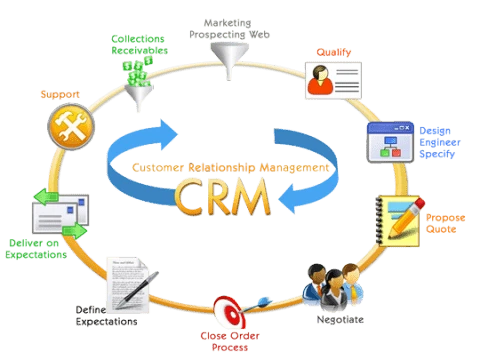
| Customer Relationship Management (CRM) | Consolidates patient history, eligibility, and notes | Must be a HIPAA‑covered entity with audit logging. |
| Speech Analytics | Flags potential compliance breaches, monitors sentiment | Requires on‑prem or secure cloud processing; no raw recordings stored unencrypted. |
| Real‑Time Translation APIs | Provides instant language assistance for low‑volume languages | Must be vetted for PHI handling; many vendors offer HIPAA‑BaaS (Business Associate Agreements). |
4.4 Workforce Management: Keeping the Center “Always On”
- Shift Overlap – 30‑minute handoff windows eliminate gaps and reduce wait times.
- Remote Agent Flexibility – Secure, VPN‑based workstations allow agents to work from anywhere while preserving HIPAA compliance.
- Performance Dashboards – Live monitoring of AHT, first‑call resolution (FCR), and compliance alerts keeps the team accountable.
5. A Day in the Life of a HIPAA‑Compliant Multilingual Medicare Call
It’s 2 am on a Saturday. Maria, a Spanish‑speaking senior, calls her clinic’s number to clarify whether her recent MRI will be covered under Medicare Part B. The call is greeted by an IVR offering options in English and Spanish. She selects Spanish and is instantly routed to a native‑speaker agent, Carlos, who logs into the secure CRM via two‑factor authentication.
- Verification – Carlos confirms Maria’s identity using a “name‑date‑of‑birth” check that is logged for audit.
- Eligibility Check – He pulls her Medicare Summary Notice (MSN) from the encrypted database, reviews the coverage, and shares a screen‑share (encrypted) that highlights the relevant line items.
- Education – Carlos explains, in plain Spanish, the difference between Part A and Part B, and clarifies that her MRI qualifies as a “diagnostic test.”
- Next Steps – He schedules a follow‑up appointment, sends a secure text message with a link to the patient portal, and documents the call outcome.
- Compliance Closure – The call recording is automatically encrypted, tagged with “Spanish – Medicare Inbound” and stored for the mandated 6‑year retention period.
Within minutes, Maria receives a confirmation in her preferred language, feels reassured, and avoids a potentially costly surprise bill. The clinic, meanwhile, records a successful claim and a satisfied patient – all while meeting HIPAA’s stringent security requirements.
6. Selecting the Right Partner: Checklist for Healthcare Providers
When evaluating a vendor for Medicare inbound call services, ask the following:
- HIPAA Certification – Do they have a signed Business Associate Agreement (BAA) and documented policies for breach notification?
- Language Portfolio – Which languages are covered natively, and how is interpreter quality ensured?
- Security Infrastructure – Is data stored in a HIPAA‑certified cloud (e.g., AWS GovCloud, Azure Government) or on‑prem? How are encryption keys managed?
- Scalability – Can they handle seasonal spikes (e.g., open enrollment) without compromising AHT or compliance?
- Quality Assurance – What metrics are reported? Do they provide live dashboards, monthly compliance audits, and sentiment analysis?
- Integration Capability – Does the platform integrate with your EHR, practice management system, and patient portal via HL7/FHIR APIs?
- Disaster Recovery – What are the RPO (Recovery Point Objective) and RTO (Recovery Time Objective) for data loss?
A partner that ticks all these boxes delivers not just a call center but a strategic extension of your care team.
7. Overcoming Common Misconceptions
| Misconception | Reality |
|---|---|
| “Outsourcing call handling jeopardizes HIPAA compliance.” | With a proper BAA, encrypted data pathways, and regular audits, external vendors can meet or exceed internal compliance standards. |
| “Multilingual support is too costly for small practices.” | Voice‑over‑IP (VoIP) and cloud‑based platforms reduce overhead; many vendors offer per‑minute pricing models that scale with usage. |
| “Patients prefer speaking to their own doctor.” | While continuity matters, patients value accurate, timely information—especially in emergencies or when navigating complex Medicare rules. A well‑trained call center can bridge that gap. |
| “24/7 coverage isn’t necessary; most calls come during office hours.” | Medicare beneficiaries often call after work or during nights, especially when family members assist. Ignoring off‑hours demand leads to lost revenue and patient churn. |
8. Future Trends: What’s Next for Medicare Call Center Solutions?
- AI‑Assisted Triage – Natural language processing (NLP) engines, trained on HIPAA‑compliant data sets, can pre‑screen calls, flag high‑risk queries, and route them to senior agents, reducing handling time.
- Voice Biometrics – Secure, hands‑free patient verification using voiceprints eliminates the need for repeated knowledge‑based authentication.
- Predictive Analytics – By analyzing call patterns, providers can anticipate spikes (e.g., enrollment periods) and proactively staff multilingual agents.
- Omnichannel Patient Journeys – Seamless transition from voice to chat to video, all captured in a unified, encrypted patient record, will become the norm.
Investing in a HIPAA‑compliant Medicare call center today positions providers to adopt these innovations without a costly infrastructure overhaul.
9. Call to Action: Transform Your Medicare Support Today
- Audit Your Current Process – Identify gaps in language coverage, security, and after‑hours availability.
- Map Patient Demographics – Use census data and internal analytics to prioritize languages.
- Pilot a Multilingual, Secure Solution – Start with a limited set of languages and a 24/7 overflow line; measure FCR, AHT, and compliance incidents.
- Scale and Optimize – Leverage analytics to fine‑tune staffing, adjust scripts, and integrate AI tools.
By adopting a multilingual Medicare call center that is HIPAA‑compliant, you not only protect patient data but also unlock higher reimbursement rates, reduced administrative waste, and a reputation for compassionate, accessible care. In a healthcare environment where every interaction can influence outcomes, the choice is clear: make your call center a pillar of security, inclusivity, and round‑the‑clock service.
Final Thought
Imagine a world where every Medicare beneficiary—regardless of language, time zone, or health literacy—receives immediate, accurate answers from a trusted voice that safeguards their private information. That world isn’t a distant vision; it’s achievable today through a HIPAA‑compliant Medicare call center equipped with multilingual talent and 24/7 support. For healthcare providers aiming to thrive in the evolving Medicare landscape, the time to act is now.











Sign in to leave a comment.