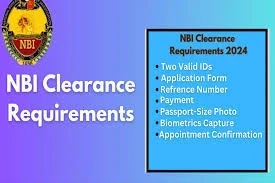
If you’re applying for an NBI Clearance in the Philippines and suddenly see the words “HIT STATUS”, don’t panic. This is one of the most misunderstood parts of the NBI Clearance process. Many applicants assume it automatically means they have a criminal record—but that’s usually not true.
In this in-depth guide, you’ll learn exactly what Hit Status in NBI Clearance means, why it happens, how long it takes to clear, and what steps you need to follow to resolve it smoothly.
What Is an NBI Clearance?
An NBI Clearance is an official document issued by the National Bureau of Investigation certifying that a person has no criminal record (or listing records if any exist). It is widely required in the Philippines for:
- Local and overseas employment
- Government transactions
- Visa and immigration applications
- Business permits
- Professional licensing
During the application process, the system checks your personal details against the NBI national database.
What Does “Hit Status” Mean in NBI Clearance?
Hit Status means that your name or personal details matched an existing record in the NBI database. This does not automatically mean you have a criminal case.
It simply indicates that:
- Someone with the same or similar name exists in the database, or
- Your personal information needs manual verification
Because of this, the NBI must conduct further checking before releasing your clearance.
Common Reasons Why You Get a Hit Status
Image suggestion: Flowchart showing name-matching process
Here are the most common reasons applicants receive a Hit Status:
1. Similar or Common Name
If your name is common (e.g., Juan Dela Cruz, Maria Santos), it may match someone else with a criminal or legal record.
2. Same Date of Birth
Even if the name is slightly different, matching birth dates can trigger a hit.
3. Existing Criminal or Court Record
If you actually have:
- A pending case
- A past criminal record
- A dismissed case still under verification
Your application will require deeper review.
4. Clerical or Encoding Errors
Mistakes in spelling, middle names, or suffixes (Jr., Sr., III) can cause a false match.
5. Previous NBI Records
If you were previously involved in a legal case—even if already resolved—it may still appear temporarily in the system.
Is Hit Status a Bad Thing?
No.
Hit Status is very common and happens to thousands of applicants daily. Most of them eventually receive their NBI Clearance without any issues.
In fact, many applicants with Hit Status:
- Have no criminal history
- Are cleared after simple verification
- Receive their clearance within a few days
How Long Does It Take to Clear a Hit Status?
Image suggestion: Calendar with highlighted dates
The processing time depends on the reason for the hit:
- 3–5 working days – For common-name matches
- 5–10 working days – For records requiring deeper review
- More than 10 days – If court verification is needed
The NBI will inform you of your release date after verification.
Step-by-Step: What to Do If You Have a Hit Status
1. Wait for Manual Verification
After your biometrics and photo capture, the NBI automatically flags your record for review.
2. Keep Your Reference Number
You’ll need it to track your application and claim your clearance later.
3. Return on the Given Release Date
Go back to the same NBI branch or check online (if available) on your scheduled date.
4. Bring Valid IDs
Carry the same IDs you used during application in case re-verification is needed.
5. Attend Interview (If Required)
In rare cases, an NBI officer may ask clarifying questions to confirm your identity.
Can You Speed Up the Hit Status Process?
Unfortunately, no shortcuts exist. However, you can avoid delays by:
- Ensuring correct spelling of your full name
- Using your complete middle name
- Bringing multiple valid IDs
- Avoiding last-minute applications (especially for overseas jobs)
What If You Have an Actual Criminal Record?
If you truly have a case on file, the NBI may:
- Require court clearance
- Ask for case disposition documents
- Delay or deny clearance until the case is resolved
Once cleared legally, you may reapply for NBI Clearance.
Hit Status vs No Hit Status: Key Differences
| Feature | Hit Status | No Hit Status |
|---|---|---|
| Release Time | Delayed | Same day |
| Verification | Manual review | Automatic |
| Criminal Record | Not always | None |
| Stress Level | 😅 High | 😌 Low |
Frequently Asked Questions About Hit Status
Can I still get my NBI Clearance with Hit Status?
Yes. Most applicants with Hit Status still receive their clearance.
Does Hit Status mean I have a criminal case?
No. It only means your details matched a record.
Can I apply again to remove Hit Status?
Reapplying won’t remove it if the system still detects a match.
Is Hit Status permanent?
No. Once verified and cleared, future applications may result in No Hit.
Tips to Avoid Hit Status in the Future
Image suggestion: Checklist graphic
- Use your complete legal name
- Avoid nicknames or abbreviations
- Ensure your birth date is accurate
- Maintain consistent records across government IDs
- Keep copies of old NBI Clearances
Final Thoughts: Don’t Panic Over Hit Status
Seeing Hit Status in NBI Clearance can be stressful, especially if you need the document urgently. But in most cases, it’s simply part of the verification process—not an accusation.
Stay calm, follow the instructions, and return on your scheduled date. Chances are, you’ll receive your NBI Clearance without any issues.












Sign in to leave a comment.