
One of the most confusing parts of India's reservation system — and a frequent point of debate in the Reservation Hatao Andolan conversation — is that reservation isn't a single, simple percentage. It actually operates on two different axes at once: vertical and horizontal. Understanding the difference explains why total reservation percentages in some states look mathematically higher than they first appear, and why certain candidates end up counted in more than one category.
Vertical Reservation: The Caste-Based Axis
Vertical reservation is what most people mean when they talk about "reservation" — quotas allocated based on caste or social category: SC, ST, OBC, and now EWS. These categories run "vertically" because each one is a separate column of seats or posts, and a candidate qualifies for one specific vertical category based on their social/economic classification.
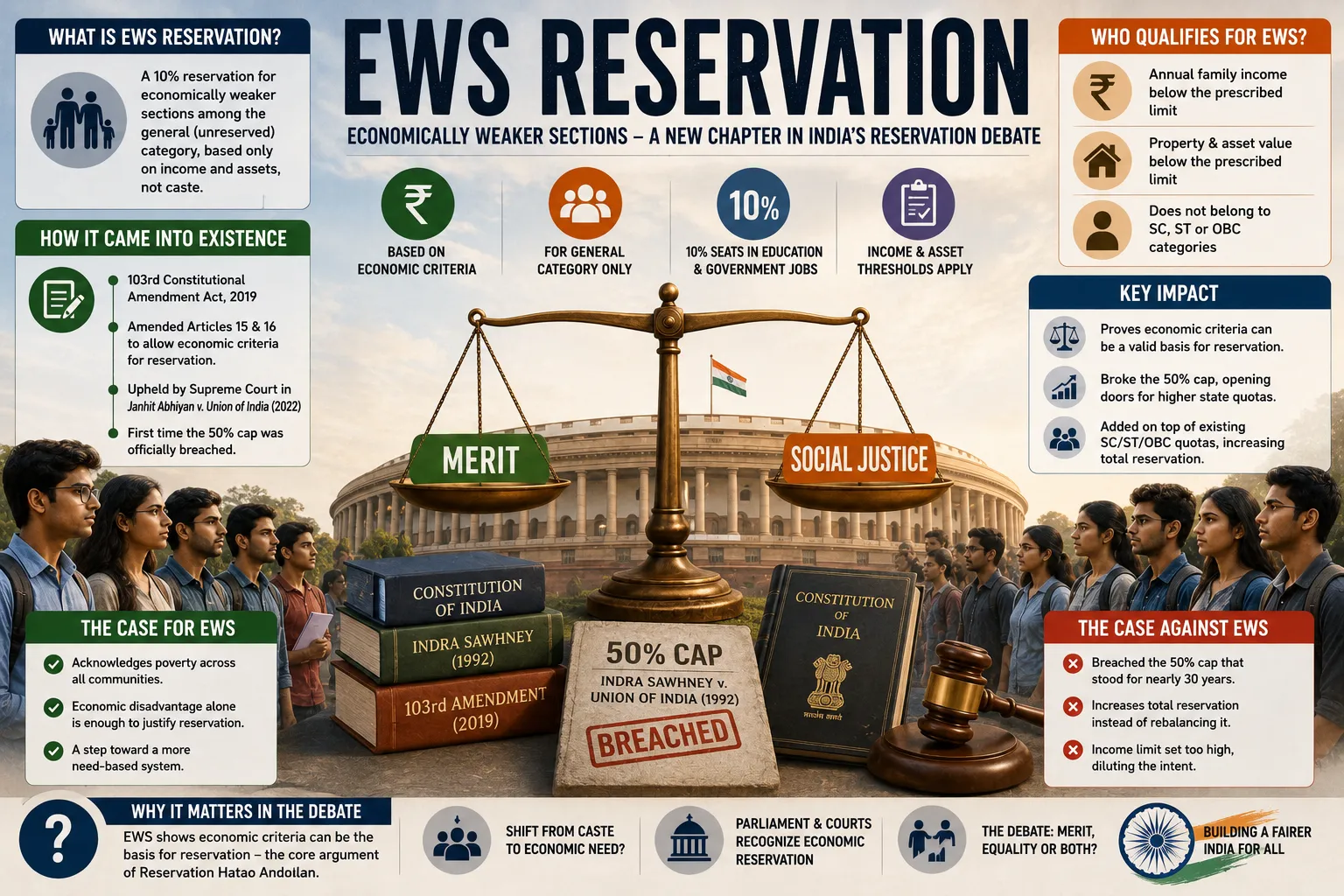
This is the reservation type covered in most of the debate around Reservation Hatao Andolan — the central 59.5% figure (15% SC + 7.5% ST + 27% OBC + 10% EWS) is a vertical reservation total.
Horizontal Reservation: The Cross-Cutting Axis
Horizontal reservation, by contrast, applies across all vertical categories rather than as a separate column. It reserves seats for groups like women, persons with disabilities, ex-servicemen, or (in some states) domicile-based categories — and crucially, these seats are carved out within each vertical category, not on top of it.
For example, if a state reserves 5% of seats horizontally for persons with disabilities, that 5% isn't a separate quota sitting outside SC/ST/OBC/General — it's distributed proportionally within each of those columns. A disabled candidate who is also SC would be counted against both the SC vertical quota and the disability horizontal quota simultaneously.
Why This Distinction Matters for the Reservation Debate
This structure explains a few things that often confuse people following the reservation percentage numbers:
- Total reservation percentages can look higher than they function in practice, because horizontal categories are folded into vertical ones rather than added as a separate block — though states sometimes calculate and present these numbers differently, which is part of why total percentages vary so much between official notifications and public reporting.
- A single candidate can benefit from multiple reservation types at once — for instance, an OBC candidate who is also a woman in a state with horizontal reservation for women could be evaluated against both the OBC vertical quota and the women's horizontal quota.
- Horizontal reservation has been comparatively less politically contentious than vertical, caste-based reservation, because categories like disability or ex-servicemen status tend to draw broader public support and aren't tied to the caste debate.
How Courts Have Treated the Two Differently
The Supreme Court's 50% cap from Indra Sawhney v. Union of India (1992) applies specifically to vertical reservation — it does not directly cap horizontal reservation, since horizontal categories cut across vertical ones rather than adding to them. This is one reason horizontal reservation debates (like disability quotas) have followed a different legal path than the caste-based vertical reservation debates that dominate discussions like this one.
That said, courts have weighed in on how the two interact — for example, ruling on whether a horizontal-category candidate should be placed in the open/general column or their specific vertical column when they qualify on merit for an open seat, an issue that has come up repeatedly in service-selection litigation.
A Simplified Example
| SC | ST | OBC | General | |
|---|---|---|---|---|
| Base seats (vertical) | 15% | 7.5% | 27% | 50.5% |
| Women (horizontal, e.g. 33%) | Applied within SC | Applied within ST | Applied within OBC | Applied within General |
| PwD (horizontal, e.g. 4%) | Applied within SC | Applied within ST | Applied within OBC | Applied within General |
A candidate is first assessed within their vertical category, and then, within that category, checked against any horizontal reservations they also qualify for.
Frequently Asked Questions
What is the main difference between horizontal and vertical reservation? Vertical reservation allocates seats based on caste/social category (SC, ST, OBC, EWS) as separate columns, while horizontal reservation reserves seats for groups like women, persons with disabilities, or ex-servicemen across all vertical categories, rather than as a separate column.
Does the 50% Supreme Court cap apply to horizontal reservation? The 50% cap from Indra Sawhney v. Union of India (1992) applies specifically to vertical, caste-based reservation; horizontal reservation operates differently since it's distributed within vertical categories rather than added on top of them.
Can a candidate benefit from both vertical and horizontal reservation at the same time? Yes — for example, a candidate who is both OBC (vertical) and a woman in a state with horizontal reservation for women (horizontal) can be evaluated against both quotas simultaneously.
Is horizontal reservation as politically controversial as vertical reservation? Generally no. Horizontal categories like disability and ex-servicemen status tend to draw broader public support, while vertical, caste-based reservation is the primary focus of movements like Reservation Hatao Andolan.
Why do some states report reservation totals differently for the same policy? Because horizontal reservation is applied within vertical categories rather than added separately, how a state chooses to present its combined percentage can vary, which is part of why total reservation figures sometimes differ between official notifications and public reporting.
This article is for informational purposes and presents a factual, balanced explainer; it does not endorse a political position. Reservation structures vary by state and are revised periodically — always verify current figures against official government notifications.





















Sign in to leave a comment.