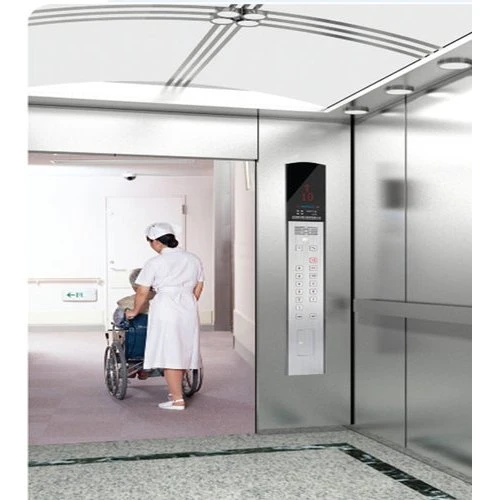
In architectural design, elevators are often treated as unavoidable but spatially rigid components. Conventional elevator shafts consume valuable square footage, interrupt spatial flow, and can compromise the aesthetic vision of a project—especially in environments demanding both form and function, like hospitals. For architects, design consultants, and developers, this presents a recurring challenge: how to integrate vertical mobility without sacrificing spatial utility or visual cohesion.
The Hospital elevator addresses this challenge through a balance of engineering precision and architectural sensitivity. More than just a vertical transportation system, it represents a smart, space-efficient, and visually harmonious solution for modern healthcare infrastructure. As hospitals evolve into high-performance spaces focused on wellness, hygiene, and adaptability, the elevator must evolve as well.
Design Integration and Architectural Compatibility
The Hospital elevator is engineered to work in tandem with contemporary design principles, supporting open-plan layouts and fluid spatial transitions. Unlike bulky conventional systems, modern hospital elevators can be customized to fit unique floor plates and architectural geometries—including curved walls and irregular corridors—without disrupting traffic flow or usable floor area.
This flexibility is essential in healthcare facilities where movement efficiency, patient comfort, and access to critical care zones are non-negotiable. The elevator’s compact machinery, minimal overhead space requirements, and shaftless or shallow-pit configurations allow for more design freedom. Additionally, materials such as antimicrobial stainless steel, tempered glass, and LED-integrated panels help the elevator blend seamlessly into interiors while maintaining infection control standards.
By accommodating these contemporary needs, the Hospital elevator becomes a functional design asset rather than a visual or spatial liability.
Space Optimization in High-Demand Environments
Hospitals often face high traffic loads, tight timelines for patient transfers, and pressure to optimize every square meter of operational space. A well-planned Hospital elevator contributes significantly to this optimization—both horizontally and vertically.
Key space-saving features include:
- Compact shaft designs: Reduces structural impact while freeing up space for other critical utilities.
- Machine-room-less (MRL) configurations: Eliminate the need for a separate machine room, increasing usable building volume.
- Flexible car dimensions: Tailored sizes accommodate stretchers, beds, and emergency staff without oversizing the shaft.
- Low overhead requirements: Facilitates installation in retrofit projects with limited ceiling heights.
- Side- or rear-opening doors: Enhances layout adaptability, especially in tight or multi-corridor junctions.
By reducing spatial consumption and maximizing circulation paths, the Hospital elevator enhances the operational footprint of healthcare facilities.
Aesthetic and Material Considerations
Traditionally, elevators in hospitals have been seen purely as utilitarian devices. Today, however, aesthetics play a growing role in creating calming, intuitive, and patient-centric environments. The Hospital elevator leverages this shift through advanced material finishes, discreet integration, and adaptable lighting.
Modern finishes such as anti-fingerprint stainless steel, laminated glass panels, and ceramic textures offer visual sophistication while standing up to heavy use. Design consultants can align elevator interiors with broader interior design schemes—from minimalist to biophilic—ensuring consistency across all patient and visitor areas.
Lighting systems also contribute significantly to the elevator's overall aesthetic and psychological impact. Soft, ambient LED lighting can reduce anxiety and improve comfort for patients during transit, especially those with limited mobility or sensory sensitivities.
Ultimately, the Hospital elevator acts as a visual extension of the architectural narrative rather than a break from it.
Innovation in Functionality and Safety
Modern Hospital elevators are engineered with safety, hygiene, and efficiency at the forefront—meeting rigorous building codes and patient care standards. From contactless controls to AI-based dispatching, these systems are not only technologically robust but designed for real-world healthcare conditions.
Notable innovations include:
- Destination control systems (DCS): Reduces wait times by grouping passengers heading to similar floors.
- Antimicrobial coatings and UV-C sanitization: Enhances hygiene in high-touch areas.
- Smooth acceleration and deceleration systems: Provides comfort and stability during patient transport.
- Energy-efficient drives and regenerative braking: Aligns with green building and LEED standards.
- Redundant power systems and fire-rated enclosures: Ensures compliance with emergency and life-safety protocols.
Such innovations make the Hospital elevator more than a conveyance device—it becomes a resilient, responsive infrastructure element integral to health-focused architectural planning.
Applications Across Healthcare and Mixed-Use Facilities
While designed primarily for medical facilities, the adaptability of the Hospital elevator extends to other complex structures such as rehabilitation centers, long-term care homes, research institutions, and mixed-use buildings combining healthcare with residential or commercial zones.
Key implementation contexts:
- Emergency care units: Fast, uninterrupted transport of critical patients between ER, ICU, and OR.
- Outpatient clinics: Efficient vertical movement for high foot traffic areas with minimal delay.
- Specialty centers: Custom cab designs accommodate MRI-safe components or bariatric patients.
- Senior living residences: Integrated with assistive features like voice commands and large-format controls.
- Medical-office hybrids: Aesthetic versatility supports branding and patient experience in public-facing areas.
This versatility reflects a broader trend in vertical transportation—where elevators must support not just logistics but also care delivery, patient psychology, and brand identity.
Conclusion: Elevating Design Possibilities in Healthcare Architecture
In today's health-conscious, design-forward built environment, the Hospital elevator redefines vertical transportation through a lens of spatial intelligence, technical excellence, and visual harmony. Its ability to integrate with complex layouts, preserve floor area, and elevate user experience positions it as an indispensable tool for forward-thinking architectural planning.
From infection-resistant materials to digitally controlled operations, the modern Hospital elevator empowers architects, developers, and consultants to meet stringent healthcare requirements without compromising design intent.










Sign in to leave a comment.