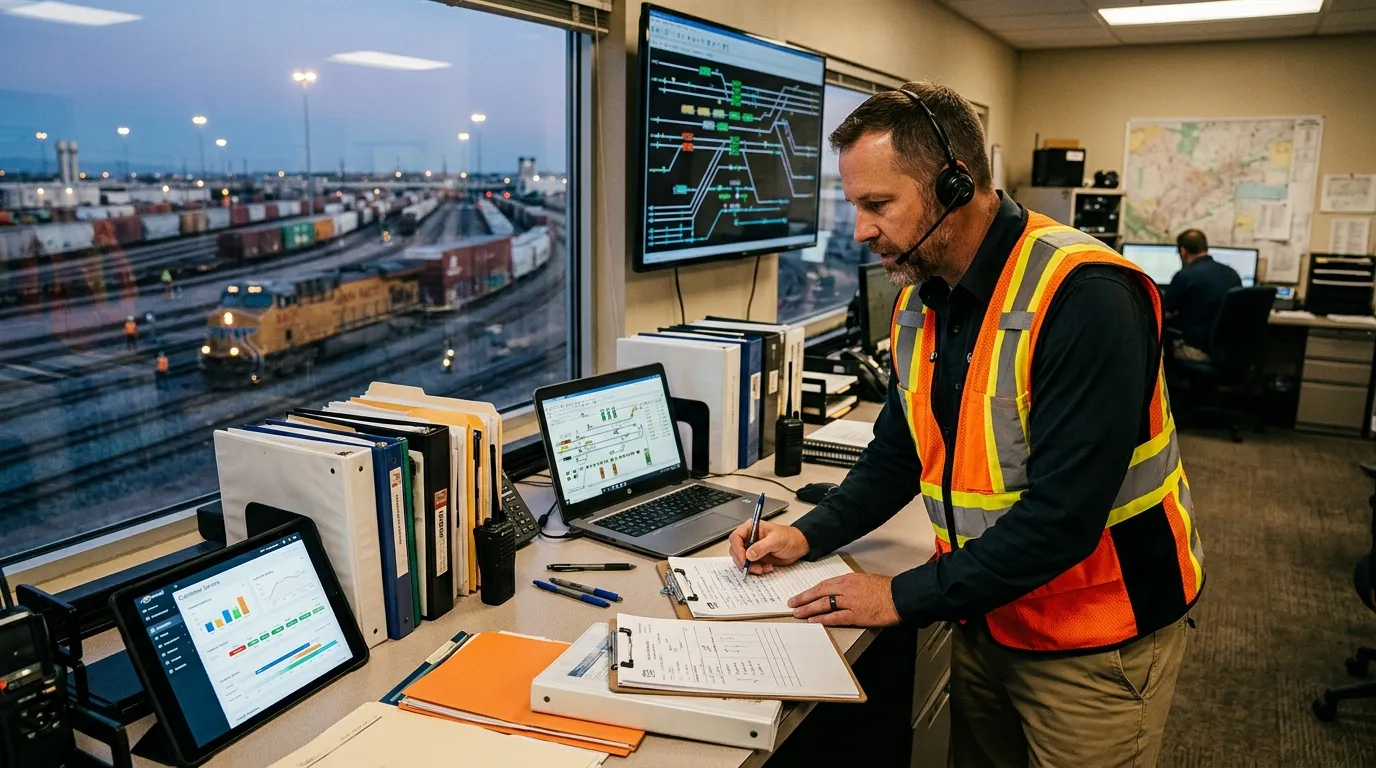

A railroad compliance consultant keeps these functions aligned by building one process around the same rules, records, train movements, and customer commitments. Dispatchers know which authority is current, crews receive correct documents, and customer-service staff share information that matches the operation each day.
Why Railroad Compliance and Dispatch Coordination Matters
Rail operations create linked decisions. A track authority affects a route. A maintenance window affects arrival times. A crew change affects paperwork and customer updates.
Federal rules require railroads to retain certain operating-rule materials and records of operational tests and inspections. FRA rules also require accurate reporting of qualifying accidents and incidents. Separate systems make missing details harder to spot.
An aligned process gives staff:
- one current source for operating documents;
- clear ownership of changes and approvals;
- time-stamped communication records;
- a defined incident-escalation route.
Paperwork Must Match the Live Operation

Paperwork should show what crews must do now, not what was planned hours earlier. A consultant reviews how documents are prepared, issued, changed, stored, and retrieved.
This may include rules, timetables, crew documents, track authorities, test records, and incident information. Under 49 CFR Part 217, records must be available to FRA representatives; electronic records must meet access and retrieval conditions.
Quick tip: Give every form one owner and one approved location. Multiple “final” versions create avoidable risk.
Dispatching Turns Rules into Decisions
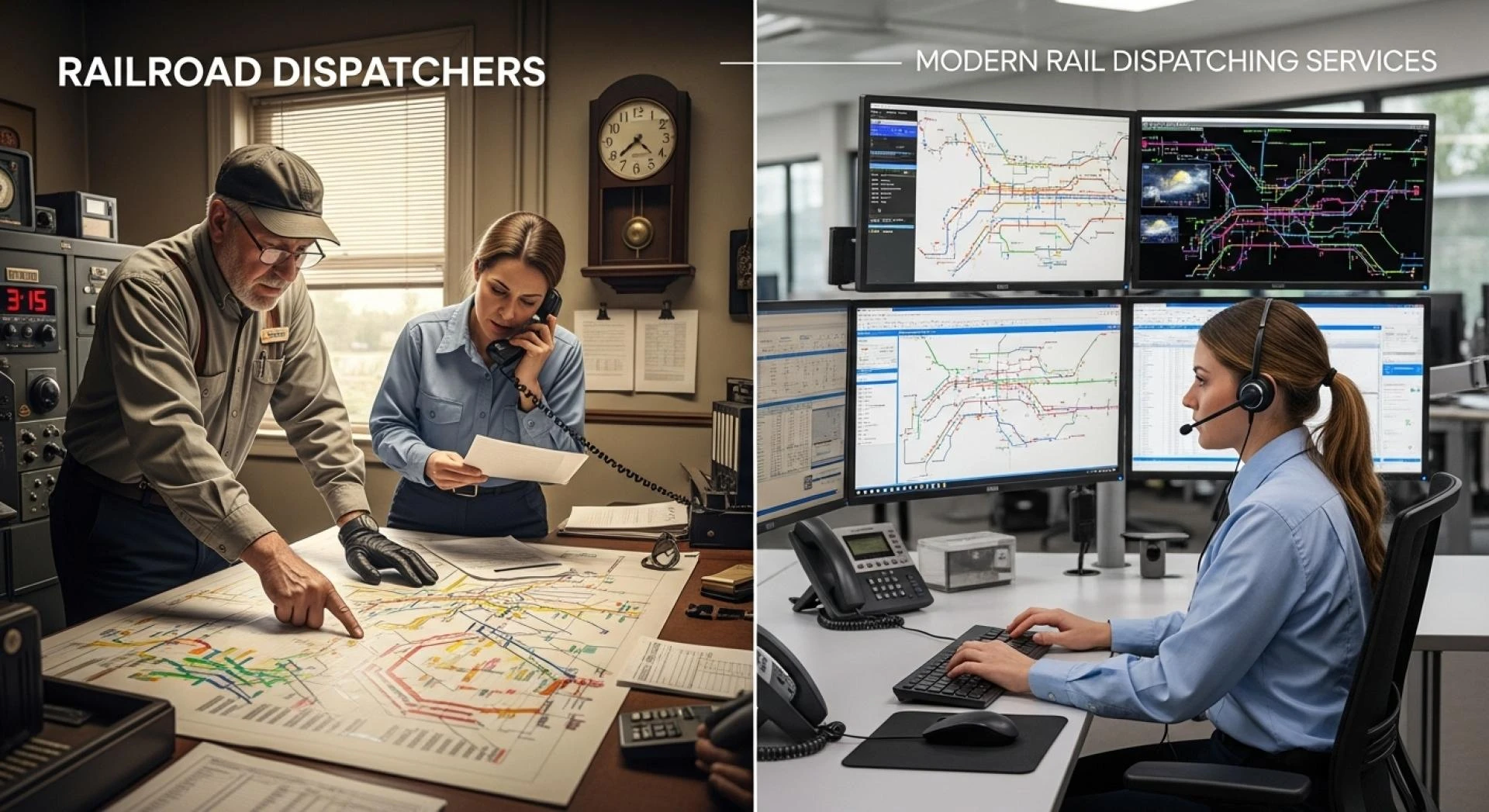
Professional railroad dispatching services coordinate train occupancy, maintenance-of-way access, communications, and changing track conditions. Their work must follow operating rules, physical characteristics, hours-of-service controls, and local instructions.
A contract train dispatching company should do more than answer radios. It needs procedures for issuing authorities, logging changes, escalating emergencies, and updating crews.
FRA rules generally prohibit U.S. operations from being dispatched outside the country. Contractors performing covered functions also have compliance duties.
Comparison: Fragmented Support vs Aligned Support
| Area | Fragmented approach | Aligned approach |
| Paperwork | Separate files and uncertain versions | Controlled documents linked to current work |
| Dispatching | Changes stay at the dispatch desk | Updates reach crews and service teams |
| Customer service | Answers rely on estimates | Messages use confirmed operating data |
| Compliance | Reviews follow a problem | Checks sit inside normal workflows |
| Incidents | Facts come from several sources | One escalation and record process |
Customer Service Needs Verified Rail Information
Freight customer service is operational support, not a separate call centre. Staff may process documents, update customers, support billing, and answer service questions. Their answers must match dispatch records.
That is the value of railroad paperwork and customer service alignment: customers get clear answers backed by traceable records.
Did you know? FRA lists rail-equipment accidents, grade-crossing events, and casualties or occupational illnesses among the main monthly reporting groups under Part 225.
A Three-Step Alignment Workflow
- Capture: Dispatch, crew, maintenance, and customer events enter approved systems.
- Check: Rules, times, required fields, and supporting records are reviewed.
- Share: Each team receives verified information.
This helps contract train dispatch services support safe movement and cleaner administrative handoffs.
Signs the Functions Are Out of Sync
- Crews often request corrected documents.
- Customer updates conflict with dispatch information.
- Billing waits for missing movement details.
- Incident facts change depending on who is asked.
How to Compare Railroad Service Providers
The top railroad contractors fit the railroad’s traffic, rules, technology, and reporting needs. Compare railroad contractor companies by:
- rules qualifications and relevant experience;
- 24/7 coverage and emergency escalation;
- record-retention and quality controls;
- dispatch technology and customer-service ability.
For outsourced train dispatching for short lines, ask how the provider learns physical characteristics and local instructions.
Key Takeaways
- Compliance turns rules into repeatable daily actions.
- Dispatching creates the live record of train and maintenance movements.
- Paperwork gives crews reliable instructions and managers evidence.
- Customer service should use verified operating information.
Keep Every Handoff on the Same Track
Strong contract train dispatch services connect movement decisions, paperwork, and customer communication.
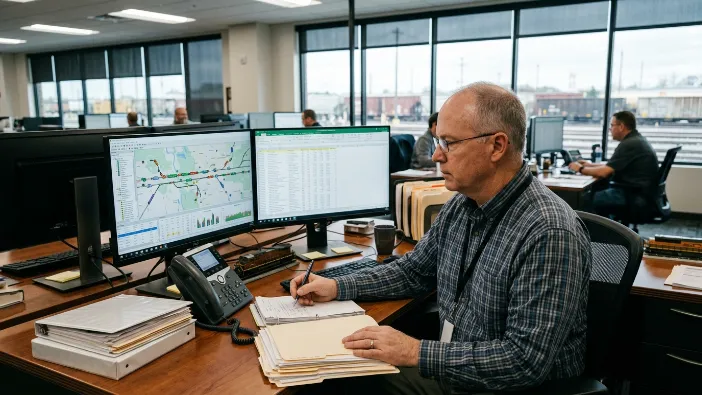
Experts like RailRCS provide an integrated service model covering 24/7 dispatch, freight customer service, and compliance support. They feature GCOR- and NORAC-qualified dispatchers, internal CAD software, RMI experience, document retention, billing support, and incident-reporting programs. Contact them now to get your business on track with no loss of time and money.
Frequently Asked Questions
What Does a Rail Compliance Adviser Do?
A railroad compliance consultant reviews programs, records, training, reporting, and workflows so regulatory duties stay connected to daily work.
Can Dispatching and Customer Service Be Outsourced Together?
Yes. Integrated railroad dispatching services and customer support can reduce handoff gaps when roles and escalation rules are clear.
What Should a Contract Dispatch Provider Record?
A contract train dispatching company should document authorities, changes, communications, exceptions, and required records under the railroad’s rules.
How Do Top Contractors Reduce Paperwork Errors?
The top railroad contractors use controlled templates, named owners, current data, review steps, and retention schedules.
Are All Rail Service Providers Alike?
No. Railroad contractor companies differ in qualifications, technology, coverage, service scope, and operating experience.






















Sign in to leave a comment.