

Accurate data collection is one of the foundations of effective Applied Behavior Analysis (ABA) therapy. Behavior analysts rely on objective information to understand a learner's behavior, measure progress, evaluate interventions, and make informed clinical decisions. However, collecting and managing large amounts of behavioral data manually can be time-consuming and may introduce errors.
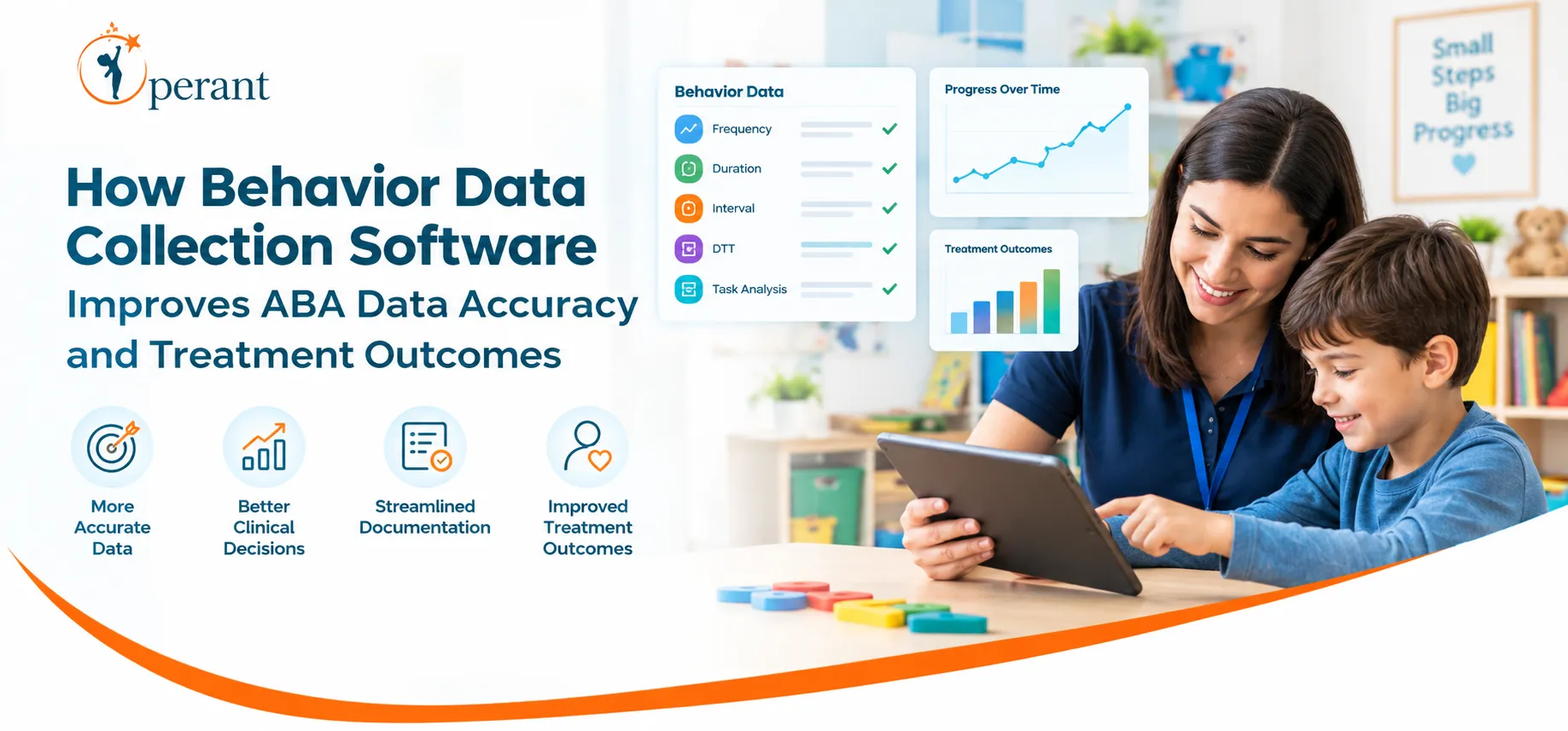
Modern behavior data collection software is helping ABA providers streamline this process. By replacing paper-based systems and disconnected spreadsheets with digital tools, clinics can improve data accuracy, organize clinical information, and make treatment decisions based on timely, measurable results.
Why Accurate Data Matters in ABA Therapy
ABA treatment is highly data-driven. Therapists may record frequency, duration, latency, rate, percentage of correct responses, prompting levels, and other measurements during sessions. These observations help BCBAs determine whether a learner is progressing toward established goals.
When data is incomplete, inconsistent, or entered incorrectly, it can become more difficult to identify meaningful trends. Even small documentation errors can affect graphs, progress reports, and clinical decision-making.
Behavior data collection software provides a structured way for therapists to record information consistently. Digital systems can guide users toward the appropriate measurement method and organize observations according to individual treatment programs and goals.
Real-Time Data Collection Reduces Documentation Delays
One of the major advantages of digital data collection is the ability to record information during the session.
Instead of writing observations on paper and entering them into a system later, therapists can use a tablet, smartphone, or computer to document data as it occurs. This reduces duplicate data entry and helps keep clinical records current.
Real-time collection can be especially useful for therapists working in homes, schools, community settings, and clinics. A mobile-friendly behavior data collection software platform can allow authorized team members to access relevant programs and record observations wherever services are delivered.
Standardizing Data Across Therapists
ABA teams often include multiple RBTs, BCBAs, supervisors, and other professionals. Each person needs to collect and document information consistently for the data to remain useful.
Digital software can provide standardized data fields, predefined measurement types, program instructions, and treatment targets. This can help reduce variation in how different team members record the same type of observation.
Consistent documentation makes it easier for BCBAs to compare performance across sessions and identify changes over time. Standardized data collection can also help organizations establish more consistent clinical workflows as their teams grow.
Automated Graphing Makes Trends Easier to Identify
Collecting data is only part of the process. Clinical teams also need to interpret that information.
Many modern ABA platforms can automatically transform session data into visual graphs and reports. Instead of manually transferring information into spreadsheets and creating charts, clinicians can review updated data within the platform.
Visual displays can make changes in behavior easier to recognize. For example, a BCBA may observe a gradual reduction in a target behavior or an increase in independent skill performance. These trends can then be considered alongside the treatment plan and other clinical information.
Automated graphing does not replace clinical judgment. Rather, it gives clinicians an organized way to review the information needed for that judgment.
Supporting Data-Driven Treatment Decisions
Effective ABA treatment requires ongoing evaluation. When intervention strategies are implemented, BCBAs need objective information to determine whether those strategies are associated with desired changes.
Behavior data collection software can make this review more efficient by keeping session data, treatment targets, notes, and progress information organized in one environment.
When trends indicate that a learner is making progress, the clinical team can document that progress and continue monitoring. If performance is not changing as expected, the BCBA can review the available data and determine whether a program modification or additional assessment is appropriate.
This creates a continuous cycle of data collection, analysis, clinical decision-making, and progress monitoring.
Improving Collaboration Between BCBAs and RBTs
Communication is essential when several professionals participate in a learner's treatment. RBTs may collect data and implement programs while BCBAs analyze performance, provide supervision, and make clinical decisions.
A centralized digital system can help keep team members working from current information. Depending on user permissions, staff can access treatment programs, record session data, review updates, and document relevant observations.
This can reduce reliance on separate paper records and spreadsheets while providing a clearer view of ongoing treatment activities.
For growing ABA organizations, platforms such as Operant Systems can support a more connected approach to clinical data management by bringing important information into a centralized digital workflow.
Saving Time on Administrative Tasks
Data management can take significant time when it involves manual calculations, spreadsheet updates, graph creation, and repeated documentation.
Automated features within behavior data collection software can reduce some of these repetitive tasks. Digital records, automated calculations, graphing tools, templates, and centralized documentation can help ABA organizations build more efficient workflows.
The time saved can potentially be redirected toward clinical activities such as supervision, caregiver collaboration, program development, and direct client support.
For ABA clinics, improving administrative efficiency is especially important as the number of clients, therapists, and treatment programs increases.
Choosing the Right Behavior Data Collection Software
ABA organizations should evaluate software based on their specific clinical and operational requirements. Important considerations may include ease of use, mobile accessibility, offline functionality, measurement options, automated graphing, customization, reporting, user permissions, data security, and scalability.
The best system for one organization may not be the best fit for another. Staff adoption is also important. A platform should be intuitive enough for therapists to use during active sessions while providing BCBAs with the tools necessary for meaningful data analysis.
When evaluating solutions, ABA providers should also consider how easily the software fits into existing clinical workflows. A system that is powerful but difficult to use may create additional administrative challenges. The goal should be to find technology that makes data collection simpler while maintaining the quality and structure required for clinical decision-making.
A More Accurate and Connected Approach to ABA Data
Technology is changing how ABA providers collect, organize, and interpret behavioral information. Behavior data collection software can reduce manual documentation, improve consistency, simplify data analysis, and help clinical teams access information more efficiently.
For organizations looking for a technology-focused approach to ABA data management, Operant Systems offers a solution designed around the needs of modern ABA providers. By supporting digital data collection and connected clinical workflows, technology can help teams spend less time managing information and more time using that information to support learners.
Conclusion: Turning Better Data Into Better ABA Outcomes
Accurate behavioral data is essential for effective ABA therapy, and the right technology can make the data collection process more efficient, consistent, and actionable. Behavior data collection software helps ABA providers move away from manual documentation by giving therapists structured tools to record observations, monitor progress, and maintain organized clinical information.
With features such as real-time data collection, standardized measurement, automated graphing, centralized records, and mobile accessibility, digital platforms can support both day-to-day documentation and long-term clinical decision-making. When BCBAs and RBTs have access to accurate and timely information, they can spend less time managing data and more time focusing on treatment quality and learner progress.
Operant Systems provides technology designed to support ABA providers with streamlined data collection and clinical workflows. By bringing important behavioral information into a more connected digital environment, Operant Systems can help organizations improve documentation, support collaboration, and make data easier to use throughout the treatment process.
Ultimately, technology should support not replace clinical expertise. By combining reliable behavior data collection software with professional analysis and evidence-based decision-making, ABA teams can create more efficient workflows while keeping measurable client progress at the center of care.





















Sign in to leave a comment.