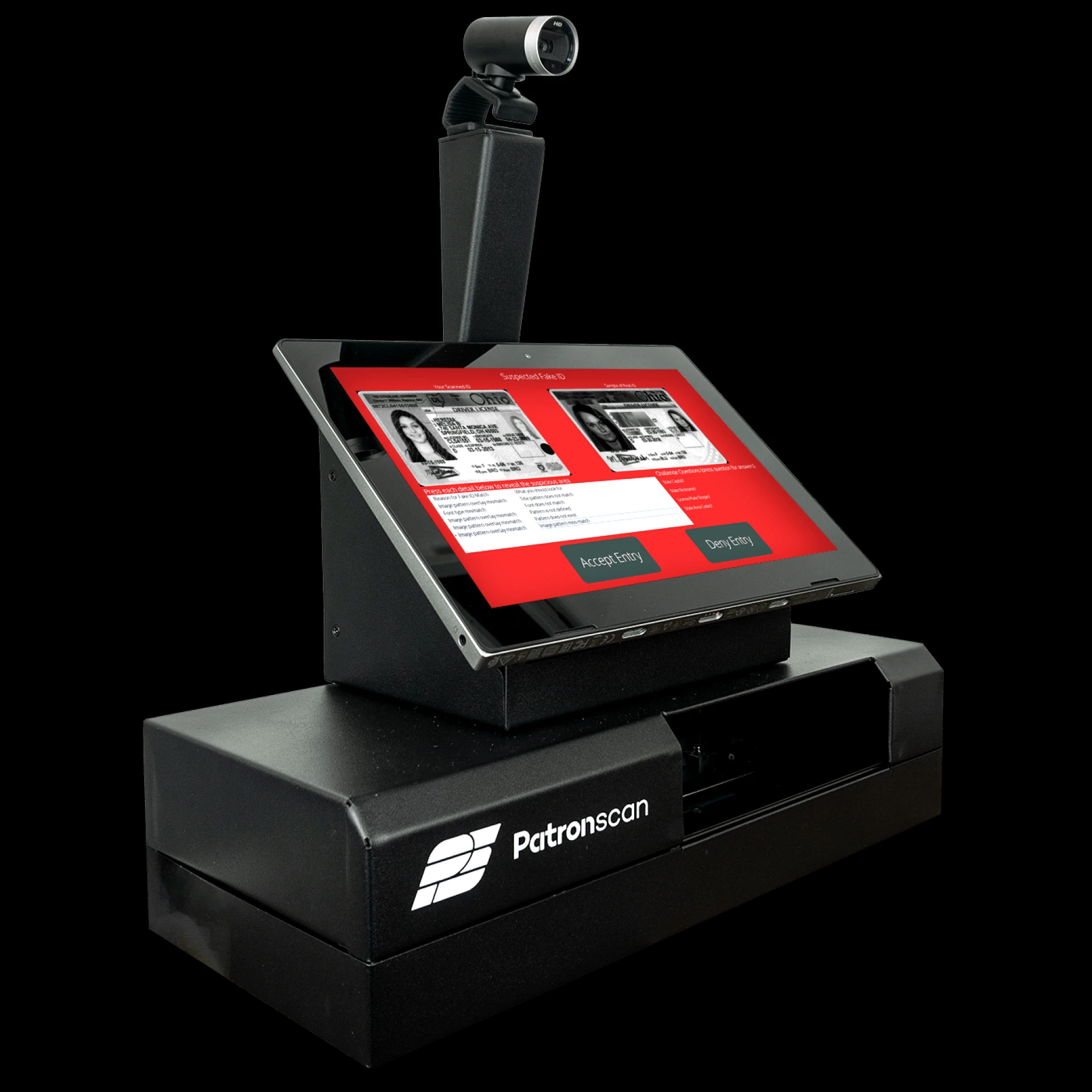

In recent years, ID scanners have undergone a significant transformation, driven by advancements in biometric technology. These innovations have revolutionized the way identity verification is conducted across various industries, from hospitality and security to retail and government. This unique integration of cutting-edge biometrics has not only elevated the accuracy and efficiency of ID scanners but has also opened up new possibilities for applications in areas such as access control, age verification, and fraud prevention.
One of the key ways in which biometric technology is enhancing ID scanners is through the incorporation of facial recognition systems. Traditional ID scanners relied on optical character recognition (OCR) to extract information from the printed text on an ID document. While effective to some extent, OCR had limitations in dealing with documents that were damaged, poorly printed, or written in unconventional fonts. Facial recognition, on the other hand, leverages the unique facial features of an individual, providing a highly accurate means of identity verification.
The integration of facial recognition technology enables ID scanners to perform real-time authentication by comparing the live image of an individual with the photo on their ID document. This not only helps prevent identity fraud but also allows for a more seamless and secure experience for both businesses and customers. For example, in high-security environments like airports or government facilities, this technology ensures that only authorized individuals gain access, reducing the potential for security breaches.
Furthermore, the use of biometrics in ID scanners has greatly improved age verification processes, particularly in industries where compliance with age restrictions is crucial, such as the sale of alcohol or tobacco. By analyzing facial features, these scanners can accurately estimate an individual's age, ensuring that only those of legal age are granted access to age-restricted products or venues. This not only helps businesses stay in compliance with regulations but also minimizes the risk of legal liabilities associated with underage sales.
Another notable advancement in ID scanner technology involves the integration of fingerprint recognition. This biometric modality offers an additional layer of security by capturing and matching unique fingerprint patterns. By requiring individuals to place their finger on a designated scanner, the system can quickly and accurately authenticate their identity. This is particularly valuable in situations where a higher level of security is needed, such as in financial institutions or government facilities.
Moreover, the incorporation of fingerprint recognition can greatly enhance the efficiency of ID scanners, as it eliminates the need for manual entry of information. This not only reduces the potential for human error but also accelerates the authentication process, leading to shorter wait times and improved customer satisfaction.
In addition to facial and fingerprint recognition, some ID scanners now incorporate iris or retina scanning technology. These modalities rely on the unique patterns within an individual's eye, offering an even higher level of security compared to other biometric methods. While not as commonly implemented as facial or fingerprint recognition, iris and retina scanning find applications in environments where the utmost security is paramount, such as in top-secret government facilities or high-value asset storage.
In conclusion,
The integration of advanced biometric technology has propelled ID scanners into a new era of accuracy, efficiency, and security. Through the use of facial recognition, fingerprint recognition, and other biometric modalities, these scanners are now capable of performing real-time authentication with unparalleled precision. This not only aids in preventing identity fraud and age-related compliance issues but also streamlines processes in various industries. As biometric technology continues to advance, we can expect further innovations in ID scanning, opening up new possibilities for secure and seamless identity verification.










Sign in to leave a comment.