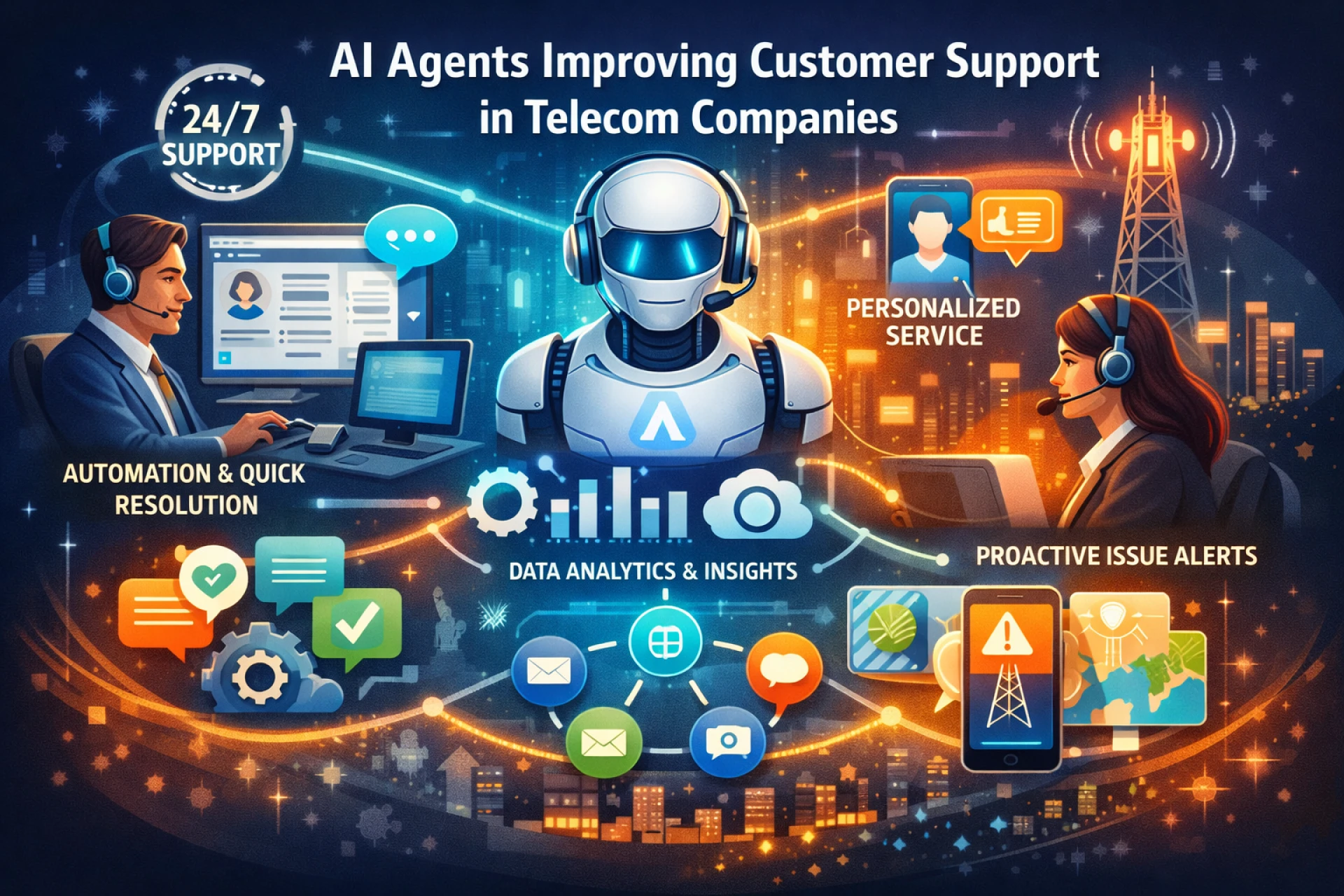

Customer expectations in telecom have changed dramatically. Today’s users demand instant responses, personalized service, and seamless issue resolution across multiple channels. Traditional support models—often dependent on large call centers and manual processes—struggle to meet these rising expectations. This is where AI agents in telecom are making a powerful impact, helping service providers transform customer support into a faster, smarter, and more efficient function.
AI-driven systems are no longer just chatbots; they are intelligent digital agents capable of understanding customer intent, predicting issues, and delivering real-time solutions. For telecom companies aiming to reduce operational costs while enhancing user satisfaction, AI agents have become a strategic necessity.
The Growing Need for Intelligent Customer Support
Telecom companies manage millions of customer interactions daily, ranging from billing inquiries to network issues. Handling such volume manually often leads to long wait times, inconsistent responses, and customer frustration.
AI agents address these challenges by automating repetitive queries and assisting human agents with data-driven insights. This hybrid approach ensures that customers receive quick resolutions while complex issues are escalated efficiently. As a result, telecom providers can maintain high service standards even during peak demand.
1. 24/7 Availability and Instant Response
One of the biggest advantages of AI agents is their ability to provide round-the-clock support. Unlike traditional support teams, AI-powered systems do not require breaks or shifts.
Customers can get instant answers to common queries such as:
- Account balance and billing details
- Data usage and plan information
- Service activation or deactivation
This always-on support significantly reduces wait times and enhances customer satisfaction. Faster responses also mean fewer escalations and improved operational efficiency.
2. Personalized Customer Experience
Modern AI agents analyze customer data, usage patterns, and past interactions to deliver highly personalized support. Instead of generic responses, customers receive solutions tailored to their specific needs.
For example, if a customer frequently exceeds their data limit, the AI agent can proactively suggest a better plan. Similarly, it can recommend troubleshooting steps based on the user’s device and service history.
Personalization not only improves the customer experience but also increases upselling and cross-selling opportunities for telecom providers.
3. Efficient Query Resolution and Automation
AI agents excel at handling repetitive and high-volume queries. By automating routine tasks, telecom companies can free up human agents to focus on complex and high-value interactions.
Common automated functions include:
- Password resets
- Bill payments and reminders
- SIM activation support
- Network troubleshooting
This level of automation reduces operational costs and improves overall service efficiency. It also ensures consistency in responses, minimizing human error.
4. Omnichannel Support Integration
Today’s customers interact with telecom providers across multiple platforms, including websites, mobile apps, social media, and messaging services. AI agents unify these channels into a seamless support experience.
Whether a customer starts a conversation on a mobile app and continues it via email, AI agents maintain context and continuity. This eliminates the need for customers to repeat their issues and enhances the overall user journey.
For any telco solution provider, implementing omnichannel AI support is essential to stay competitive in a highly dynamic market.
5. Proactive Issue Detection and Resolution
AI agents are not limited to reactive support—they can also predict and prevent issues before they impact customers. By analyzing network data and customer behavior, these systems can identify potential disruptions and alert users in advance.
For example:
- Notifying customers about network outages in their area
- Suggesting device optimization tips
- Alerting users about unusual account activity
This proactive approach reduces complaint volumes and builds customer trust, as users feel informed and supported.
6. Enhanced Agent Productivity
AI agents also act as virtual assistants for human support teams. They provide real-time suggestions, retrieve customer data instantly, and recommend the best solutions based on past cases.
This reduces the time required to resolve queries and improves first-call resolution rates. Human agents can focus on delivering better service rather than searching for information, leading to higher productivity and job satisfaction.
7. Cost Optimization for Telecom Providers
Customer support operations are one of the largest cost centers for telecom companies. AI agents help significantly reduce these costs by:
- Automating high-volume queries
- Reducing the need for large support teams
- Minimizing call center infrastructure expenses
At the same time, they improve service quality, creating a strong balance between cost efficiency and customer satisfaction.
8. Data-Driven Insights and Continuous Improvement
AI agents continuously collect and analyze customer interaction data. These insights help telecom companies identify common issues, improve service offerings, and refine their support strategies.
For instance, if a large number of customers report similar network problems, providers can take immediate corrective action. This data-driven approach ensures continuous improvement in both customer experience and operational performance.
Conclusion
AI agents are redefining customer support in the telecom industry. From providing instant responses and personalized experiences to enabling proactive issue resolution, they offer a comprehensive solution to modern customer service challenges.
Telecom companies that embrace AI-driven support systems can not only enhance customer satisfaction but also achieve significant cost savings and operational efficiency. As the industry continues to evolve, AI agents will play a central role in building smarter, more responsive, and customer-centric telecom services.
For businesses looking to stay ahead, integrating AI into customer support is no longer optional—it is a strategic imperative.

Sign in to leave a comment.