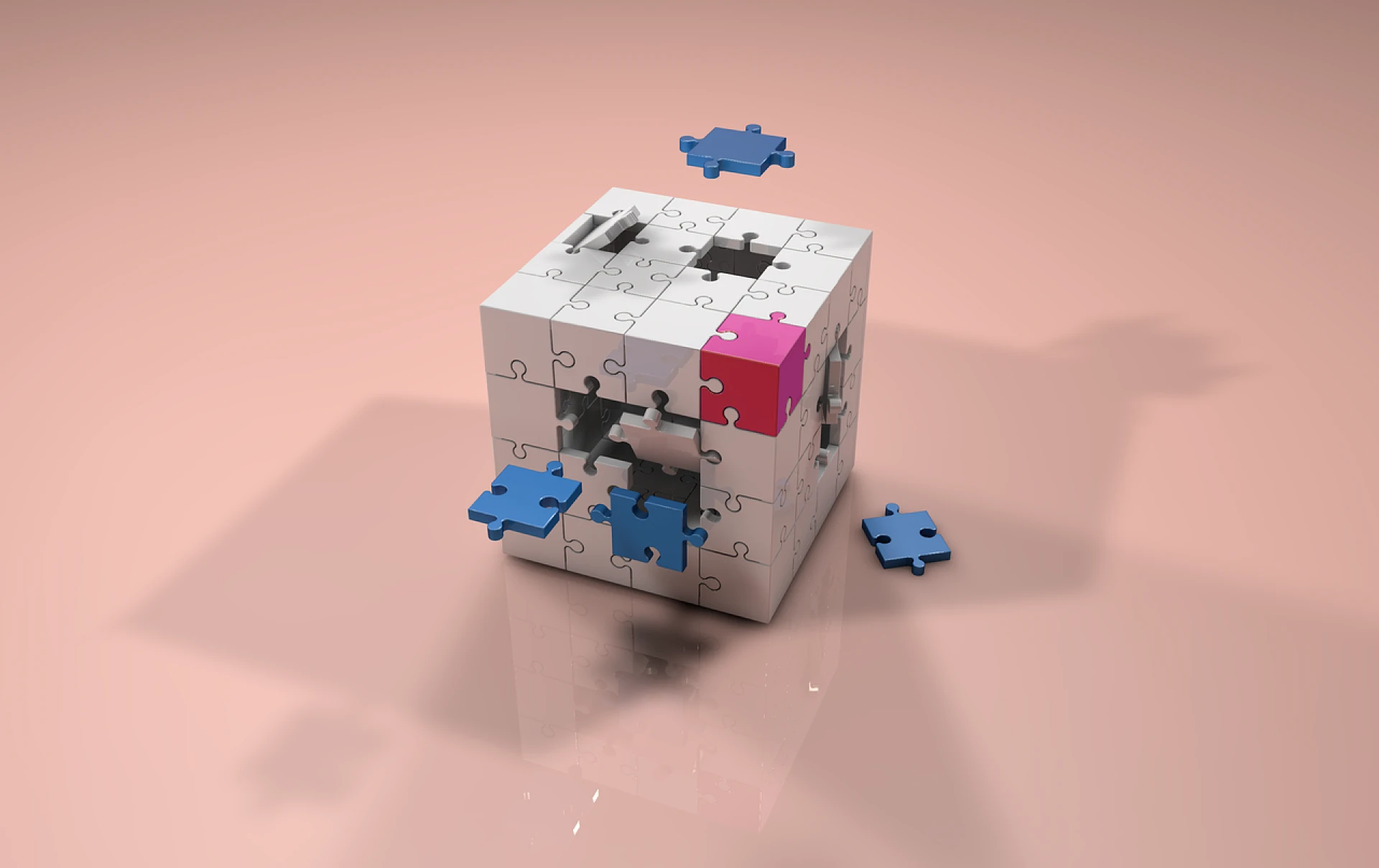

Humans have long been fascinated by brain puzzles and complex problem-solving tasks. From classic crosswords and Sudoku to intricate logic games and escape room challenges, these puzzles test our cognitive skills, creativity, and problem-solving abilities. In recent years, artificial intelligence (AI) has emerged as a powerful tool for solving complex brain puzzles, often surpassing human capabilities in speed, accuracy, and efficiency. But how exactly does AI tackle these challenges, and what are its implications for the future of problem-solving?
This article explores how AI can be used to solve complex brain puzzles, delving into its methods, applications, and potential to revolutionize puzzle-solving across various domains.
1. Understanding the Problem-Solving Process
Before delving into how AI solves brain puzzles, it's essential to understand the problem-solving process itself. Most puzzles require a combination of the following:
- Pattern Recognition: Identifying patterns, sequences, or relationships between different elements of the puzzle.
- Logical Reasoning: Applying logical rules to deduce the correct solution.
- Memory and Recall: Storing and retrieving information to make connections and eliminate incorrect options.
- Creativity: Thinking outside the box to find innovative solutions.
AI systems are designed to mimic these cognitive processes, often using algorithms that can analyze, learn, and optimize solutions based on data and logic.
2. AI Techniques for Solving Brain Puzzles
AI uses various techniques and algorithms to solve complex puzzles, each tailored to specific types of challenges:
a. Search Algorithms
Many puzzles, such as mazes and logic-based games, require searching for the correct solution among many possible options. AI employs search algorithms like:
- Depth-First Search (DFS): Explores as far as possible along a branch before backtracking.
- Breadth-First Search (BFS): Explores all possible moves at one level before moving deeper.
- A Algorithm:* Combines search with heuristics to find the shortest or most efficient path to a solution.
b. Machine Learning and Neural Networks
Machine learning (ML) allows AI to learn from data and improve its performance over time. Neural networks, a subset of ML, are particularly effective for pattern recognition and decision-making.
Example: AI models like DeepMind’s AlphaGo use neural networks to learn strategies for complex board games like Go, which involve countless possible moves and require both strategic planning and adaptability.
For brain puzzles, neural networks can identify hidden patterns or correlations that humans might overlook, providing faster and more accurate solutions.
c. Constraint Satisfaction Problems (CSP)
Some puzzles involve constraints that must be satisfied for the solution to be valid, such as Sudoku or crossword puzzles. AI solves these by systematically eliminating possibilities that violate the constraints.
Example: AI can solve Sudoku puzzles by applying CSP algorithms that analyze the grid, identify constraints, and iteratively narrow down possible solutions until only the correct answer remains. AI tools are also being used to solve the popular New York Times Connections game.
d. Reinforcement Learning
In puzzles that require a sequence of actions, such as chess or escape room challenges, AI can use reinforcement learning (RL). RL involves training an AI agent through trial and error, rewarding successful actions and penalizing failures.
Example: AI-powered game bots use RL to learn optimal strategies for solving puzzle-based video games, eventually mastering levels that even expert human players find difficult.
3. Applications of AI in Solving Brain Puzzles
AI’s ability to solve brain puzzles isn’t just limited to entertainment. Its problem-solving capabilities have practical applications across various industries:
a. Healthcare and Neuroscience
AI can help solve complex puzzles related to brain function and neurological disorders. By analyzing brain scans and neural activity, AI can identify patterns associated with conditions like Alzheimer’s disease or epilepsy, leading to earlier diagnoses and more effective treatments.
Example: AI algorithms can analyze fMRI scans to decode the "puzzle" of brain connectivity, helping researchers understand how different regions of the brain interact.
b. Cybersecurity
Many cybersecurity challenges involve solving complex puzzles to detect vulnerabilities, decode encrypted messages, or identify patterns of malicious activity. AI can analyze large datasets and uncover hidden threats faster than human analysts.
Example: AI systems like IBM's Watson for Cyber Security use machine learning to identify and mitigate potential cyber threats by solving the "puzzle" of attack vectors and vulnerabilities.
c. Finance and Risk Analysis
Financial markets are often compared to complex puzzles, with numerous variables influencing outcomes. AI can analyze market data, detect patterns, and predict trends, helping investors make informed decisions.
Example: AI-driven trading algorithms solve the puzzle of market volatility by identifying arbitrage opportunities and executing trades with precision.
d. Game Development and Virtual Reality
AI is revolutionizing the gaming industry by creating intelligent, adaptive puzzles and challenges that respond to player behavior. This enhances the gaming experience and provides personalized difficulty levels.
Example: AI-driven escape room games use dynamic puzzles that adjust based on player performance, creating a more engaging and challenging experience.
4. Implications and Future of AI in Puzzle-Solving
AI's ability to solve complex brain puzzles has profound implications for the future:
- Enhanced Human-AI Collaboration: AI can serve as a powerful assistant, helping humans tackle puzzles and challenges that were previously unsolvable.
- Advancements in Cognitive Science: By studying how AI solves puzzles, researchers can gain insights into human cognition and develop new methods for enhancing problem-solving skills.
- Ethical Considerations: As AI becomes more adept at solving puzzles, it raises questions about intellectual property, fairness, and the role of human creativity.
Conclusion
AI has transformed the way we approach and solve complex brain puzzles, offering unparalleled speed, accuracy, and adaptability. From entertainment and healthcare to cybersecurity and finance, AI’s puzzle-solving capabilities are reshaping industries and pushing the boundaries of human ingenuity. As AI continues to evolve, it will not only solve more intricate puzzles but also unlock new possibilities for innovation and discovery.























Sign in to leave a comment.