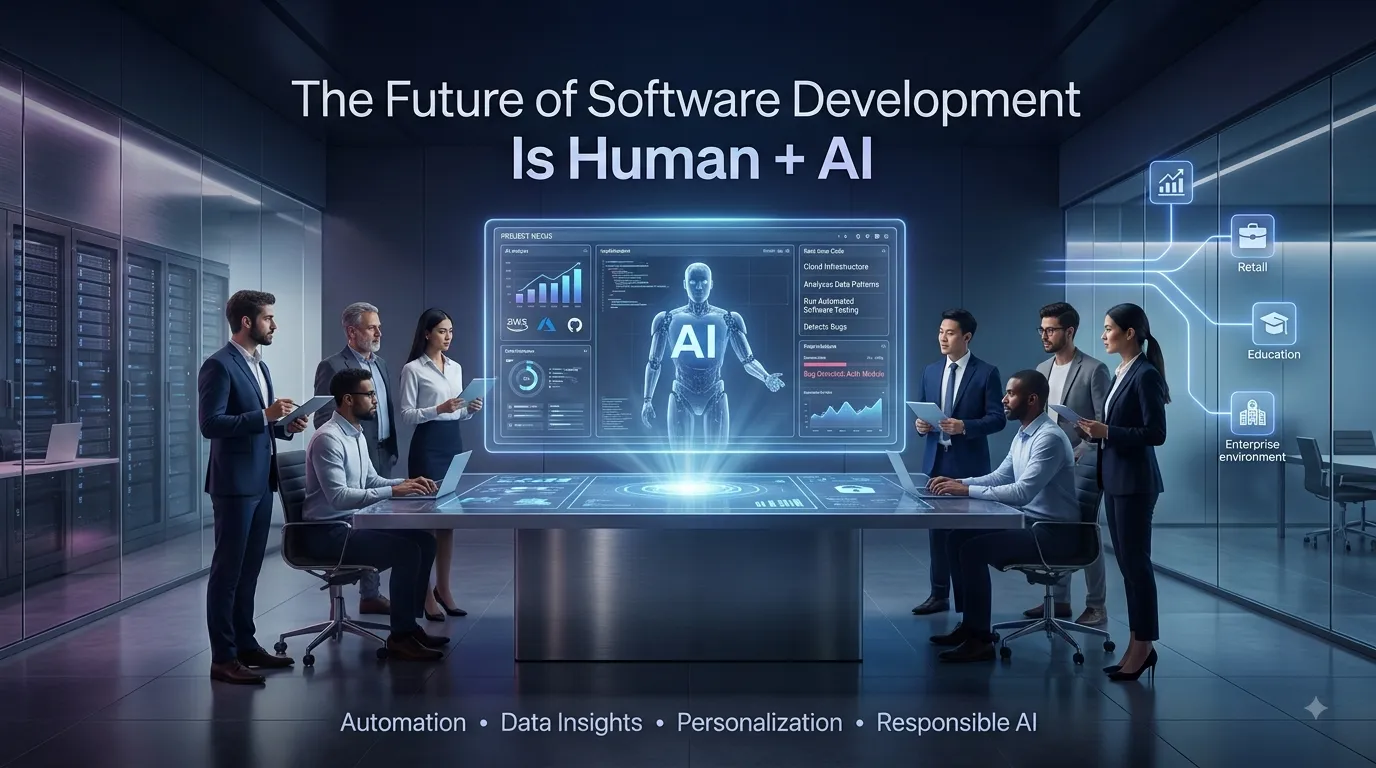

Artificial intelligence(AI) has rapidly become one of the most discussed technologies in the digital world. From automating repetitive tasks to generating code and analyzing massive datasets, AI is reshaping how software is planned, developed, tested, and maintained.
Despite its growing influence, one common misconception continues to circulate: that AI will eventually replace software developers.
The reality is far more balanced.
Artificial intelligence is transforming software development by enhancing human capabilities, not eliminating them. It enables development teams to work more efficiently, solve problems faster, and focus on innovation while leaving repetitive tasks to intelligent automation.
For businesses investing in digital products, understanding this shift is essential for making informed technology decisions.
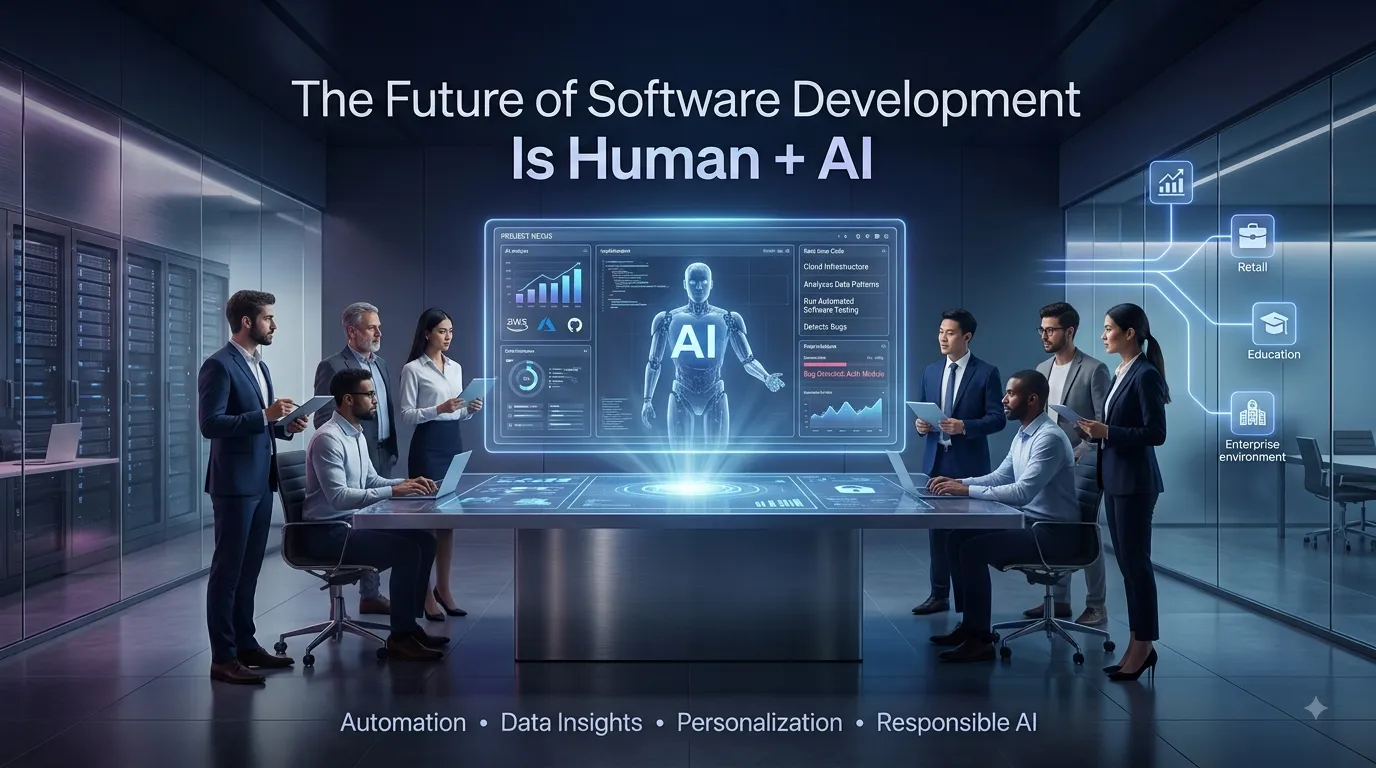
AI Is a Powerful Assistant, Not a Replacement
Software development involves much more than writing code.
Developers collaborate with business stakeholders, understand customer needs, design system architecture, solve technical challenges, ensure security, optimize performance, and make countless strategic decisions throughout every project.
These responsibilities require creativity, critical thinking, experience, and business understanding—qualities that artificial intelligence cannot replace.
Instead, AI supports developers by automating repetitive activities such as code suggestions, documentation, testing assistance, bug detection, and performance analysis. This allows engineers to dedicate more time to solving meaningful business problems rather than routine development tasks.
Faster Development Without Compromising Quality
One of AI's greatest advantages is its ability to accelerate the software development lifecycle.
Modern AI-powered development tools assist with repetitive coding patterns, recommend improvements, identify syntax issues, and generate boilerplate code that developers would otherwise create manually.
This increased efficiency enables teams to spend more time refining application architecture, enhancing user experiences, and improving software quality.
However, AI-generated output still requires careful human review. Experienced developers validate every recommendation, ensuring the final application remains secure, scalable, and aligned with business requirements.
The result is faster delivery without sacrificing reliability.
Improving Software Quality Through Intelligent Testing
Testing has always been one of the most important stages of software development.
Artificial intelligence is making this process significantly more efficient by helping identify potential issues earlier in the development cycle.
AI-assisted testing tools can analyze application behavior, detect unusual patterns, generate test cases, and identify possible performance bottlenecks before software reaches production.
Developers then review these findings, prioritize improvements, and implement solutions based on technical expertise and business priorities.
This collaboration between AI and experienced engineers reduces defects while improving software stability.
Better Decision-Making with Data-Driven Insights
Modern applications generate enormous volumes of operational data.
Artificial intelligence can process this information far more quickly than manual analysis, helping businesses identify trends, predict user behavior, and uncover opportunities for improvement.
Development teams use these insights to optimize application performance, improve customer experiences, enhance workflows, and introduce features that align with actual user needs rather than assumptions.
Instead of relying solely on intuition, organizations can make more informed product decisions supported by meaningful data.
Personalizing Digital Experiences
Today's customers expect applications to understand their preferences and provide relevant experiences.
Artificial intelligence enables software to deliver personalized recommendations, intelligent search results, customized content, automated support, and adaptive user journeys based on individual behaviour.
Whether used in e-commerce platforms, healthcare systems, financial applications, or educational technology, AI helps create experiences that feel more relevant and engaging.
Businesses that thoughtfully implement personalization often improve customer satisfaction, increase retention, and strengthen long-term loyalty.
Automation Creates More Time for Innovation
Every software project includes repetitive activities that consume valuable development resources.
Tasks such as generating documentation, organizing code, monitoring system performance, reviewing logs, and handling routine maintenance can often be automated using AI-powered tools.
By reducing manual workloads, development teams gain additional time to focus on product strategy, creative problem-solving, user experience improvements, and innovation.
Rather than replacing professionals, automation enhances their ability to deliver greater value throughout the project lifecycle.
Responsible AI Implementation Matters
While artificial intelligence offers tremendous opportunities, successful adoption requires careful planning and responsible implementation.
Businesses should consider data privacy, security, transparency, compliance, and ethical considerations whenever integrating AI into digital products.
Responsible development includes protecting sensitive information, validating AI-generated results, maintaining human oversight, and ensuring automated systems remain accountable.
Organizations that approach AI thoughtfully build stronger customer trust while reducing operational and regulatory risks.
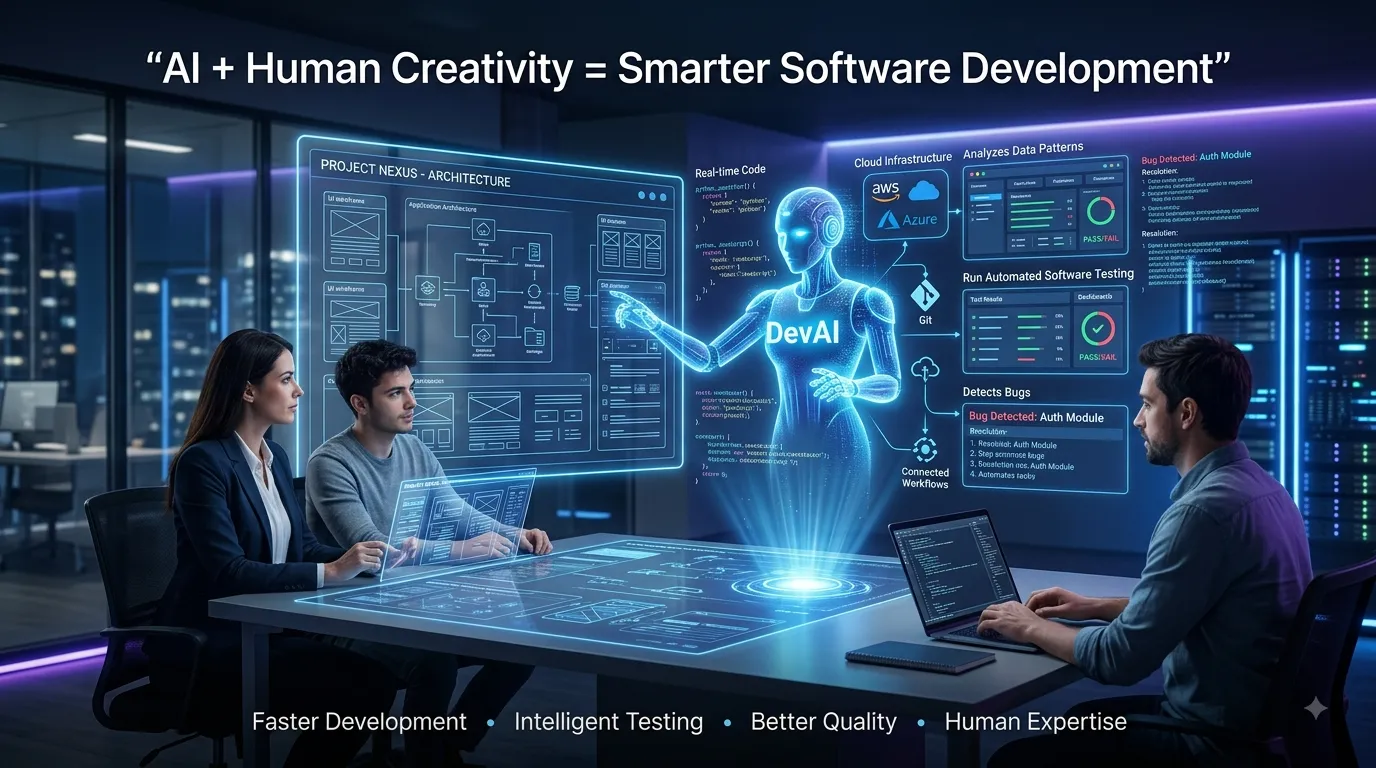
The Importance of Human Expertise
No matter how advanced AI becomes, successful software projects will continue relying on experienced professionals.
- Business analysts translate organizational goals into technical requirements.
- Designers create intuitive user experiences.
- Architects build scalable systems.
- Developers solve complex technical challenges.
- Quality assurance specialists ensure software performs reliably.
- Project managers coordinate collaboration across teams.
Artificial intelligence strengthens each of these roles, but it does not replace the knowledge, creativity, communication, and judgment that people bring to every successful project.
The Future Is Human and AI Working Together
The future of software development is not about choosing between humans and artificial intelligence.
- It is about combining the strengths of both.
- AI delivers speed, automation, and analytical power.
- Human professionals contribute creativity, empathy, strategic thinking, business understanding, and innovation.
Organizations that embrace this collaborative approach will develop better software, respond faster to changing market demands, and create digital products that continue to evolve alongside customer expectations.
Final Thoughts
Artificial intelligence is transforming software development into a smarter, more efficient, and more collaborative discipline.
Businesses that understand AI as a productivity tool - not a replacement for human expertise - are better positioned to deliver innovative digital solutions while maintaining quality, security, and customer trust.
The most successful software projects of the future will not be built by artificial intelligence alone.
They will be created by talented professionals empowered by intelligent technologies, working together to solve real-world business challenges and build exceptional digital experiences.
Frequently Asked Questions
Will AI really replace software developers in the future?
No, AI is not expected to replace software developers. Instead, it enhances their capabilities by automating repetitive tasks, allowing developers to focus on more strategic and creative aspects of software development.
How does AI improve the software development process?
AI improves the software development process by accelerating tasks such as coding, testing, and bug detection. It allows developers to work more efficiently and spend more time on critical decision-making and innovation.
What role does human expertise play in AI-driven software development?
Human expertise remains crucial in AI-driven software development. While AI can automate tasks and provide data-driven insights, the creativity, critical thinking, and judgment of experienced developers are irreplaceable.
Can AI ensure the quality of software applications?
AI can assist in ensuring software quality by identifying potential issues early in the development cycle and analyzing performance. However, human developers must validate AI-generated results to maintain security and reliability.
How can businesses implement AI responsibly in software development?
Businesses can implement AI responsibly by considering data privacy, security, and ethical implications. This includes maintaining human oversight, validating AI outputs, and ensuring compliance with regulations to build customer trust.
What benefits does AI offer for personalizing digital experiences?
AI enables software to deliver personalized recommendations and adaptive user journeys based on individual behavior. This personalization can enhance customer satisfaction and loyalty by creating more relevant and engaging experiences.
How does AI contribute to faster software development without compromising quality?
AI contributes to faster software development by automating repetitive tasks and providing coding recommendations. Despite this speed, human oversight is essential to ensure the quality and security of the final product.


























Sign in to leave a comment.