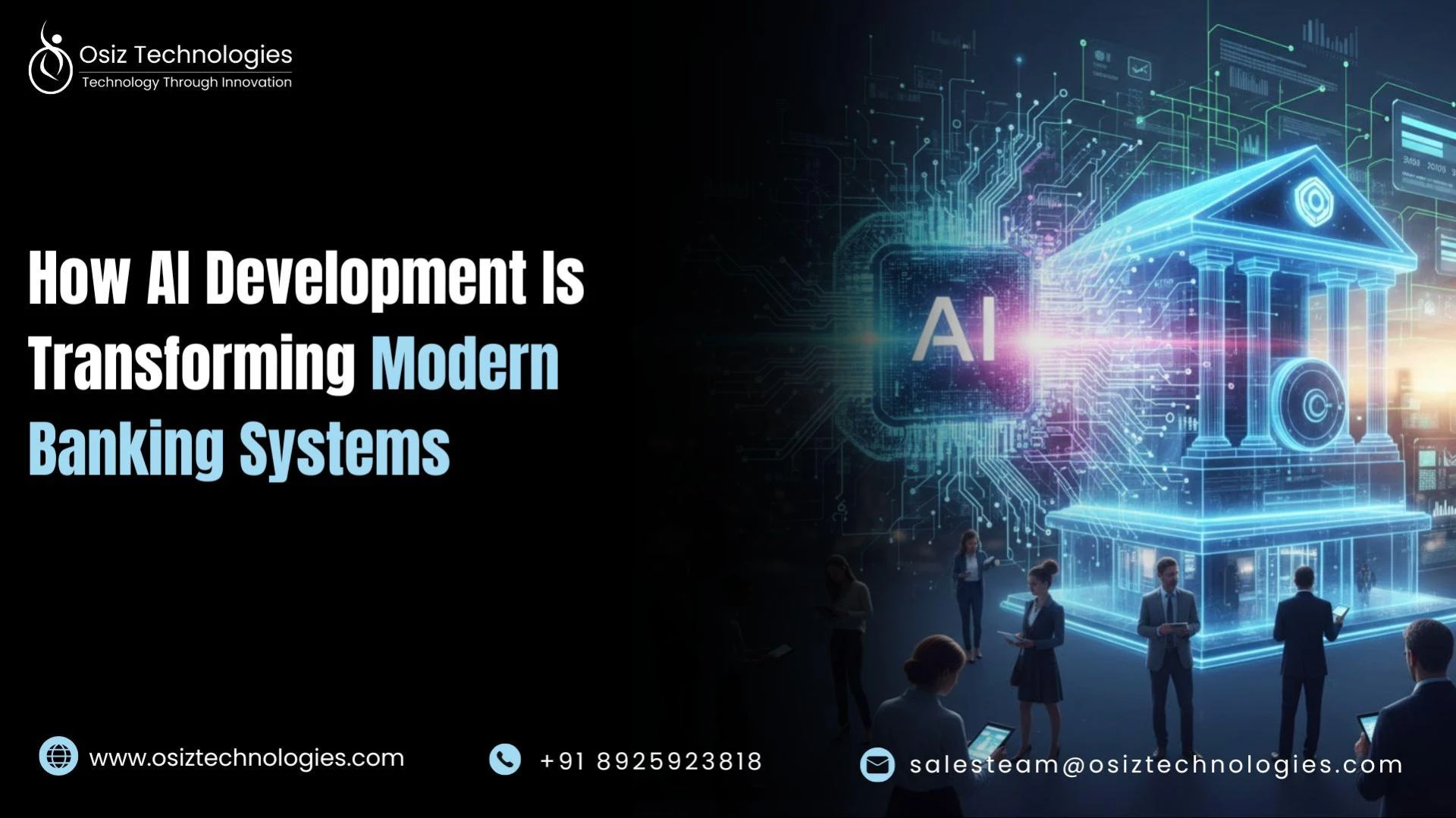

Banking systems have transitioned from manual processes to digital platforms, and now to intelligent, AI-powered ecosystems. Early banking focused on record-keeping and transactional accuracy. With digitization, banks improved speed and accessibility. Today, AI development marks the next evolution, enabling systems to analyze data, predict outcomes, and make informed decisions in real time. This shift allows banks to operate proactively rather than reactively, improving efficiency, security, and customer trust while adapting to rapidly changing financial environments.
What AI Development Means for Modern Banking Infrastructure
AI Development in modern banking infrastructure involves embedding intelligence into core systems without disrupting existing operations. Instead of replacing legacy platforms, AI acts as an enhancement layer that processes vast volumes of data and supports decision-making. AI-powered infrastructure helps banks optimize workflows, reduce operational bottlenecks, and scale services securely. It also enables real-time monitoring, faster processing, and improved resilience—key requirements for modern banking systems operating in a data-intensive environment.
Key AI Technologies Powering Next-Generation Banking Systems
Machine Learning for Transaction Analysis and Risk Modeling
Machine learning models analyze historical and real-time transaction data to identify patterns and anomalies. In banking systems, this improves fraud detection, credit evaluation, and risk forecasting by continuously learning from new data.
Natural Language Processing in Banking Communication
NLP enables banks to automate customer interactions, process documents, and extract insights from unstructured data. It powers chatbots, voice assistants, and automated KYC verification, improving communication efficiency.
Predictive Analytics for Financial Forecasting
Predictive analytics helps banks anticipate customer behavior, liquidity needs, and market trends. This allows financial institutions to make data-driven decisions and improve long-term planning.
Computer Vision for Identity Verification and KYC
Computer vision technology is used for facial recognition, document validation, and biometric authentication. It strengthens identity verification processes while reducing manual errors and processing time.
AI Development Use Cases Across Core Banking Operations
AI-Powered Core Banking Automation
AI automates routine banking tasks such as account management, transaction reconciliation, and back-office operations. This reduces human intervention, lowers costs, and improves system efficiency.
Fraud Detection and Anti–Money Laundering (AML) Systems
AI continuously monitors transaction patterns to detect suspicious activities in real time. Unlike traditional rule-based systems, AI adapts to evolving fraud tactics, strengthening AML compliance.
AI-Based Credit Scoring and Risk Assessment
AI-driven credit scoring evaluates a broader range of data points, enabling more accurate risk assessment. This improves lending decisions while promoting fair and inclusive banking practices.
Enhancing Customer Experience Through AI-Driven Banking Solutions
AI Chatbots and Virtual Banking Assistants
AI-powered chatbots provide instant responses, assist with transactions, and resolve customer queries 24/7. This improves service availability and reduces wait times.
Personalized Banking Through Data-Driven Insights
AI analyzes customer behavior to offer personalized recommendations, tailored financial products, and proactive alerts, enhancing customer engagement and satisfaction.
24/7 Omnichannel Customer Support with AI
AI enables consistent customer support across mobile apps, websites, and messaging platforms, ensuring seamless experiences regardless of the communication channel.
AI Development for Banking Security, Compliance, and Risk Management
AI for Real-Time Fraud Monitoring
AI systems detect unusual behavior instantly, preventing fraud before it escalates. Continuous learning improves accuracy and reduces false positives.
Automated KYC and Regulatory Compliance
AI automates identity verification, transaction monitoring, and compliance reporting, helping banks meet regulatory requirements efficiently and accurately.
Predictive Risk Management Systems
AI-powered risk management tools analyze financial and operational data to identify potential threats early, enabling proactive mitigation strategies.
Challenges and Considerations in Implementing AI in Banking Systems
Data Quality and Integration with Legacy Systems
AI systems rely on high-quality data. Integrating AI with existing legacy infrastructure requires careful planning to ensure data consistency and system stability.
Regulatory Compliance and Model Explainability
Banks must ensure AI decisions are transparent and explainable to meet regulatory standards and maintain trust with regulators and customers.
Ethical AI and Data Privacy Considerations
Responsible AI usage is critical in banking. Institutions must address bias, protect customer data, and follow ethical guidelines to ensure fair and secure AI adoption.
Why Choose Osiz for AI Development in Banking Systems
Osiz is a trusted AI Development Company for banks seeking secure, scalable, and compliant solutions. With deep expertise in AI and financial systems, Osiz delivers tailored AI solutions for automation, fraud detection, customer engagement, and risk management. By aligning technology with regulatory and business needs, Osiz helps banks modernize their systems and confidently embrace the future of intelligent banking.



Sign in to leave a comment.