
eCommerce buyers are no longer searching—they're conversing. They're not typing keywords into search bars—they're asking ChatGPT detailed questions, uploading product images to Google's AI Mode, and conversing in sentences with voice assistants. The shift reflects a transformation in how search systems function:
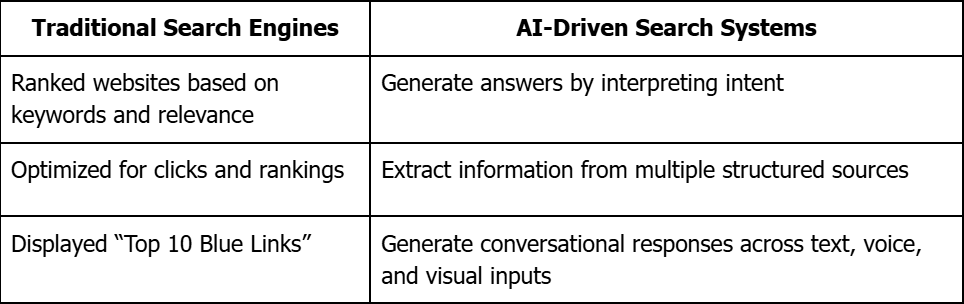
eCommerce businesses need to strategize for visibility in AI-driven search, which requires a different approach entirely—one built on four strategic pivots: structuring content for AI extraction rather than just human readability, optimizing across text, voice, and visual modalities simultaneously, shifting from traditional SEO to Answer Engine Optimization, and diversifying discovery channels beyond Google's ecosystem. Let’s explore this in detail!
How AI Systems like ChatGPT, AI Mode, and Perplexity Generate Answers?
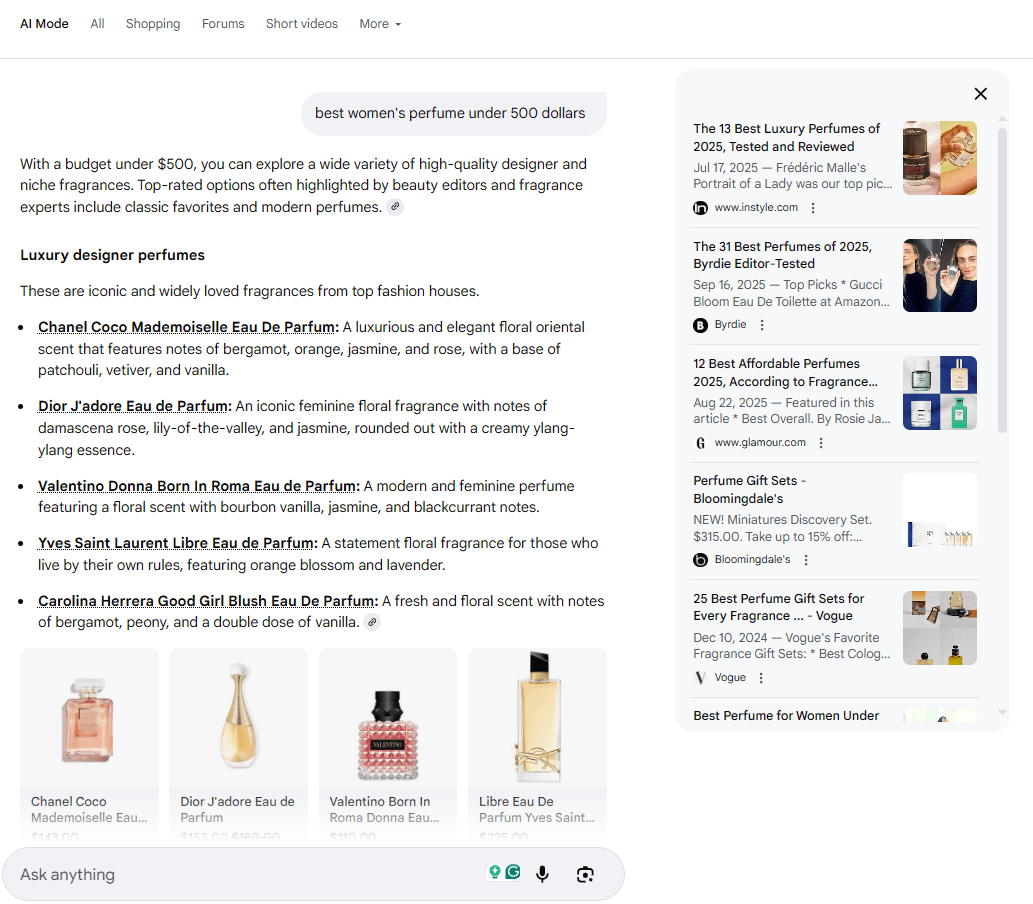
- Google’s AI Mode provide instant summaries directly at the top of the results page, highlighting the most relevant information aligned with the user’s query. These summaries are followed by supporting links, but users often find the information they need without exploring further
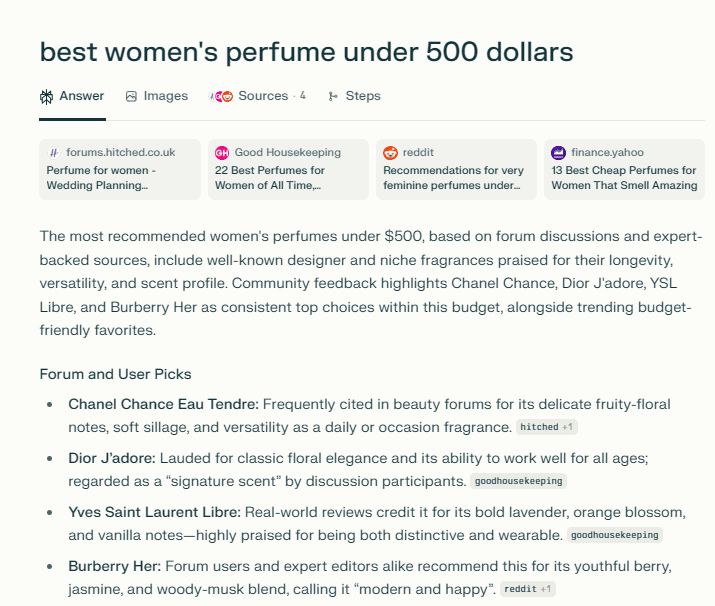
- Perplexity builds detailed, citation-backed responses by dynamically referencing multiple trusted sources — from product pages and expert reviews to forums and databases.
- ChatGPT (with browsing enabled) offers a more conversational experience, adapting to user follow-ups, filtering preferences, and even generating visual content when requested. It includes referenced sources at the end of each response
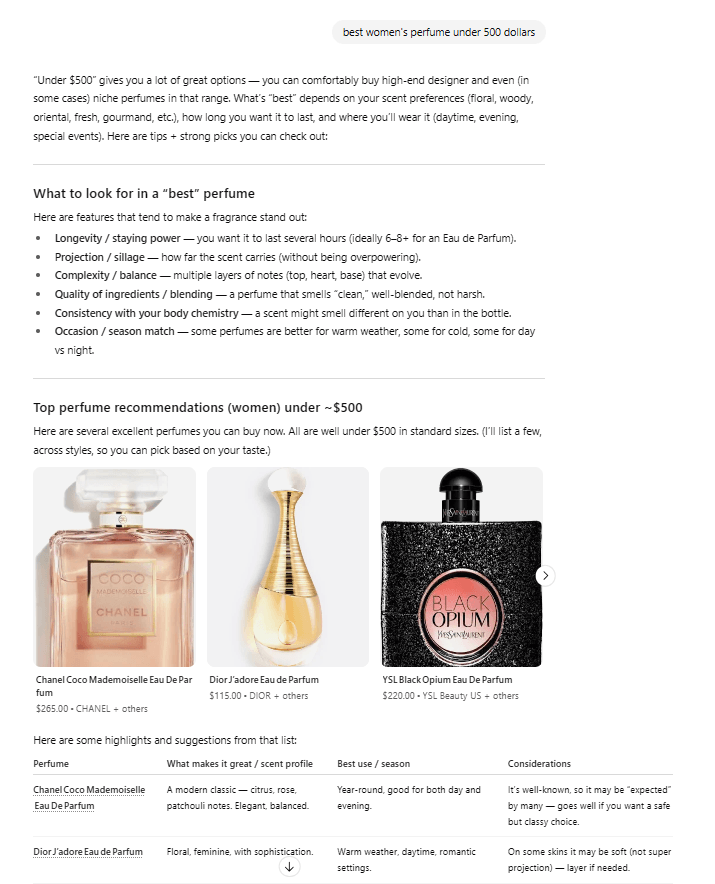
The Evolved Consumer Behaviour & AI‑Driven Search in eCommerce
Multi‑Intent / Conversational Queries
Consumers no longer type “blue running shoes under $1000” only. They might write:
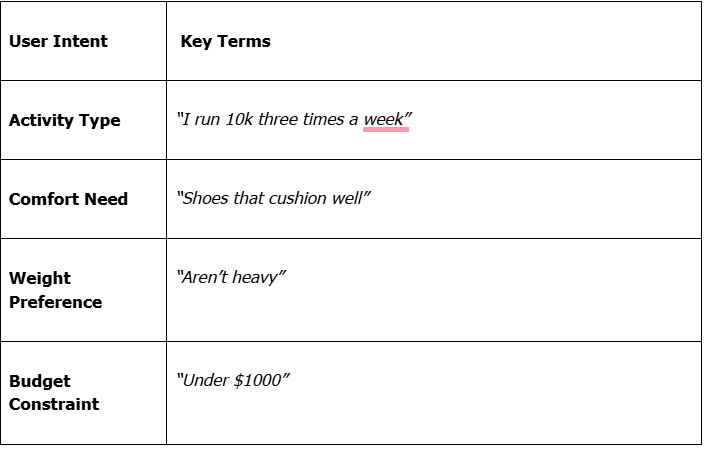
“I run 10k three times a week, need shoes that cushion well but aren’t heavy — show me something under $1000”
Such a query bundles intent + use case + constraint + preference.
Semantic parsing to natural language queries, identifying core intents, product attributes, and contextual constraints (like cushioning, weight, and budget) to generate personalized recommendations.
The Rise of Voice Commerce
The voice commerce market is projected to reach $395.53 billion by 2029. With virtual assistants (Alexa, Siri, Google Assistant), the voice search queries are:
- More conversational (e.g., “I’m looking for stretchable and breathable yoga pants I can wear outdoors and to yoga class”).
- More iterative in nature—users often begin with a broad question and narrow down their preferences through follow-up prompts.
- Users often include local intent, time sensitivity, or availability.
- Queries expect direct, spoken responses — so content must be structured for clarity and brevity.
- Voice assistants are designed to extract content that can be delivered as clear, conversational answers. The eCommerce AI search strategies to improve visibility in voice search include structuring content as concise and answer-focused snippets with schema markup, summarising features, and using conversational FAQ-style bullets.
Visual Search in eCommerce
The visual search market is expected to be more than $150 billion by 2032. Unlike traditional keyword-based search, visual search involves the user uploading images to find similar products. Google’s AI Mode— allows multimodal input: Users can upload an image and type a natural-language prompt. The AI system interprets both visual and textual cues to refine results.
Example:
A user spots a floral midi dress and wants something similar, but in a different colour. They:
- Snap a photo of the dress (or upload an image from Pinterest).
- Open Google Search in AI Mode and upload the image.
- In the search bar, they type:
“I want this in pastel blue or lavender, ideally under $100.”
Google’s SGE interprets:
- The visual style (e.g., floral print, midi length, A-line silhouette),
- The text input (pastel colour preference, budget filter),
The visual search engine interprets the image and retrieves products that closely match in design or attributes. It presents cross-selling opportunities for eCommerce brands.
eCommerce AI search Strategies to Optimize for Visual
The product images must be high-quality, high-resolution, with clean backgrounds and multiple angles.
- Add rich visual metadata (alt text, tags, object segmentation).
- Include clear, keyword-rich filenames and alt text to support search engine understanding and accessibility
- Add Schema markup to help AI systems interpret and display your product images more effectively.
- Maintain consistent tagging, categorization, and feature descriptors to strengthen image-to-product mapping and retrieval accuracy.
The Crux: Consumers search across modalities—combining images, voice, and natural language. To stay visible, your product data must be structured, enriched, and aligned with how AI-driven systems interpret, retrieve, and generate results.
Best eCommerce AI Search Strategies for Visibility & Reach
Serve the Intent with Rich, Structured Content
Enhance Relevance with Intent-Based Content Structuring
Product pages should not merely display technical specifications (e.g., “16 GB RAM, 512 GB SSD, color: grey”), but clearly convey the use cases. For example:
- Optimized for 4K video editing workflows — exports timelines in under 20 minutes.
- Weighs less than 1.3 kg — suitable for mobile creators on extended workdays.
- Engineered for durability — tested for drop resistance up to 1 meter.
Integrating use-case language enables AI systems to better interpret and match content to user intent.
Address the Pain Points of the Target
The product descriptions must cater to common consumer concerns—such as overheating, discomfort, or poor fit—using trigger phrases like “spill-resistant,” “allergy-safe,” or “tight fit.” This enhances semantic match signals and improves the responses of AI-driven search in eCommerce.
Structure Content to Enhance AI and Search Engine Parsing
- Use semantic HTML headings (H1–H3) on product pages to clearly separate the product title, features, benefits, and usage details—helping AI systems parse page structure effectively.
- Incorporate short-form, answer-ready content through FAQs and quick specs.
Implement schema markup (e.g., Product, FAQ) to enhance voice search, improve snippets, and enable interpretation by AI systems.
Maintain Consistency and Catalog Integrity
Inconsistent or outdated product data introduces ambiguity and reduces visibility across AI search systems. Regular updates to product specs, attributes, and availability are essential for ensuring alignment with AI-driven discovery mechanisms.
2. Integrate Multimodal Content and Comparative Tools
Short-Form Videos and Product Demonstrations
Embed 15–30 second videos highlighting product use, unboxing, or side-by-side comparisons. AI systems increasingly leverage video metadata—such as captions, transcripts, and structured data—for content indexing. Incorporating timestamps and labeled chapters enhances discoverability, allowing platforms to index and retrieve specific, highly relevant segments of information.
High-Quality Imagery and Contextual Visuals
- Include multiple angles, zoomed-in views, 360° spins, and clean-background product shots.
- Supplement with contextual imagery (e.g., lifestyle shots) to help AI systems interpret real-world use cases and recognize visual styling attributes.
Product Comparison Matrices
Use structured comparison tables to highlight differences across product tiers or competitive alternatives. Clear column headings and consistent row structures make this data easier for AI systems to extract and summarize. Moreover, table schema should be used where applicable.
Leverage User-Generated Content (UGC)
Showcase user-submitted reviews, images, and videos to provide diverse visual and contextual signals. Structured review formats—including star ratings, pros and cons, and verified buyer labels—enhance credibility and improve AI-driven interpretation and ranking
3. Optimize for AI-Native Product Discovery Channels
Implement Answer Engine Optimization (AEO) Strategy
Optimization must extend beyond traditional SEO to include AEO—a strategy focused on optimizing eCommerce search with content easily parsed by AI systems. These systems prioritize content that is structured, intent-aligned, and capable of being cited or summarized in natural language responses
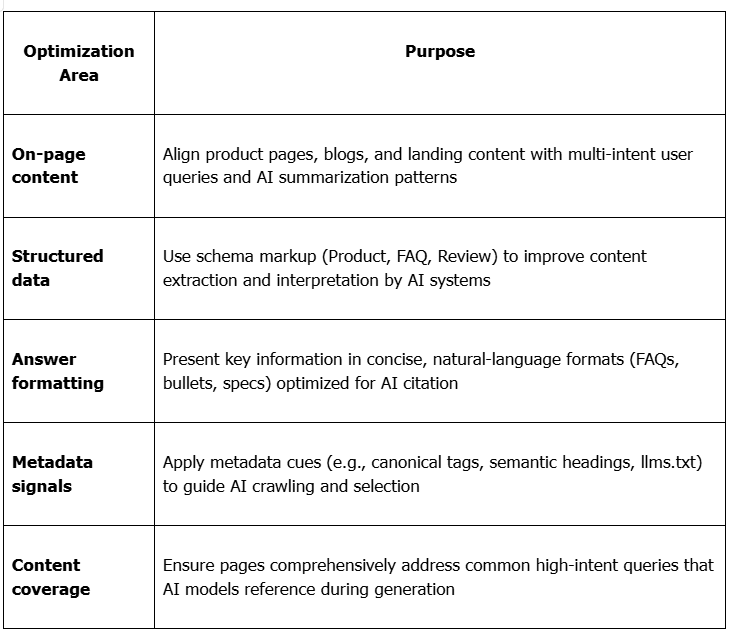
Core Optimization Areas for AI-Native Product Discovery
Invest in AI-Augmented On-Site Search (For DTC Brands)
For eCommerce brands operating direct-to-consumer (DTC) storefronts, AI-powered on-site search is no longer just a utility—it’s a dynamic engine for product discovery and personalization, directly impacting engagement, conversion rates, and customer lifetime value.
Key Features to Integrate:
- Natural Language Search (NLS): Implementing semantic or vector-based search engines that interpret intent. For example, a query like “lightweight waterproof jacket for hiking in fall under $100” should surface the most contextually relevant products—even if exact keywords don’t match.
- Behavioral Personalization: Re-rank and refine search results based on individual user behavior, such as browsing history, purchase patterns, and real-time session signals. This leads to personalized search in eCommerce, thereby providing a dynamic shopping experience tailored to each visitor’s preferences.
- Smart Search Assistance: Integrate features like autocomplete, typo tolerance, and dynamic filters (e.g., size, color, in-stock items) to reduce friction and guide users toward high-intent products faster.
- Learning-to-Rank Algorithms: Use AI models that learn from user engagement—clicks, bounce rate, user engagement time, and purchases—to continuously refine the relevance and order of search results.
4. Diversify Traffic Beyond Google to Build Resilient Growth Channels
With the rollout of Google’s AI Mode, DTC brands and marketplace sellers that rely heavily on a single channel risk abrupt drops in traffic and sales when algorithms change or generative AI absorbs clicks.
Strategic Diversification Tactics
- Build First-Party Data Assets Through Email Marketing
Email marketing provides immunity from algorithmic volatility, supports personalized lifecycle campaigns, and delivers high-margin revenue through controlled re-engagement.
- Market Across Social Channels for Demand + Discovery
Invest in platform-native content strategies across Instagram, TikTok, Pinterest, and LinkedIn. Short-form video, interactive polls, and livestream commerce not only deepen brand engagement but also generate multimodal signals increasingly indexed by AI systems for product discovery.
- Distribute Content Beyond eCommerce Sites
Diversify beyond your domain by publishing thought leadership across media formats—guest editorials, YouTube videos, and marketing podcast appearances. These assets create topical authority, widen audience reach, and improve your brand’s inclusion in AI-generated answers.
- Build Affiliate Ecosystems
Partner with micro-influencers, affiliate marketers, and complementary DTC brands to extend distribution. These networks drive incremental reach and increase your chances of being cited across third-party content—reinforcing AI visibility through diversified backlinks and references.
- Offset Organic Volatility with Paid Media
Leverage highly targeted advertising on paid social (Meta, TikTok, Pinterest) and programmatic platforms to capture demand surges or mitigate drops in organic traffic. AI-augmented targeting allows real-time message refinement and audience expansion.
The Future of eCommerce Search with AI: Without AI-optimized content and multimodal strategies, eCommerce businesses risk losing visibility, leading to higher customer acquisition costs and significant revenue loss. Partnering with an eCommerce SEO agency specializing in AI-native optimization provides the technical expertise and implementation frameworks needed to establish citability before competitive advantages solidify.
Sign in to leave a comment.