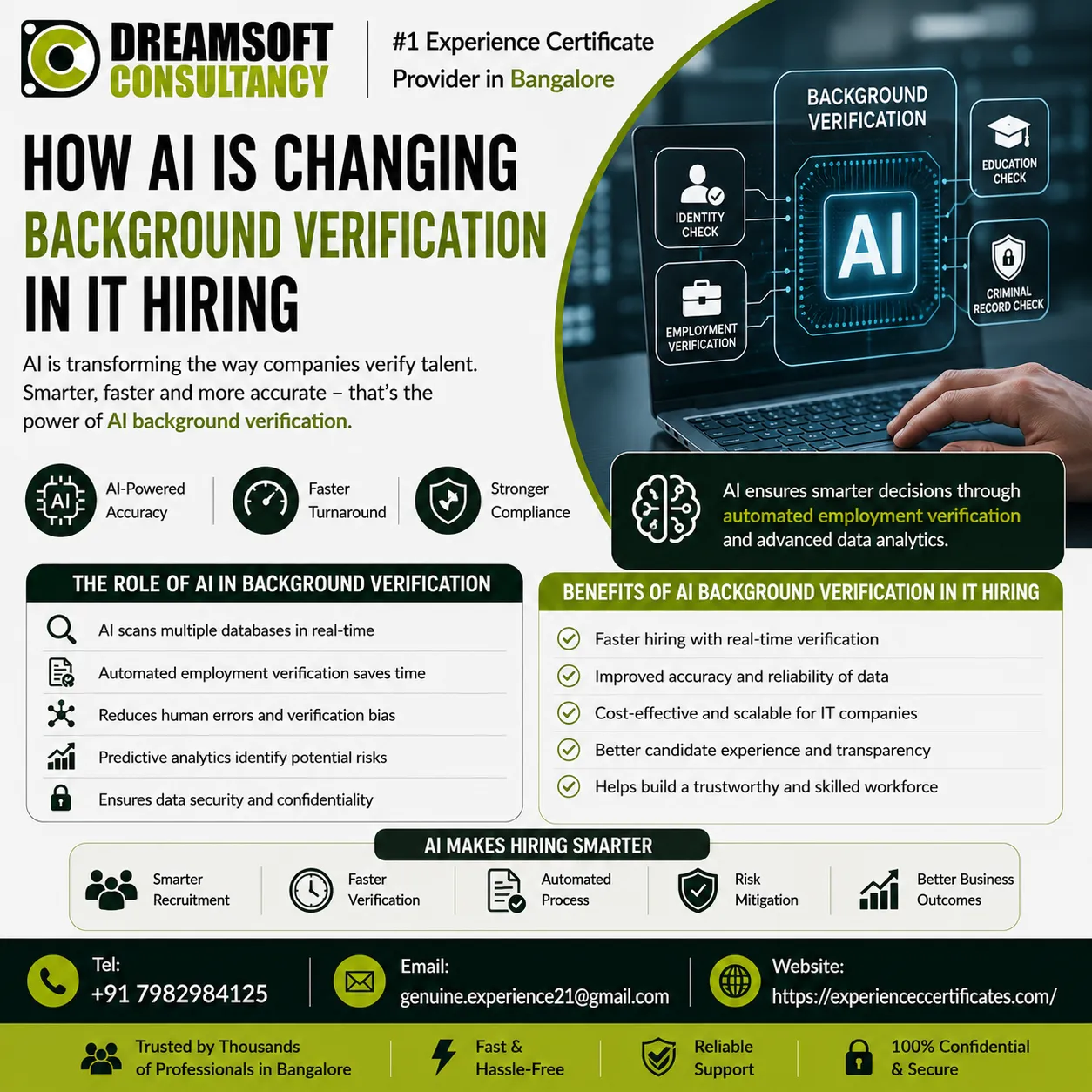

Not long ago, background verification meant a slow, manual process: an HR coordinator dialing your former employer, waiting days for an email reply, and cross-checking documents by hand. If you've been through it recently, you may have noticed something different — faster turnarounds, digital verification portals, and sometimes barely any human contact at all.
That shift has a name: AI background verification. IT companies, in particular, have moved fast to adopt it, given the sheer volume of hiring and the technical workforce's comfort with digital processes. This guide breaks down exactly how AI is reshaping BGV in IT hiring, what's genuinely improving, where the risks still lie, and what candidates should know as this becomes the new normal.
Why IT Hiring Was the First to Adopt AI-Driven Verification
IT companies hire at a scale most other industries simply don't. A single mid-sized tech firm might process hundreds of background checks a month, across multiple cities, roles, and staffing partners. Manual verification at that volume is slow, expensive, and prone to human error.
AI recruitment tools entered this space to solve a very practical problem: how do you verify thousands of candidates accurately without the process becoming a bottleneck for the entire hiring pipeline? For an industry already built on automation and digital infrastructure, adopting AI for verification was a natural next step, not a radical leap.
How AI Background Verification Actually Works
Unlike traditional BGV, which relies heavily on phone calls and manual document review, AI-driven systems combine several technologies to speed up and strengthen the process.
Document verification through optical character recognition (OCR) and pattern matching. AI systems can scan offer letters, experience certificates, and payslips, checking formatting, font consistency, and structural patterns against known templates to flag potential forgeries far faster than a human eye could.
Database cross-referencing. Rather than waiting for a company's HR team to respond to a manual request, AI tools can cross-check candidate details against digital employment records, official verification databases, and, in some regions, government-linked employment registries.
Natural language processing for reference checks. Some platforms now use AI to analyse written or transcribed reference responses, looking for patterns, inconsistencies, or red flags in the language used, rather than relying solely on a human reviewer's judgement.
Automated risk scoring. Many automated employment verification platforms generate a risk or confidence score for each candidate, flagging discrepancies for human review rather than requiring every single case to be manually processed from scratch.
What's Genuinely Improving for Candidates and Employers
It's worth being fair here — this shift isn't just about speed. Several real improvements come with it.
Faster turnaround times. What used to take one to two weeks can now often complete in a matter of days, particularly for candidates with straightforward, well-documented histories. That's a real benefit when you're waiting on an offer to be confirmed.
Reduced human bias in initial screening. Automated document and pattern checks apply the same standard to every candidate, reducing the inconsistency that can creep into manual, case-by-case review.
Better detection of sophisticated forgeries. As fake experience certificates and fabricated documents have become more convincing, AI's ability to detect formatting inconsistencies and cross-reference data at scale has actually raised the bar for what verification catches — a genuine win for honest candidates competing against fraudulent claims.
Where the Risks and Limitations Still Show Up
None of this means AI verification is flawless, and it's worth understanding where the real gaps remain.
False positives can flag genuine candidates. A legitimate employer that's since closed, restructured, or simply uses an unusual document format can trip pattern-matching systems, creating unnecessary friction for honest applicants.what to do if your verification gets flagged incorrectly
Database gaps, especially for smaller companies or informal roles. AI systems rely heavily on digital records. Startups, small businesses, or informal employment arrangements that never made it into a structured database can be harder to verify automatically, sometimes requiring the same manual follow-up the technology was meant to replace.
Over-reliance on automated scores. When companies lean too heavily on an AI-generated risk score without meaningful human review, genuinely explainable discrepancies — a notice period date mismatch, a title that changed after a promotion — can get treated as red flags rather than the routine administrative variations they usually are.
Data privacy concerns. AI verification systems process significant amounts of personal and employment data. Candidates are right to ask how that data is stored, who has access to it, and how long it's retained, especially when third-party platforms are involved.
What This Means for Candidates Applying to IT Roles Today
Understanding this shift isn't just interesting background — it changes how you should prepare.
Keep digital copies of every document, formatted cleanly. Since AI systems often rely on OCR and pattern recognition, blurry scans or inconsistent formatting can trigger unnecessary flags, even when the document itself is completely genuine.
Ensure consistency across every platform. Your resume, LinkedIn profile, and official documents should align exactly on dates and designations. Automated cross-referencing catches inconsistencies that a manual reviewer might have simply overlooked or asked about casually.
Don't panic if something gets flagged. A flag from an automated system usually triggers human review, not automatic rejection. If you're asked to clarify something, respond promptly and provide supporting documentation rather than assuming the worst.
Choose staffing partners and employers who are transparent about their process. If you're uncertain how a company's verification system works, it's reasonable to ask HR directly what platform they use and what the process involves.
Where This Is Likely Headed Next
AI-driven verification is still evolving quickly, and IT hiring will likely keep leading that shift. Expect deeper integration with government and institutional databases, more sophisticated forgery detection, and, eventually, verification processes that feel almost instantaneous for candidates with clean, well-documented histories.
The core principle underneath all of it stays the same, though: accurate, honest documentation will always verify smoothly, whether the system checking it is a human or an algorithm.
Your Next Step
AI is making background verification in IT hiring faster and, in many ways, more consistent — but it also introduces new points of friction, particularly around database gaps and over-reliance on automated scoring. The best way to navigate this shift is straightforward: keep your documentation clean, consistent, and digitally accessible, and respond quickly if anything gets flagged.
If you're currently job hunting in IT, take a few minutes today to review your resume and documents for consistency across dates and titles. It's a small step that makes automated verification work in your favour, not against you.






















Sign in to leave a comment.