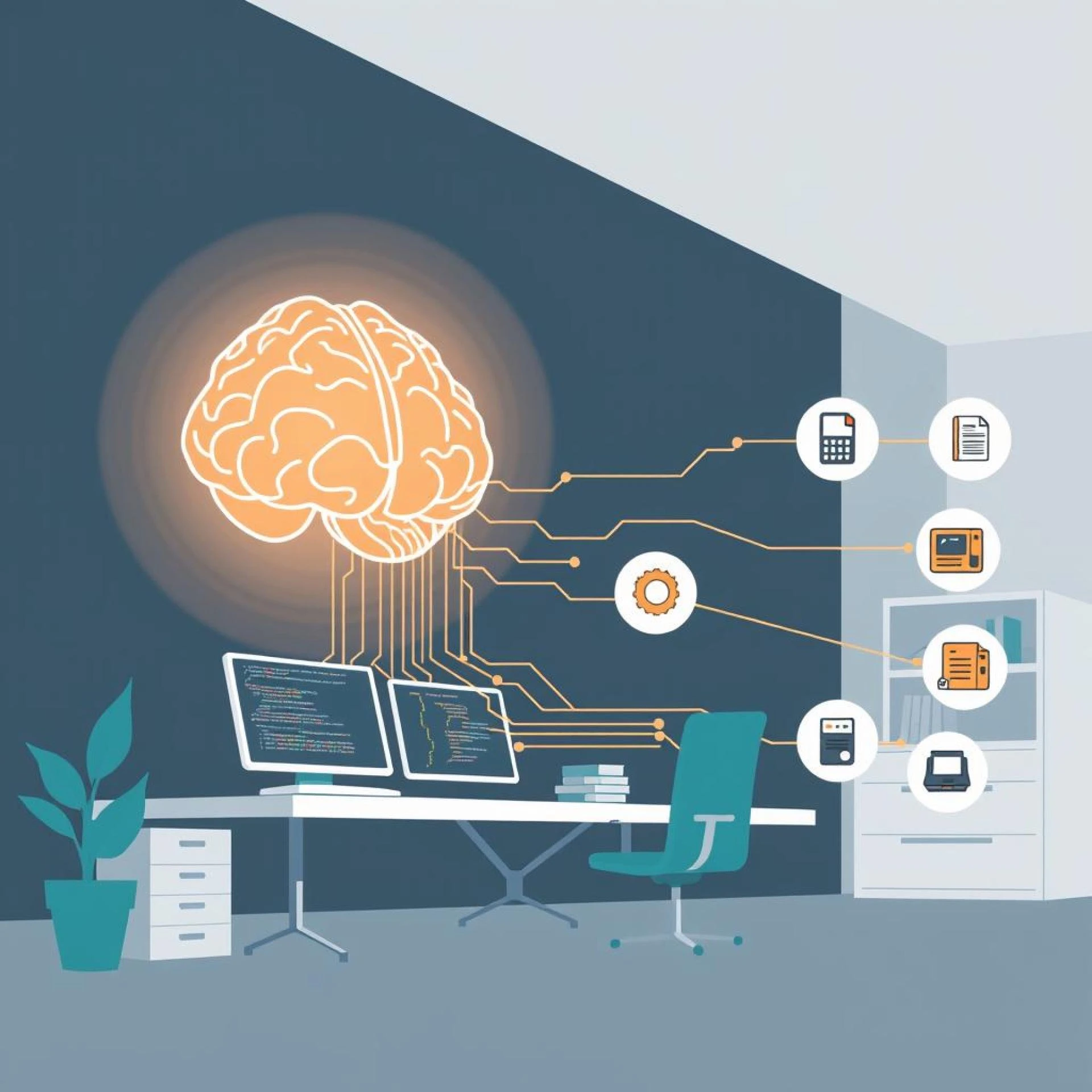

Artificial Intelligence has evolved from a buzzword to a practical, everyday tool in software engineering. What began as small-scale experiments has now become a deeply embedded part of the development workflow. AI writes code, detects bugs, generates test suites, manages deployment pipelines, and even performs code reviews.
Whether working as an independent developer or managing a large engineering team, AI development services are increasingly essential in building modern software. Enterprises, startups, and open-source projects are adopting AI not only for efficiency gains but also to reimagine how software is conceptualized and delivered.
With platforms such as GitHub Copilot, Amazon CodeWhisperer, and AI-driven agents like Devin, development is entering a new phase—one where automation blends seamlessly with human insight to produce better, faster, and more reliable results.
Initial Challenges in Adoption
1. The Learning Curve of Prompting & Supervision
AI tools can only reach their potential in the hands of developers who know how to guide them. A new discipline, prompt engineering, has emerged to help developers frame clear intentions, constraints, and context for an AI assistant. This represents a significant shift in mindset: instead of focusing solely on syntax, developers must now learn how to orchestrate the desired outcome.
For engineers with years of experience solving problems independently, this change can feel counterintuitive. Artificial Intelligence development company in India is not a replacement for skill—it amplifies it. However, that amplification still relies on a foundation of deep technical knowledge.
2. Accuracy, Quality, and Trust
AI-generated code is not inherently flawless. In fact, research has shown it can introduce significant risks. A 2024 Veracode study found that 45% of code generated by major LLMs—including GPT-4 and CodeWhisperer—contained security vulnerabilities, with Java-specific output showing a flaw rate of 70%.
This highlights a paradox: AI speeds up code creation, but it can also accelerate the introduction of bugs or insecure code. Without proper validation, these risks can quickly outweigh the benefits.
3. Organizational Friction
The Atlassian Developer Experience (DevEx) report for 2025 revealed that AI tools save developers more than 10 hours per week. Yet, many teams lose almost the same amount of time to poor documentation, siloed knowledge, and inefficient collaboration structures.
This reality shows that AI cannot fix structural issues on its own. Without strong processes and alignment, the technology can end up accelerating miscommunication instead of delivering clarity.
Our Approach to Problem-Solving
1. Context-Aware Code Generation
GitHub Copilot, Claude, and similar tools form part of our AI-assisted workflow. Developers receive intelligent suggestions for code completions, test cases, and documentation—directly in their IDE. These systems become even more powerful when combined with a context-rich understanding of the full codebase.
In large monorepos or microservices-based architectures, onboarding can take weeks. AI shortens this drastically by providing contextual insights on file relationships, dependencies, and conventions.
2. Development as Supervision, Not Execution
AI should be treated as a collaborator rather than a replacement. Developers remain responsible for reviewing and refining AI output. The role of a software engineer increasingly resembles that of an editor-in-chief—overseeing, curating, and improving drafts created by AI.
This approach encourages stronger architecture decisions, more comprehensive testing, and higher maintainability. GitHub’s CEO recently summarized the change:
3. Integration Across the SDLC
An Artificial Intelligence development company in India embeds AI across the entire software development lifecycle in our approach:
- Drafting user stories and technical specifications
- Writing unit tests and identifying coverage gaps
- Automating environment setup and infrastructure provisioning
- Summarizing code changes and reviewing pull requests
- Assisting with deployment, rollback, and release notes
- Running security and compliance scans on generated code
Consistent application of AI at every stage ensures faster delivery without sacrificing quality.
Outstanding Features of AI-Augmented Development
Intelligent Pair Programming
In-IDE assistants such as Copilot, Replit Ghostwriter, and Cursor create an always-available pair programming experience. They explain unfamiliar code, generate alternative implementations, and reduce time spent searching documentation.
Rapid Prototyping for MVPs
An artificial intelligence app development company in USA will confirm how AI allows working prototypes and full-stack MVPs to be built in days instead of weeks. The concept of vibe coding—producing entire applications through descriptive prompts—has gained traction in early-stage startups. According to Y Combinator, 25% of startups in its early 2025 cohort used AI-driven development for their initial product builds.
While AI-first codebases may require refactoring before scaling, they enable faster market testing and investor demonstrations.
Operational Efficiency and Cost Optimization
Teams can increase throughput without proportionally increasing headcount. AI Development services handle repetitive tasks such as boilerplate generation, data mapping, and documentation updates, freeing developers for strategic and creative work.
Services Delivered
- AI Code Assistant Deployment
- Integrating GitHub Copilot, Claude, and Amazon CodeWhisperer into development workflows.
- Prompt Engineering Training
- Enabling teams to create precise prompts and evaluate AI output effectively.
- Secure AI Coding Practices
- Applying automated vulnerability scanning and integrating SAST/DAST into AI-generated output.
- Custom AI Tools
- Developing proprietary agents to handle boilerplate, test generation, or migration scripting for specific stacks.
- DevOps AI Automation
- Enhancing CI/CD pipelines with AI-assisted configuration, automated release notes, and rollback scripts.
Key Project Milestones
- Assessing AI readiness and selecting appropriate tools.
- Running sandbox trials with open-source and proprietary code.
- Onboarding developers and integrating AI assistants into IDEs.
- Establishing review and override protocols for AI output.
- Executing a full AI-assisted development cycle.
- Conducting post-delivery audits and performance reviews.
Technology Stack
- AI Tools: GitHub Copilot, Claude, Amazon CodeWhisperer, Cursor
- Languages: JavaScript, Python, TypeScript, Java, Go
- Frameworks: React, Django, Express, Spring Boot
- DevOps: Jenkins, GitHub Actions, Docker, Kubernetes
- Security: Snyk, Veracode, SonarQube
- Testing: Jest, PyTest, AI-assisted Cypress/E2E
- AI Agent Platforms: Devin AI, Replit Ghostwriter
Final Outcome
AI is changing more than just the speed of software development—it is reshaping the very nature of the work. Developers are no longer just authors of code; they are curators, reviewers, and prompt designers who guide AI toward the right solutions.
A well-structured integration strategy, complete with human oversight, security validation, and scalable design, allows teams to deliver higher-quality products faster. Our experience shows measurable results: reduced bug counts, shorter review cycles, and significantly faster MVP delivery.
The future of development will be defined not simply by how quickly code can be shipped but by how intelligently it can be created. AI is not just a time-saver—it is becoming a core creative partner in the craft of building software.










Sign in to leave a comment.