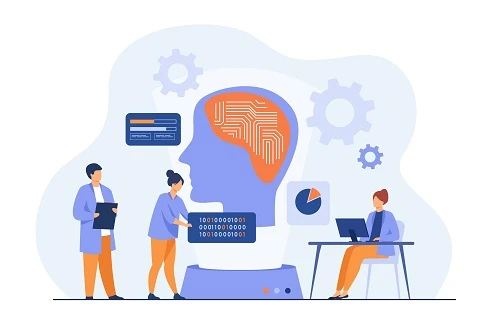

In today’s fast-paced customer experience landscape, businesses are realizing that AI Support is no longer a futuristic novelty—it’s a strategic necessity. But does that mean putting aside your existing CRM systems? Far from it. In fact, combining AI-driven support with robust CRM infrastructure unlocks a synergy that empowers teams to deliver smarter, faster, more personalized service. Let’s explore how this integration works—and why it might be just what your business needs.
Bridging the Gap Between Queries and Insight: AI Support in Action
Imagine a customer lands on your website at midnight with a question about their billing. They don’t want to wait until business hours. That’s where AI support shines. Through chatbots, virtual agents, or AI-powered ticket triaging, you can address simple issues instantly, escalate complex ones, and capture key data—24/7.
The Benefits at a Glance
- Instant responses: AI handles frequently asked questions (order status, password resets, product specs), reducing wait times and deflecting repetitive work from your human agents.
- Context awareness: With intelligent routing, the AI can analyze user inputs, detect sentiment or urgency, and forward high-priority issues to the right department.
- Self-learning capabilities: Through conversation logs and feedback loops, AI gets smarter over time—adapting to your business’s tone, terminology, and evolving queries.
- Scalability at minimal cost: During peak seasons or sudden spikes in traffic, AI scales without the proportional headcount increase.
While these features are compelling, AI support tools by themselves can’t manage the relational and operational depth that a CRM system provides. That’s where integration becomes a game changer.
How AI and CRM Form a Powerful Duo
Let’s walk through how a modern AI-support layer complements CRM, enhancing your customer operations rather than replacing any element.
1. Data enrichment and context-sharing
When the AI handles an interaction, it can feed structured data (customer name, issue type, purchase history) into the CRM instantly. So when a human agent takes over, they see a full context: previous interactions, order history, and any open tickets. No more asking the same questions twice.
2. Intelligent lead capture and scoring
Your AI engine can detect when a support conversation may convert into a sales opportunity (for example, a customer asking about upgrades). It can tag and route that lead into CRM sales pipelines, complete with inferred data points. Sales teams get warmer leads and less manual discovery work.
3. Automated workflow triggers
Based on AI interactions, CRMs can launch automated workflows—triggering follow-up emails, assigning tasks to support reps, or escalating to managers. The result is a smooth, proactive process rather than reactive firefighting.
4. Insight-driven improvements
With AI capturing interactions, sentiment, and user trends, you gain analytics that feed decision-making in your CRM dashboards—identifying common pain points, content gaps, and automation opportunities. This insight loop helps you optimize both support and sales processes.
5. Unified omnichannel experience
Your AI support layer can engage users across chat, messaging apps, email, or voice. Because it syncs with your CRM, all those touchpoints centralize in one view—so agents don’t have to jump between fragmented tools.
In short: AI handles routine, repetitive, time-sensitive tasks and hands off more complex, relational work to your CRM-fueled team. The combined architecture is more powerful, efficient, and human-centered than either alone.
Real-World Scenarios: Where this Synergy Delivers
- E-commerce scale-up: An online retailer uses AI chat for sizing, returns, and FAQs. When a chatbot detects a frustrated buyer, it instantly routes the session to a human agent along with all collected context in the CRM. Conversion rates improve, returns drop, and agent satisfaction rises.
- SaaS support desk: A software company leverages AI to collect logs, error codes, and system states before assigning a ticket in the CRM. The support engineer already knows what the user sees—no tedious steps lost in translation.
- Telecom or utility services: High call volumes often overwhelm human agents. AI handles status checks or account inquiries instantly, freeing agents to tackle outages, billing disputes, or complex plan changes—with each interaction stored in the CRM for follow-up or analysis.
These examples illustrate the high-leverage, real-world impact when AI and CRM talk to each other.
Keys to a Smooth Integration
To make this synergy effective, keep these best practices in mind:
- Define clear handoff rules — Decide when AI continues vs. when it escalates to human support.
- Map data models carefully — Ensure AI-collected metadata (issue tags, sentiment scores, user intents) aligns with CRM schemas.
- Train with domain data — The AI should understand your industry’s vernacular, product lines, and support policies.
- Maintain oversight loops — Periodically audit AI escalations to confirm quality, prevent misroutes, and refine processes.
- Keep user experience central — Don’t force a robotic handoff; transitions should feel seamless to the end user.
Why Maintaining Traditional CRM Matters
Even though AI delivers remarkable automation and agility, Traditional CRM remains the backbone of customer relationships. It holds your enterprise’s historical data, long-term sales pipeline, account hierarchies, manual workflows, and strategic insights. AI support enhances your front door, but the CRM remains your home base for nurturing long-term value and customer lifecycle management.
In other words: AI support is the new front line, but traditional CRM is the command center.
Objective & Call to Action
If you’re ready to explore how AI support can seamlessly complement — rather than replace — your CRM infrastructure, DialDesk can help you bridge the gap. With deep experience in AI integrations and customer-centric systems, DialDesk empowers businesses to adopt scalable, intelligent support without losing the core relational strength of their CRM.
Get in touch with DialDesk today to schedule a demo and discover how AI support and your existing CRM can work in perfect harmony—boosting efficiency, reducing response times, and strengthening customer loyalty.




























Sign in to leave a comment.