
The world of web development is changing faster than ever, and at the heart of this transformation is Artificial Intelligence (AI). What was once a straightforward process of coding websites has now evolved into an intelligent, data-driven discipline where machines can predict user behavior, personalize interfaces, and even help developers write better code.
If you think about it, web development used to be purely technical — designers focused on visuals, developers worked on code, and businesses hoped it all connected smoothly. But AI has changed that. It has turned websites into living systems that understand, learn, and respond to users in real time.
Let’s explore how AI is reshaping the future of web development and why this shift is opening new opportunities for businesses and developers a like.
1. Smarter Website Design Through AI
One of the biggest ways AI is transforming web development is in the design phase. Traditionally, designing a website required manual wireframing, layout planning, and testing. Now, AI can automate much of that process.
AI-powered tools analyze user data, design preferences, and behavior patterns to suggest the best design layouts automatically. They can recommend color schemes, font combinations, and even button placements that improve user engagement.
Imagine a system that learns from thousands of successful websites and applies that knowledge to create something uniquely suited for your brand. That’s what AI design assistants do today. They help developers and designers work faster, more efficiently, and with greater precision.
The goal isn’t to replace designers but to enhance their creativity. With AI handling repetitive design tasks, creative teams can focus on strategy, storytelling, and innovation the elements that truly make a brand stand out.
2. AI in Coding and Development
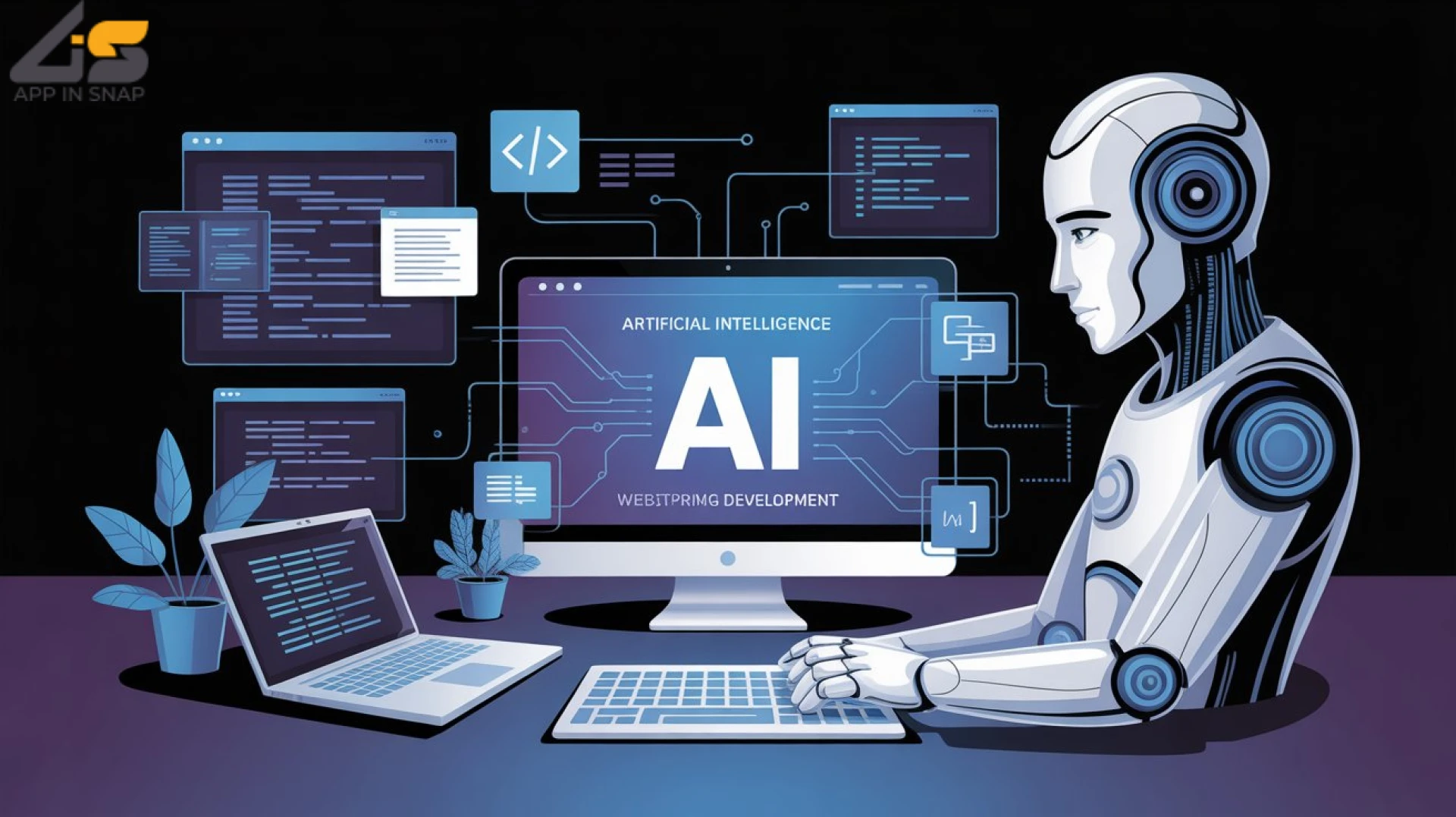
Writing code has always been a technical art, but AI is making it smarter and more intuitive. Developers now use AI-assisted coding platforms that understand context, predict syntax, and even suggest entire lines of code.
These tools analyze past coding patterns and errors, helping developers avoid common mistakes and accelerate production. What once took hours of debugging can now be done in minutes.
Machine learning algorithms can also test websites automatically, identify potential performance bottlenecks, and optimize backend systems without human intervention.
This not only saves time but improves the overall quality of the final product. As a result, web developers can focus more on innovation building intelligent features rather than spending time fixing repetitive code issues.
3. Personalized User Experiences
In the modern digital world, personalization isn’t a luxury it’s a necessity. Users expect websites to understand their preferences, habits, and needs. That’s where AI truly shines.
AI-driven web platforms can now analyze user data in real time to deliver personalized recommendations, tailored content, and dynamic interfaces. For example, an eCommerce website can display products based on browsing history, purchase behavior, or even mood detection from facial recognition.
Chatbots and virtual assistants are another great example. They provide instant support, answer user queries, and guide visitors through the website. These systems learn from every interaction, becoming smarter and more efficient over time.
In short, AI allows websites to feel alive adapting to each visitor, improving engagement, and turning casual visitors into loyal customers.
4. Enhancing Web Security
As the internet grows, so do cyber threats. Traditional security systems can’t always keep up with the evolving nature of attacks. AI plays a crucial role here by offering proactive, intelligent protection.
Machine learning algorithms monitor traffic patterns, detect suspicious activities, and automatically block potential threats before they cause harm. They can even identify unusual login attempts or fraudulent behavior in real time.
For developers, this means peace of mind. AI acts as a constant security guard, analyzing behavior data and learning from each new threat it encounters. Over time, it becomes more accurate and responsive, reducing the need for manual monitoring.
Security is no longer reactive with AI, it becomes predictive.
5. Improved SEO and Content Optimization
Search engines love websites that provide value, speed, and relevance. AI helps developers and marketers achieve all three.
Modern AI-powered SEO tools can analyze website performance, keyword usage, user behavior, and competitor trends to optimize your site effectively. They can even rewrite meta descriptions or suggest content updates to improve ranking.
AI can also predict what type of content users are likely to search for next, helping websites stay ahead of the curve.
For instance, natural language processing (NLP) allows search engines to understand context better than ever before. AI-driven SEO ensures that your website doesn’t just get visitors it attracts the right visitors.
6. Voice Search and Conversational Interfaces
Voice search is changing how users interact with the web. With smart assistants like Alexa, Siri, and Google Assistant, people no longer just type queries they talk to their devices.
Web developers must now design websites optimized for conversational language. AI helps interpret voice inputs, process natural language, and respond with relevant results.
This means websites need to adapt to the way people speak, not just the way they type. Developers are now building conversational interfaces and integrating speech recognition APIs to make browsing more natural and intuitive.
AI bridges the gap between human communication and machine understanding creating seamless, user-friendly experiences.
7. Predictive Analytics and User Insights
AI’s power lies in its ability to analyze data at scale. Predictive analytics uses this capability to forecast user behavior and business outcomes.
Web developers can integrate AI analytics systems that track how users interact with a site where they click, how long they stay, what content they read, and when they leave.
This data helps developers refine layouts, improve user flows, and increase conversion rates. For businesses, it means smarter decisions based on real evidence, not just assumptions.
AI doesn’t just show you what’s happening; it helps you understand why it’s happening and what to do next.
8. Accelerating Development with Automation
AI and automation go hand in hand. With AI-based tools, developers can automate repetitive tasks like testing, bug fixing, or code formatting.
Continuous integration and delivery pipelines can now be enhanced with AI, ensuring faster, more stable deployments. This means less downtime, fewer errors, and smoother updates.
Automation also helps teams collaborate better. AI can track progress, manage workloads, and even assign tasks based on developer performance or expertise.
Ultimately, AI helps build smarter workflows that save time and improve quality two things every development team values deeply.
9. The Future of AI-Driven Web Development
We’re just scratching the surface of what AI can do in web development. As technology evolves, we’ll see even more intelligent systems that not only assist developers but collaborate with them in real time.
Imagine websites that self-optimize based on user data, automatically update their design based on trends, or build new pages based on voice instructions. That future isn’t far away.
The integration of AI, automation, and web technology will continue to push boundaries making digital experiences more human, efficient, and engaging.
10. The Role of Companies Driving This Change
Behind this wave of innovation are companies that specialize in integrating AI into real-world business solutions. App in Snap is one such company helping businesses harness the power of digital infrastructure and AI technologies to stay ahead of the curve.
Their expertise in systems, cloud, networks, and enterprise solutions enables businesses to build intelligent digital environments that adapt, scale, and evolve.
AI in web development is not just about coding smarter; it’s about building digital ecosystems that think, learn, and grow alongside businesses. That’s exactly what App in Snap helps companies achieve turning ideas into intelligent, future-ready platforms.
Conclusion
Artificial Intelligence has become the secret ingredient powering the next era of web development. It simplifies coding, enhances design, improves security, and creates websites that truly understand their users.
As AI continues to evolve, developers will have even more powerful tools at their disposal tools that learn, adapt, and collaborate. For businesses, it means greater efficiency, deeper insights, and better customer experiences.
The fusion of AI and web development is more than just a trend it’s a revolution that’s reshaping how we think about the internet. And companies like
are helping lead that transformation, ensuring that businesses don’t just keep up with the digital future they help build it.
























Sign in to leave a comment.