
Precision is essential in the complex world of manufacturing. Maintaining precise tolerances is essential when creating essential components for the aerospace, medical, automotive, or any other industry. Although their importance in the quest for quality and accuracy is sometimes overlooked, boring tools play a crucial role in this pursuit of precision. The blog below will highlight the critical role boring tools play in achieving tight tolerances and upholding the highest quality standards across a range of industries.
Understanding tolerances in manufacturing
Tolerances are defined as the permissible variation in dimensions or properties of a part or product. They specify the range that a feature or component must lie in order for it to function correctly. Tolerances are commonly specified in engineering drawings and blueprints, and they are necessary for the interchangeability and assembly of parts. For example, consider a precision ball bearing used in machinery. The internal diameter needs to have a precise tolerance to allow for proper fits and clearances, ensuring that the bearing performs as intended. Tight tolerances are especially important in applications where components must interact closely, where seals must be airtight, or where moving parts must exhibit minimal friction and we
How do boring tools help in achieving tight tolerances?
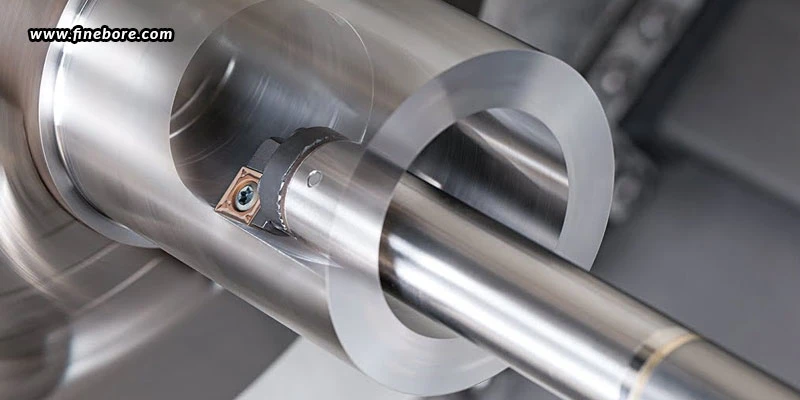
Boring tools are essential to achieve precise tolerances in manufacturing. They are used in many different applications to refine and enlarge existing holes, and to ensure that internal diameters, holes, and bores are precise. Here’s how they make a difference.
Precision machining: With precision and control, boring tools remove material to guarantee that the finished hole or bore closely adheres to the specified dimensions. Attaining precise tolerances requires this degree of control.
Fine finishes: Boring tools can achieve remarkably smooth surface finishes. Boring tools can produce the required finish within strict tolerance limits, whether the goal is to achieve a mirror-like surface or a certain roughness requirement.
Fixing imperfections: Occasionally, previous machining operations may have left little flaws or misalignments in the holes or bores that were produced. These problems can be fixed with boring tools, which will return the dimensions to the specified tolerances.
Customization: A variety of sizes and kinds of boring tools enable manufacturers to tailor the tooling for specific applications. When trying to meet strict tolerance standards in a variety of industries, this versatility is crucial.
Applications across a range of industries
Numerous industries, each with specific requirements for strict tolerances, use boring tools. Here’s a glimpse of how these tools are utilized.
Aerospace: Tight tolerances are unavoidable in the aerospace sector. Precision bores are made in vital components like engine parts, landing gear, and aircraft structures using boring tools. Achieving the proper tolerances is essential to guaranteeing the dependability and safety of aerospace systems.
Automotive: Engine cylinders, gearbox parts, and brake system components are machined in the automotive industry using boring tools. In order to maximize engine performance, fuel efficiency, and safety, precise tolerances must be achieved.
Medical: To ensure accuracy and dependability, medical devices need to meet strict tolerance requirements. Boring tools are employed in the manufacture of implants, surgical instruments, and other medical components where exact fits are crucial.
Oil and gas: Strict tolerances must be met by components used in the oil and gas sector, such as connectors and valves, to guarantee dependable and effective operations. Boring tools aid in achieving the required level of precision in these critical components.
Tool and die making: Boring tools are employed in the production of tools and dies, which are utilized to make a variety of items, in order to create accurate interior features. The high-quality final products are a result of the strict tolerances used in tool and die production.
Challenges and considerations
Although boring tools are essential for attaining precise measurements, there are certain obstacles and factors to take into account when using them, such as
Tool selection: It’s important to select the appropriate boring tool. The geometry, composition, and coatings of the tool must match the particular material and application that it is being used on.
Machining conditions: To ensure tight tolerances and tool longevity, proper setup and machining conditions, including tool speed, feed rate, and coolant use, are crucial.
Tool maintenance: To guarantee that the boring tool keeps operating accurately, regular tool maintenance and inspection are required.
Workpiece material: The efficiency of boring tools is greatly influenced by the material that is being machined. Certain materials could call for certain tools.
Quality control: To ensure that the completed workpiece complies with the required tolerances, stringent quality control procedures, such as measurement and inspection, are essential.
In summary, boring tools are essential to many different industries, including aerospace, automotive, medical devices, and more. The capacity to maintain and improve bore, hole, and internal diameter precision guarantees that the goods and parts we use on a daily basis fulfil the strict requirements needed for dependability, performance, and safety. Strict tolerances are essential to current industrial quality, partly because of the accuracy of drilling equipment. This makes boring tools suppliers in Bangalore, such as FineTech Toolings, an important part of the manufacturing chain.




























Sign in to leave a comment.