
Electrical enclosures protect sensitive components from dust, moisture, accidental contact, and environmental conditions. However, enclosing electrical equipment also creates a common challenge: heat buildup. Transformers, power supplies, drives, controllers, switches, and other components can generate heat while operating. Without proper airflow, rising internal temperatures can affect performance, shorten component life, and contribute to unexpected downtime.
Choosing the right cabinet cooling fan kit is therefore more than selecting a fan that fits an enclosure opening. The right solution should provide adequate airflow, work with the enclosure design, respond appropriately to temperature changes, and suit the environment where the cabinet operates.
For facilities across the United States, including manufacturing plants, automation systems, telecommunications installations, and commercial electrical applications, understanding these factors can make enclosure cooling more effective and reliable.
What Is a Cabinet Cooling Fan Kit?
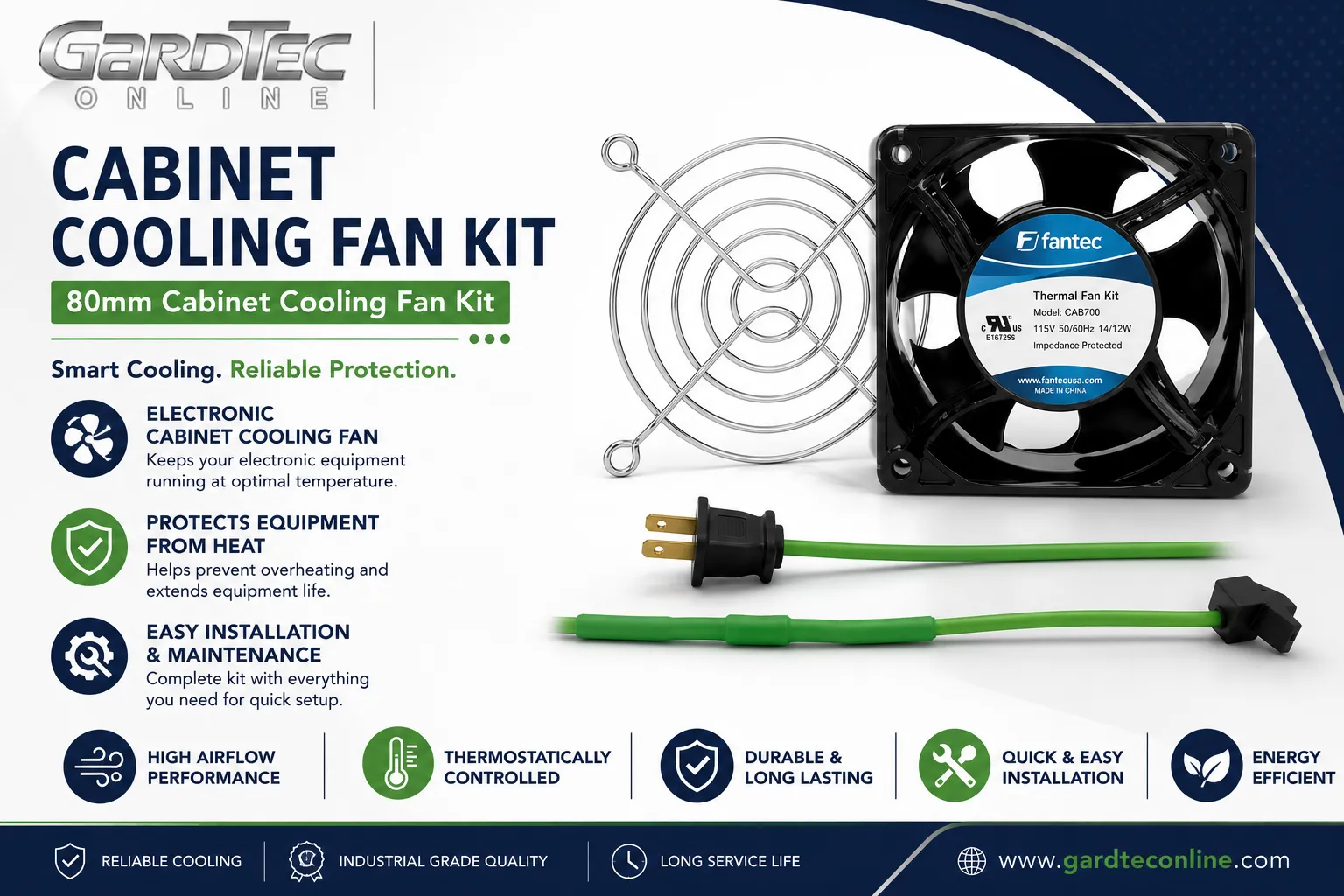
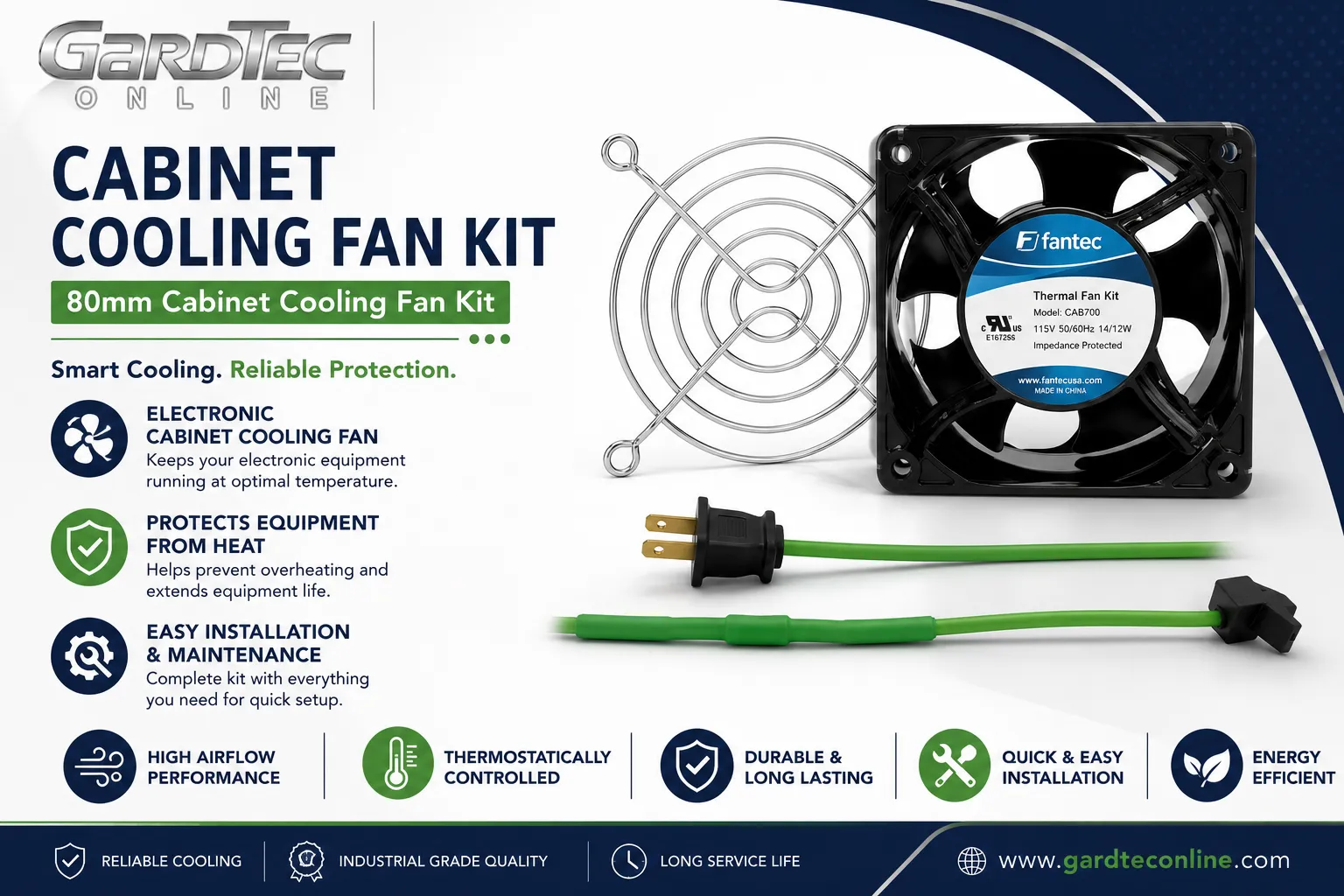
A cabinet cooling fan kit is a ventilation solution designed to move air through an electrical or electronic enclosure. Depending on the configuration, a kit may include a cooling fan, filter, fan guard, mounting hardware, thermostat, or other accessories.
The basic principle is simple: cooler ambient air enters the enclosure while warmer air is moved out. This continuous air exchange helps prevent excessive heat from accumulating around electrical components.
A cabinet cooling fan kit with thermostat control can provide an additional advantage. Instead of operating continuously, the fan can respond to temperature conditions, helping provide cooling when it is actually needed.
How Do You Choose the Right Cabinet Cooling Fan Kit?
Several factors should be considered before selecting a cooling solution. Looking only at fan size can lead to an undersized system or unnecessary airflow.
1. Determine the Enclosure Size
Start by measuring the enclosure's height, width, and depth. The available mounting area is important because cooling fans are available in different dimensions.
A larger cabinet may require greater airflow or multiple fans, while a compact enclosure may need a smaller fan assembly. The physical dimensions of the cabinet should always be considered alongside the required airflow.
2. Calculate the Heat Load
Heat generated inside the enclosure is one of the most important factors in selecting an electrical enclosure cooling fan.
Consider the equipment installed inside the cabinet and the amount of heat each component produces. Components such as variable frequency drives, power supplies, transformers, and industrial controllers can contribute significantly to the total heat load.
The higher the internal heat generation, the more effective the cooling strategy needs to be.
3. Check the Required Airflow
Fan airflow is commonly expressed in CFM, or cubic feet per minute. CFM indicates how much air a fan can move.
When comparing an enclosure cooling fan, don't focus only on the highest advertised CFM. Real-world airflow can be affected by filters, guards, cabinet openings, internal components, and resistance to airflow.
The goal is to select a fan that provides sufficient practical airflow for the enclosure rather than simply choosing the largest available model.
4. Consider Thermostat Control
A thermostat controlled cooling fan can be useful when enclosure temperature varies throughout the day or according to equipment load.
Instead of manually switching the fan on and off, a thermostat can activate cooling when the temperature reaches a selected point. This can make temperature management more convenient and may reduce unnecessary fan operation.
For equipment that experiences changing thermal loads, automatic temperature control can be a valuable feature.
5. Evaluate the Operating Environment
The environment surrounding the enclosure also matters. A cabinet located inside a clean, temperature-controlled facility has different cooling requirements from one installed in a dusty industrial area.
Consider exposure to:
- Dust and airborne particles
- Oil or industrial contaminants
- Humidity and moisture
- High ambient temperatures
- Continuous equipment operation
- Outdoor or semi-outdoor conditions
In demanding environments, filtration and appropriate enclosure protection should be considered as part of the overall electrical cabinet cooling strategy.
Why Is Electrical Enclosure Ventilation Important?
Effective electrical enclosure ventilation helps prevent heat from becoming trapped around sensitive components. Excessive temperatures can influence electronic performance and may accelerate component aging.
Proper ventilation can also support more consistent operating conditions. However, ventilation should be designed according to the cabinet's equipment, environment, and thermal requirements.
For industrial applications, industrial cabinet cooling is particularly important because equipment may operate for long periods under substantial electrical loads.
Intake or Exhaust: Which Fan Configuration Is Better?
Fan placement influences how air moves through an enclosure.
An intake fan brings cooler ambient air into the cabinet, while an exhaust fan removes warm internal air. In many applications, combining an intake and exhaust approach can create a more controlled airflow path.
The ideal configuration depends on the enclosure design, heat sources, available openings, and environmental conditions. Air should ideally move across heat-generating components rather than simply circulating in one area.
Filters may also be used on intake openings to help reduce the amount of dust entering the cabinet.
Cabinet Cooling Fan Kit Features and Benefits
| Feature | Benefit |
|---|---|
| Appropriate fan size | Helps match airflow to enclosure requirements |
| Suitable CFM rating | Supports effective heat removal |
| Thermostat control | Automates fan operation based on temperature |
| Filter option | Helps reduce airborne contaminants entering the enclosure |
| Fan guard | Provides added protection around moving fan components |
| Compact mounting design | Makes installation easier in suitable cabinet openings |
Common Applications
Cabinet cooling solutions are used across many U.S. industrial and commercial environments. Common applications include:
- Electrical control panels
- Industrial automation cabinets
- Manufacturing equipment
- Telecommunications enclosures
- Power distribution systems
- Machine control systems
- Electronic equipment cabinets
- Industrial process-control systems
The appropriate cooling approach depends on the equipment, cabinet construction, ambient conditions, and heat load.
Conclusion
Selecting the right cabinet cooling fan kit starts with understanding the enclosure rather than simply choosing a fan by size. Consider the cabinet dimensions, internal heat load, required CFM, ambient conditions, airflow path, filtration needs, and whether automatic temperature control would be useful.
For U.S. industrial and commercial applications, a well-planned electrical enclosure cooling fan solution can provide practical ventilation and help maintain a more stable environment for sensitive equipment. By evaluating these factors before installation, businesses can choose an enclosure cooling approach that better matches their equipment and operating conditions.
Explore Cabinet Cooling Solutions
GardTec Online offers cabinet cooling solutions designed for electrical and electronic enclosure applications. Explore the collection to find thermostat-equipped options and other ventilation products suitable for cabinet cooling needs.
Frequently Asked Questions (FAQ)
What is a cabinet cooling fan kit?
A cabinet cooling fan kit is a ventilation system designed to circulate air through an electrical or electronic enclosure. Depending on the model, it may include a fan, filter, guard, thermostat, or mounting accessories.
How do I know what size cooling fan my electrical cabinet needs?
Fan selection depends on enclosure dimensions, internal heat generation, ambient temperature, airflow restrictions, and the desired operating temperature. CFM and thermal requirements should be evaluated rather than choosing a fan based only on physical dimensions.
Are thermostat-controlled cooling fans better?
A thermostat-controlled fan can be beneficial when cabinet temperatures fluctuate. It can automatically activate cooling when the enclosure reaches a selected temperature, providing more convenient temperature management.
Can a cooling fan prevent electrical equipment from overheating?
A properly selected and installed cooling fan can help remove excess heat and improve airflow. However, the fan must be appropriately matched to the enclosure's heat load and operating environment.
Should an enclosure cooling fan use a filter?
A filter can be useful when the surrounding environment contains dust or airborne particles. It helps reduce contaminants entering the cabinet through the ventilation opening.
Where should a cabinet cooling fan be installed?
The best location depends on the cabinet layout and airflow requirements. The cooling arrangement should encourage air to pass through heat-generating areas rather than creating stagnant pockets of warm air.

























Sign in to leave a comment.