
The idea of pursuing PhD primarily emerges from an insatiable thirst to explore the domain of one’s interest. Especially in today’s scenario, when every domain has been divided into vast sub-domains, there is a great need for individuals with expertise of their respective fields. With the rapid urbanisation opening many new doors, India too is experiencing a boom in modern fields of science and technology, leading to a large demand of highly learned professionals.
Requirements for a PhD:
As per UGC Regulations, the minimum requirement for enrolling for a PhD in India is a minimum of 55% marks in Masters’ Degree. Although this not a tall order for most of the aspirants, the number of candidates enrolling for PhD is significantly lesser. There are many reasons for this trend, the most significant of which is the complicated nature of PhD. This degree, unlike most others is not time-bound, and therefore requires the highest level of commitment from the aspirants.
Most Institutes conduct their own entrance examinations for selection of their PhD candidates. This process in itself is rigorous and tests the academic acumen, problem solving skills and communication skills of the candidates. The process of award of a PhD Degree is demanding, and requires quantifiable outcomes from the candidates in specific time limits decided by the Institute. The various Institutes and Universities in India have different (but almost similar) requirements in terms of maximum duration, research publications and other outputs expected of a PhD Candidate.
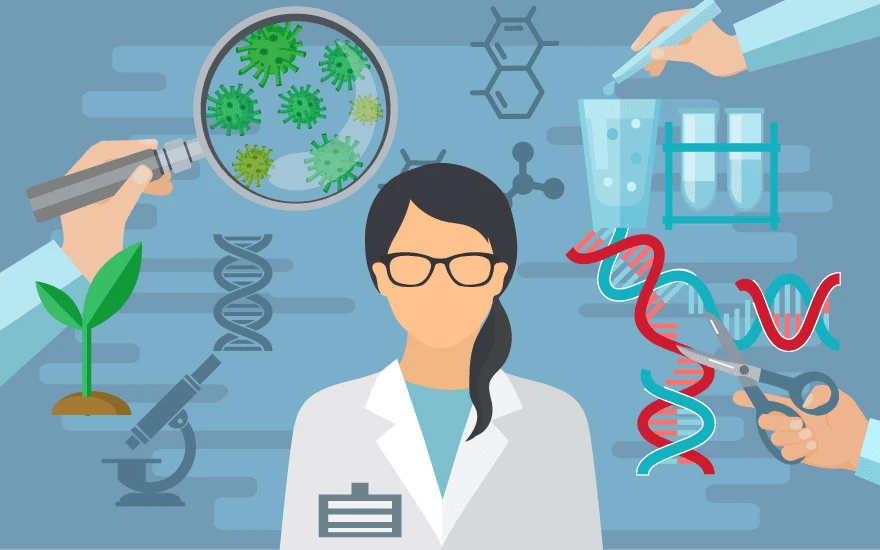
Biotechnology refers to various techniques and technologies used in the bio-industrial production or bio-genetic controlled processes involving vegetal, animal or human organisms. Genetic manipulation is the most common form of using living organisms and bimolecular processes for the creation or modification of the physical properties of various types of products. Example of biotech products or practices include antibiotics, biofuels and genetically modified foods. An important medical application of biotechnology includes genetic processes that lead to organ regeneration.
Biotechnology contributes to developments in areas like agriculture, food production and security, climate control and medicine. Biotechnology can also help with solving some of the most pressing environmental issues, like oil spills, pesticide side effects or polluted water, contributing to the health of the natural environment.
Masters in Biotechnology include blended curricula with a mixture of lectures in biology, chemistry and mathematics, combined with laboratory work, computer applications and research and even ethical case studies. Biotechnology degrees provide solid grounding in biochemistry, molecular biology, genomic, bioinformatics, drug design and development, nanotechnology or innovation management, as well as in-depth IT skills.
Biotechnology graduates develop careers in a wide range of fields such as the chemical, pharmaceutical, food and environmental industries, in genetics and regenerative medicine, in process control, or in research and development. Example roles include bio-informatician, biophysicist, quality control analyst, biomedical engineer, pharmaceutical sales representative, or crime lab technician.










Sign in to leave a comment.