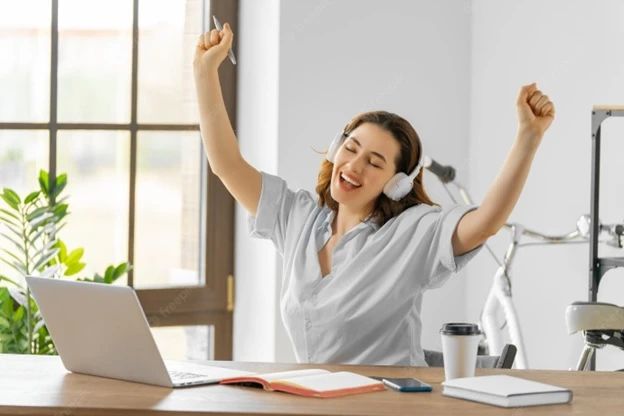

Since the beginning of the COVID-19 pandemic more than a year ago, perspectives toward physical and mental health have undergone tremendous change. Because they have more time for rest, healthy meal preparation, and productive behaviors, some students who take online classes are more concerned about their health.
While studying at home, we must pay close attention to both our physical and emotional health. Students find it difficult to prioritize their fitness goals at this time due to the change from a traditional classroom setup to a virtual classroom settings, which is equally vital.
Here are some suggestions to keep you healthy and fit while blended learning is ongoing.
Drink lots of water
Whether you're doing your homework at home or at school, staying hydrated regularly can help you stay motivated and productive. As a result, you'll have less fatigue and irritability and be more active. To ensure that you get the appropriate amount of water each day, keep a bottle of water close by your desk or study area at all times.
Dehydration is evident if you lose even 2% of the water in your body. Athletes typically lose up to 6–10% of their water weight through perspiration, according to trustworthy sources.
This could lead to adjustments in how the body regulates its warmth as well as decreased motivation and increased exhaustion. It can also make exercise seem more difficult than it actually is, both physically and psychologically.
Reduce eye strain from screens and get some stretch
The digital age offers many advantages, but excessive device use can be bad for your eyes and vision. Computer vision syndrome (CVS), which can be brought on by excessive screen time, can result in headaches, dry eyes, blurry vision, depressed moods, and sleep problems.
Prolonged sitting can damage a child's eyes and shorten their lifespan by changing the way their arteries or blood flow. Students are permitted to leave their seats, go outside, or stretch during breaks. Even brief exercise can significantly lessen the detrimental consequences of prolonged sitting.
Do whatever makes you feel relaxed
In your yard, on your roof deck, or on your balcony, take advantage of whatever chance you get to reconnect with nature. Of course, going for a normal stroll in a park or around the mall right now would be difficult. Try to open your windows occasionally each day if you live in a condo to let some fresh air in. Consider purchasing some plants for your desk space as well.
Keeping your body as physically active
Inactivity over extended periods is very bad for one's health. Therefore, young individuals should discover ways to exercise quickly even while swamped with papers. One quick approach to doing this is to stretch as you get up from your chair. Numerous home exercise videos provide exercises to reduce the aches from spending all day in a study area. You can also decide to use the stairs whenever you can to get some exercise. Always stay hydrated, and stand up and move around. These will improve your mood in addition to helping to relieve muscle strain.
Get enough quality Sleep
Students need to get the required amount of sleep each night to focus, pay attention, and perform better in class. Children and teenagers who don't get enough sleep are more likely to experience accidents, type 2 diabetes, obesity, and poor mental health. [https://www.cdc.gov/healthyschools/sleep.htm#:~:text=Students%20should%20get%20the%20proper,poor%20mental%20health%2C%20and%20injuries.]
How much sleep students get is one of the best measures of academic performance. Sleep plays a critical role in both memory consolidation and restoration in students. People who don't get enough sleep work harder yet achieve less.
Prepare healthy foods and snacks
You must therefore practice temperance and organize your meals. Both chicken and salad and rice with tuna make very healthy lunch options. Select low-calorie, high-protein snacks like fruits and nuts. Never forget the importance of eating balanced meals to keep your body healthy and sustain your energy and focus throughout the day. Making your own meals is another way to cut costs and reduce the danger of exposure from delivery.
If students make food choices that benefit their schoolwork, they have a far higher chance of success. Regular studies have shown links between increases in cognition, memory, attention span, concentration, and reasoning, as well as a healthy, varied diet. Additionally, students who regularly consume nutrient-rich diets have increased problem-solving abilities, better factual understanding, and improved memory, as stated in https://share.upmc.com/2019/08/healthy-snacks-to-power-studying/.
Efficient snacking also increases energy levels, speeds up the metabolism, and regulates blood sugar. Blood glucose volatility can result in low energy, irritability, restlessness, worry, and fatigue.
Take some Vitamins
Consider purchasing some vitamins and nutritious supplements from your nearby pharmacy to help combat the potential nutrient desert that many canned and processed foods may be. To identify the ones that will work best for you, consult your doctor or pharmacist first.
Find time for your Hobbies
Managing your work-life balance is one of the challenges you could encounter while working or studying from home. Despite this, it's still crucial to find time for your hobbies. This could involve activities like reading, hiking, participating in sports, or making stuff. Make time each week to engage in your hobbies. This concentrated time, even if it is only for 30 minutes, will keep you motivated.
Expose yourself to sunlight every morning.
When working or studying at home, there is a chance of not getting enough sunlight. The light from the sun contains a lot of the vitamin D that we need for both our physical and mental health. The progression of the melatonin rhythm is impacted by exposure to sunlight, according to NCBI. The melatonin rhythm phase, which has been utilized to treat premenstrual syndrome, insomnia, and seasonal affective disorder, is advanced by early morning light exposure. The effects of daylight also alter serotonin, which is a precursor to melatonin.
Socialize with your friends and families
The importance of social interaction to your physical and mental wellbeing cannot be overstated! Yes, keeping up your ties with the people you care about will prolong your happiness. During one of your breaks, pick up the phone to call your family, set up a video chat with your pals, or just go hug your roommate or a relative who lives with you.
Practice mindfulness exercise
Nowadays, it's crucial to exercise your mind, and it's frequently promoted as a strategy to increase your intelligence and mental clarity. Despite the fact that many cognitive scientists think the promises made about mindfulness training are overblown and incorrect, there is a ton of data that indicates specific activities are beneficial for the health of your brain.
It can be exhausting to constantly plan, solve problems, daydream, or consider unusual or useless ideas. Additionally, it can increase your risk of developing stress, anxiety, and depressive symptoms. You can divert your focus away from this way of thinking and toward your environment by engaging in mindfulness exercises.
Watch videos that are motivating and inspirational.
You believe that watching a motivational film will provide you with the spark you need to begin moving. You believe that doing something is necessary for achieving your aims. You believe you utilized your time well because you discovered new and fascinating information. The rush of dopamine gives you a tingle in your tummy.
Make time for “Me” Time.
In the modern world, balancing homework, due dates, studying for examinations, and social commitments may be too much for a student to manage. Regardless of the demands of your lifestyle, be careful not to burn out.
Spend some time on yourself. We frequently prioritize everyone else's needs over our own because we don't want to seem self-centered or feel guilty, but this is unhealthy.
You need to give yourself some time. We frequently prioritize others' needs over our own because we don't want to appear self-centered or feel bad, yet this is detrimental. You need to rethink healthcare to include self-care and normalize the value of unlimited vacations.
Take a break by going outside for 15 minutes.
It goes without saying that you should remember to follow the usual safety precautions while going outside, like avoiding crowded areas and wearing a mask. You might only need to step off your balcony or use the building's amenities and garden to get outside.










Sign in to leave a comment.