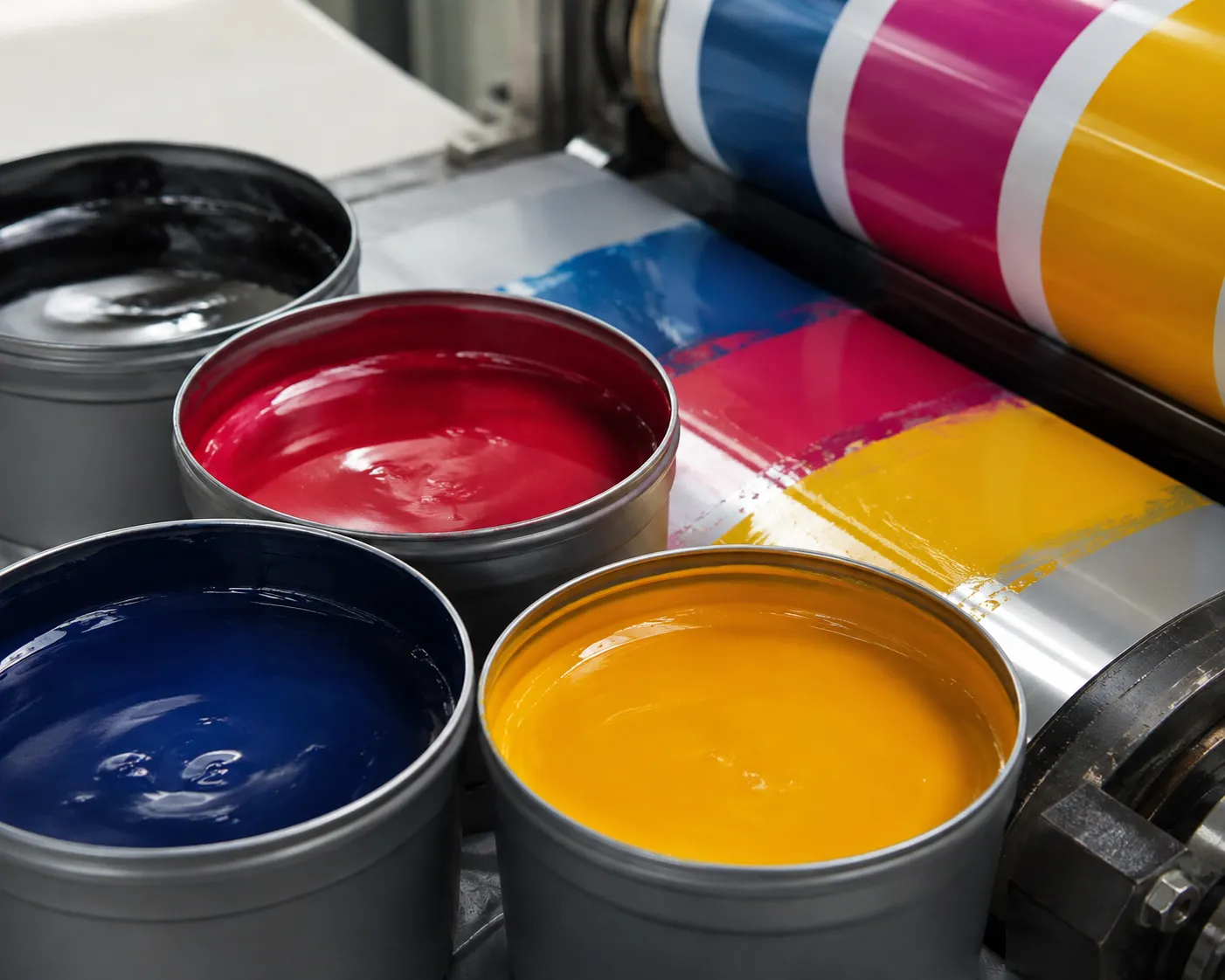
The printing industry is constantly developing as manufacturers seek better print quality, production efficiency, and solutions aligned with evolving packaging requirements. Gravure printing is widely used for high-volume applications because it can produce detailed images, strong colour reproduction, and consistent results. Along with improvements in printing machinery and cylinder technology, ink formulations are also evolving to meet modern production needs.
For manufacturers considering water based ink for gravure printing, understanding how these inks work and what factors influence their performance is essential. Water-based formulations use water as a primary carrier and can be engineered for specific substrates, printing speeds, drying systems, and end-use applications. When the formulation and press conditions are properly matched, they can deliver reliable print quality while supporting changing production requirements.
What Are Water-Based Gravure Inks?
Water-based gravure inks are specially formulated printing inks designed to work with the engraved cylinders used in gravure printing. They generally contain pigments, resins, additives, and water, with each component contributing to the overall performance of the ink.
The formulation must maintain suitable viscosity, surface tension, pigment dispersion, and drying characteristics. These properties influence how effectively the ink enters the microscopic cells of the gravure cylinder and transfers onto the printing substrate.
Since different substrates have different surface properties, ink manufacturers need to consider substrate compatibility when developing or recommending an ink.
How Does Gravure Printing Transfer Ink?
Gravure printing uses a cylindrical surface containing thousands of microscopic engraved cells. These cells collect ink as the cylinder rotates through the ink system. Excess ink is removed from the cylinder surface, while the ink held inside the engraved cells is transferred to the substrate.
This process requires precise control of ink properties. If viscosity or surface tension is unsuitable, ink transfer may become inconsistent, potentially affecting colour density and image reproduction.
Water-based formulations therefore need to be carefully optimized for the specific gravure printing process and operating conditions.
Why Is Viscosity Important?
Viscosity is one of the key properties affecting printing performance. It determines how easily the ink flows through the printing system and into the engraved cylinder cells.
If viscosity is too high or too low, the ink may not transfer as expected. This can contribute to variations in colour strength, dot reproduction, or overall print consistency.
Maintaining the recommended viscosity range throughout production can help printing teams achieve more stable results. Regular monitoring and appropriate adjustment may be necessary because temperature, evaporation, and press conditions can influence ink viscosity during a production run.
How Does Drying Influence Print Quality?
Drying is particularly important when working with water-based inks because water must leave the printed film before the material moves through subsequent production stages.
The drying process can be influenced by press speed, dryer temperature, airflow, humidity, substrate type, and ink film thickness. If the ink does not dry adequately, problems such as smearing, blocking, or poor resistance may occur.
On the other hand, excessive drying conditions may increase energy consumption or affect sensitive substrates. The goal is to establish balanced drying conditions that match the ink, substrate, and press configuration.
What Advantages Can Water-Based Ink Technology Offer?
Modern water-based ink technology can provide several potential benefits for suitable printing applications. Since water serves as the primary carrier, these formulations can reduce dependence on certain organic solvents compared with conventional solvent-based systems.
Advances in resin and pigment technology have also helped improve the performance of water-based inks. Depending on the formulation, they can provide good colour strength, adhesion, print definition, and resistance properties.
For packaging manufacturers, the suitability of an ink ultimately depends on the specific substrate and final application. A formulation designed for one packaging structure may not necessarily deliver the same results on another.
Where Can Water-Based Gravure Inks Be Used?
Water-based gravure inks can be used for various printing applications, depending on their formulation and substrate compatibility. These may include paper packaging, flexible packaging, labels, and selected specialty applications.
The final use of the printed material is an important consideration. Packaging that requires lamination, heat sealing, folding, or other converting processes may require specific ink properties.
Before selecting an ink, printers should evaluate the complete production process, including substrate, cylinder specifications, press speed, drying system, and downstream requirements.
How Can Printers Maintain Consistent Results?
Consistent printing depends on controlling several variables simultaneously. Ink viscosity, substrate condition, cylinder quality, press speed, drying parameters, and environmental conditions can all influence the final print.
Printing teams should maintain appropriate ink storage and handling practices and monitor viscosity during production. Proper mixing and filtration can also help maintain ink consistency.
Regular cleaning of the ink system and printing cylinders is equally important. Residual or dried ink can affect cell performance and contribute to printing defects.
A systematic approach to press setup and quality inspection can help identify problems early and reduce unnecessary production interruptions.
What Should You Look for in an Ink Manufacturer?
Choosing an ink manufacturer involves more than comparing product specifications. Consistent product quality, formulation expertise, technical assistance, and application knowledge are important considerations.
A capable ink supplier should understand the relationship between ink, substrate, cylinder, press, and drying system. This knowledge allows the manufacturer to recommend or develop an ink that is appropriate for the intended application.
Technical support can also be useful when printers encounter challenges related to drying, adhesion, colour strength, viscosity, or print consistency. A responsive supplier can help identify the cause of the issue and suggest suitable adjustments.
Why Choose Spectra Inks & Coatings Pvt Ltd?
Spectra Inks & Coatings Pvt Ltd develops printing ink solutions designed around the requirements of modern printing and packaging applications. The company focuses on formulation quality, consistency, and practical printing performance.
By combining technical knowledge with application-focused development, Spectra Inks & Coatings Pvt Ltd aims to provide ink solutions suitable for different substrates and production environments. Understanding customer requirements allows the company to focus on solutions that support print quality and efficient production.
As packaging manufacturers increasingly evaluate different ink technologies, having access to an experienced ink partner can help them make informed choices according to their specific printing needs.
What Is the Future of Water-Based Gravure Printing?
The development of water-based ink technology is expected to continue as the printing industry looks for improved performance and more resource-conscious solutions. Advances in resins, pigments, additives, and drying technology can help address some of the challenges associated with water-based systems.
Future formulations may focus on faster drying, improved adhesion, stronger resistance properties, enhanced colour reproduction, and compatibility with a wider range of substrates.
Improved press technology and better drying systems can also contribute to the broader adoption of water-based solutions in suitable applications.
Conclusion
Water-based ink technology can provide an effective option for selected gravure printing applications when the formulation is properly matched with the substrate and production conditions. Achieving consistent results requires careful control of viscosity, drying, cylinder performance, press settings, and ink handling.
For businesses evaluating water based ink for gravure printing, partnering with an experienced manufacturer can help ensure that technical and application requirements are properly considered. Spectra Inks & Coatings Pvt Ltd focuses on developing quality-oriented printing ink solutions that support the changing needs of modern packaging and printing operations.






















Sign in to leave a comment.