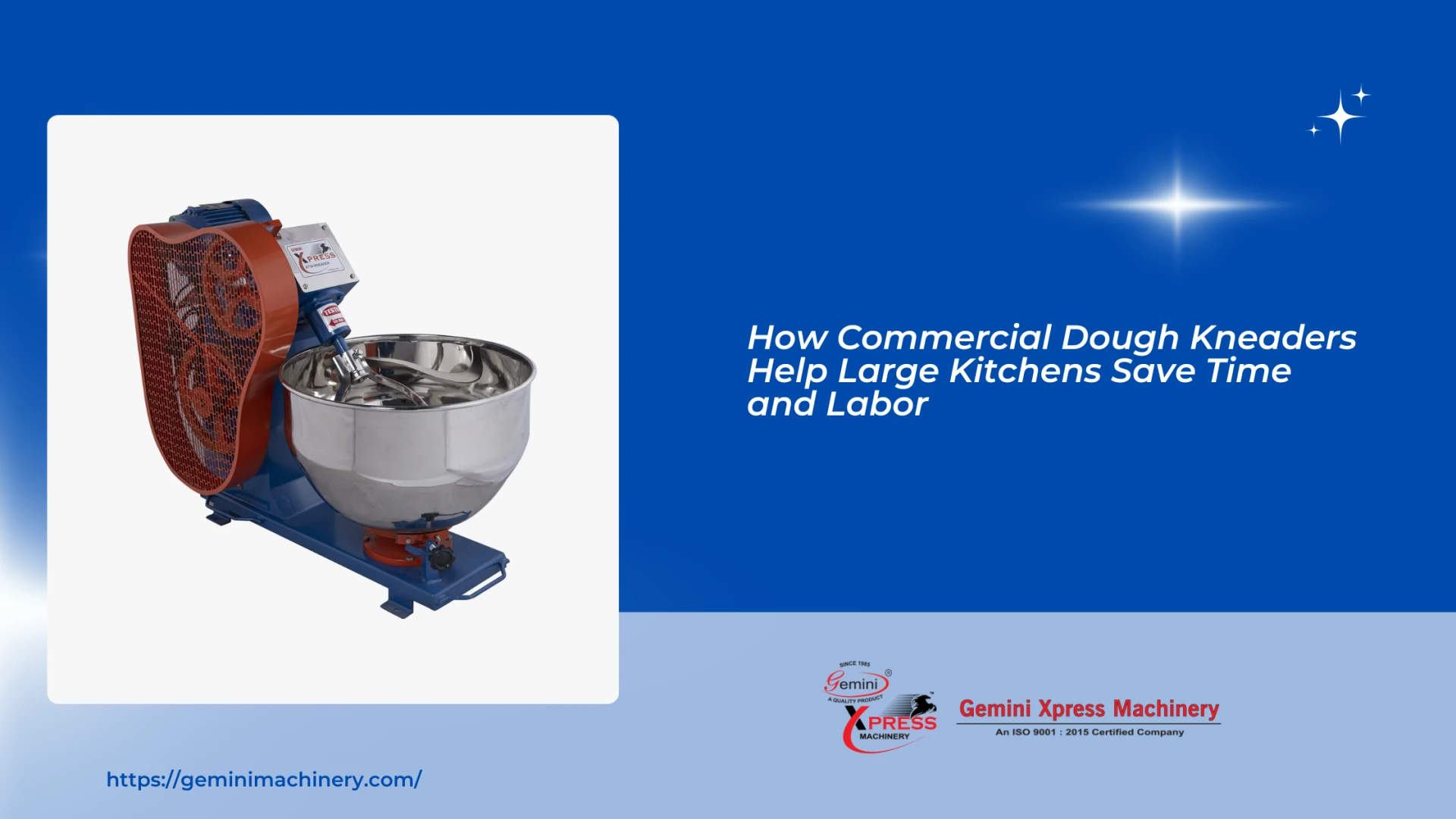

Exploring the operational benefits of commercial dough kneaders
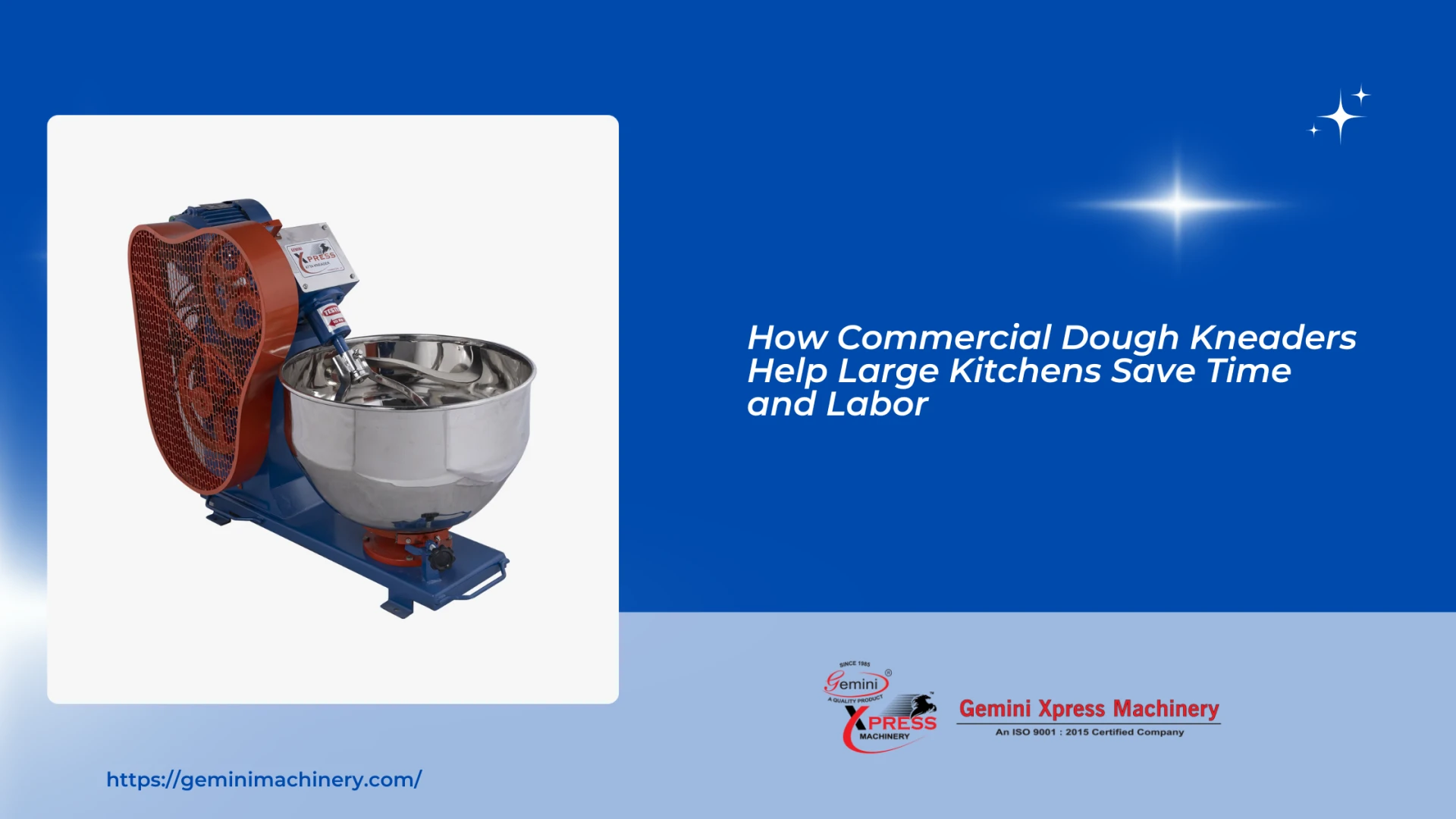
In large kitchens — such as bakeries, hotels, industrial canteens and food production units — time and labor efficiency directly impact profitability. One of the most labor-intensive tasks in these environments is dough preparation. Manual kneading consumes significant time, requires skilled labor, and often leads to inconsistent results. This is why many high-volume kitchens are adopting commercial dough kneaders to streamline operations.
The Problem with Manual Dough Kneading in Large Kitchens
Manual kneading may work for small batches, but it becomes impractical when production volumes increase. Large kitchens face several challenges with traditional methods:
- High dependence on skilled manpower
- Inconsistent dough texture across batches
- Longer preparation cycles
- Physical fatigue and workplace strain
- Difficulty maintaining hygiene standards
These issues slow down production and increase operational costs.
What Is a Commercial Dough Kneader?
A commercial dough kneader is a heavy-duty kitchen machine designed to mix and knead large quantities of dough efficiently. Built for continuous operation, these machines use powerful motors and robust mixing mechanisms to produce uniform dough in a fraction of the time required for manual kneading.
Most modern models are made from food-grade stainless steel, ensuring durability, hygiene, and easy cleaning.
How Commercial Dough Kneaders Save Time
Faster Dough Preparation
Commercial dough kneaders can process large batches within minutes, significantly reducing preparation time compared to manual methods.
Continuous Operation
Unlike manual labor, machines can operate continuously without fatigue, allowing kitchens to meet peak demand efficiently.
Reduced Batch-to-Batch Variation
Automated kneading ensures consistent mixing speed and pressure, delivering uniform dough every time and eliminating rework.
How Commercial Dough Kneaders Reduce Labor Costs
Less Manpower Required
One operator can manage the machine, replacing multiple workers needed for manual kneading.
Lower Training Dependency
Machine operation requires minimal skill, reducing reliance on experienced labor and lowering training costs.
Improved Workplace Safety
By minimizing repetitive manual work, dough kneaders reduce physical strain and injury risk among kitchen staff.
Hygiene and Quality Advantages
Stainless steel commercial dough kneaders support better hygiene standards by:
- Preventing contamination
- Allowing easy washdown and cleaning
- Meeting food safety regulations
Consistent dough quality also improves product uniformity, taste, and customer satisfaction.
Ideal Applications in Large Kitchens
Commercial dough kneaders are widely used in:
- Bakeries and confectioneries
- Hotels and restaurants
- Industrial canteens
- Cloud kitchens
- Food processing units
Their ability to handle high volumes makes them essential for scalable kitchen operations.
Conclusion
For large kitchens, saving time and reducing labor is not optional — it is a necessity. Commercial dough kneaders provide a practical solution by automating one of the most time-consuming kitchen tasks. By improving efficiency, consistency, and hygiene, these machines help kitchens operate smarter while controlling costs.
As commercial food operations continue to scale, investing in reliable dough kneading equipment is no longer a luxury, but a strategic decision.




























Sign in to leave a comment.