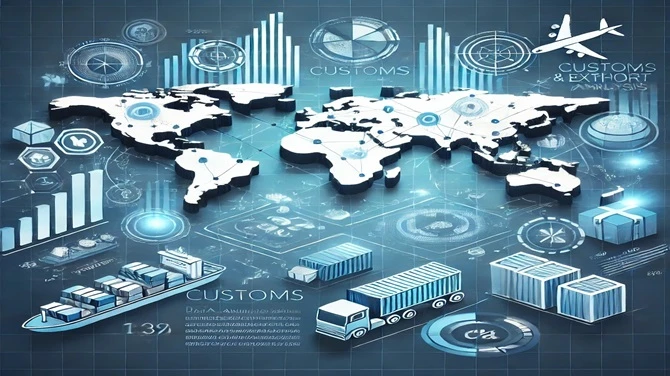

In today’s fast-paced global economy, the ability to manage supply chains effectively is paramount. As businesses face increasing pressure to deliver goods swiftly and efficiently, the role of customs data has never been more critical. This data, once considered purely logistical, has evolved into a powerful tool that drives decision-making across various industries. As we step into 2024, the integration of customs data into global supply chain management is reshaping the landscape of international trade.
In this blog, we’ll explore how businesses are using customs data to enhance visibility, optimize operations, and stay ahead of the competition in an increasingly complex market.
The Power of Customs Data in Global Supply Chains
Customs data encompasses detailed records of goods crossing borders, providing vital information on the origin, destination, classification, and value of imports and exports. This data is collected by governments and trade authorities during the customs clearance process, making it a rich source of information for businesses.
In the past, customs data was mainly used for regulatory compliance. However, as businesses become more data-driven, this information is now leveraged to unlock new opportunities and streamline supply chain operations.
Key Benefits of Leveraging Customs Data in 2024
- Enhanced Supply Chain Visibility: With access to real-time customs data, businesses gain unprecedented visibility into their supply chain. This allows them to track shipments, monitor potential delays, and make more informed decisions about inventory management. Real-time tracking is especially important in industries like e-commerce, where the speed of delivery is a key factor in customer satisfaction.
- Improved Risk Management: Customs data provides insights into patterns and trends that can help businesses identify potential risks in their supply chains. For example, monitoring customs data can highlight shipping bottlenecks, port congestion, or changes in trade regulations. Companies can then take proactive measures to mitigate these risks, such as diversifying suppliers or adjusting inventory strategies.
- Cost Reduction: By analyzing customs data, businesses can optimize their import and export processes, reducing unnecessary delays and costs. For instance, understanding the best shipping routes or identifying the most efficient customs procedures can result in significant savings. Additionally, companies can use this data to assess supplier performance and negotiate better terms with vendors.
- Better Market Insights: Customs data provides a wealth of information about competitors, market demand, and trade flows. Companies can analyze import and export patterns to identify new market opportunities, spot trends, and stay ahead of the competition. For example, if a competitor is importing a specific product in large quantities, businesses can assess whether there’s an opportunity to enter that market or innovate within that product category.
How Companies Are Using Customs Data in 2024
In 2024, companies across various sectors are tapping into customs data in innovative ways:
- E-Commerce: Online retailers use customs data to predict shipping times, monitor inventory levels, and track international orders. This data helps them optimize the customer experience by offering more accurate delivery estimates.
- Manufacturing: Manufacturers rely on customs data to ensure timely delivery of raw materials and finished goods. It enables them to optimize production schedules, plan for disruptions, and minimize stockouts.
- Retail: Retailers use customs data to track trends in product imports and exports, helping them make smarter buying decisions and adjust their product offerings to meet shifting consumer demand.
The Future of Customs Data in Global Trade
As technology continues to advance, the role of customs data in global trade will become even more significant. Artificial intelligence (AI) and machine learning (ML) will likely play a pivotal role in analyzing large volumes of customs data, allowing businesses to gain deeper insights and make more accurate predictions.
Moreover, with the increasing adoption of blockchain technology in supply chain management, the transparency and security of customs data are expected to improve significantly. This will further enhance trust and collaboration across international trade networks.
Conclusion:
The integration of customs data into global supply chains is not just a trend; it’s a strategic shift that is shaping the future of international trade. By harnessing this valuable data, businesses can enhance visibility, reduce costs, manage risks, and gain a competitive edge in an ever-evolving market. As we head into 2024, the companies that embrace customs data will be the ones that thrive in the complex world of global trade.









Sign in to leave a comment.