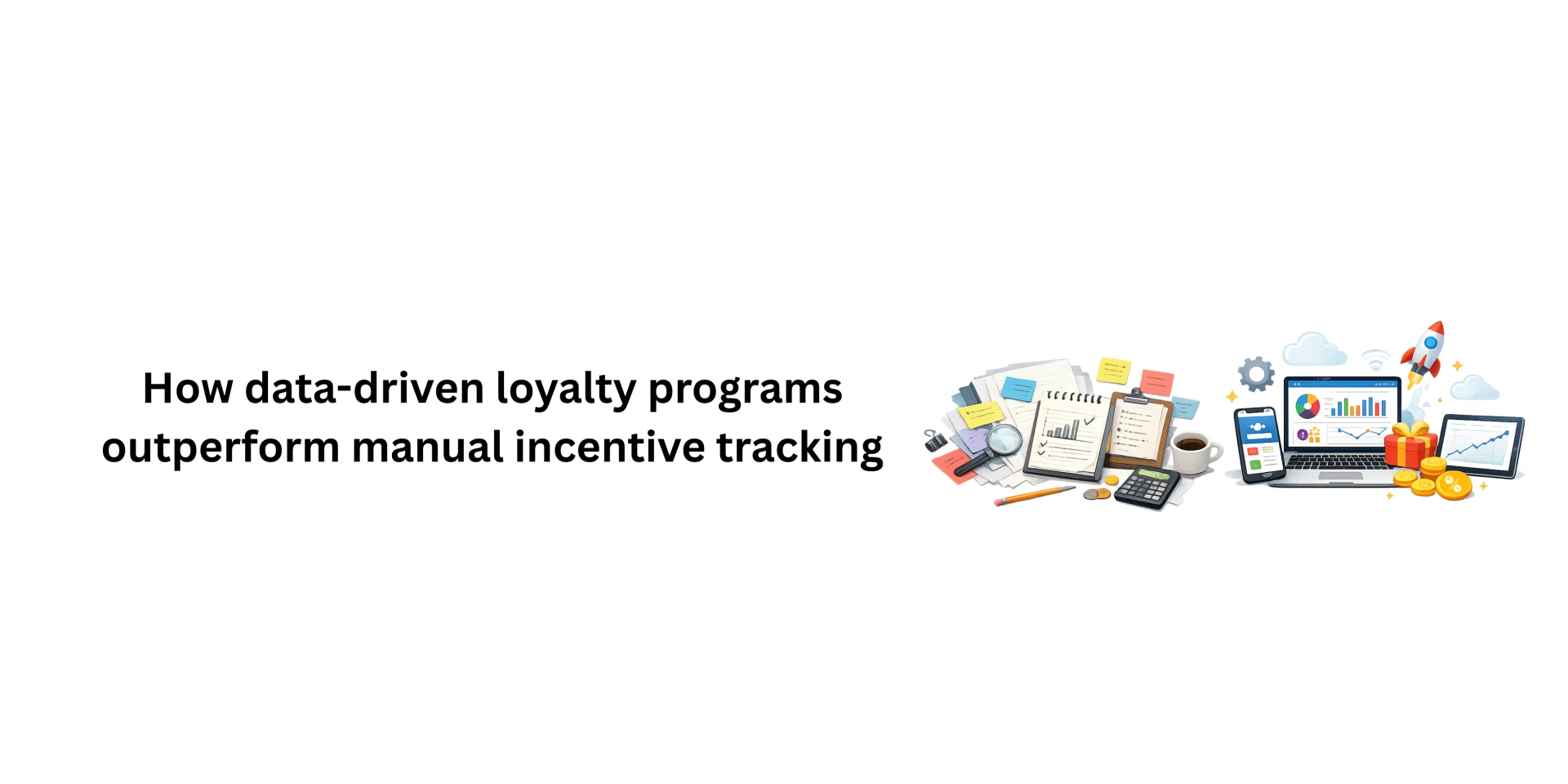

Incentives play a critical role in retention, engagement, and lifetime value. Yet many enterprises still rely on manual tracking methods to manage rewards. Spreadsheets, disconnected tools, and ad hoc processes were once sufficient. Today, they actively limit performance.
This is where data-driven loyalty programs, powered by a modern loyalty management platform, deliver a measurable advantage. By replacing assumptions with insights, these programs help businesses scale incentives with precision instead of guesswork.
Before diving deeper, it helps to understand how smart tenant incentives with loyalty programs create stronger engagement when data—not manual effort—drives decisions.
Why manual incentive tracking breaks down at scale
Manual incentive tracking is not inherently flawed. It is simply not designed for enterprise complexity.
As organizations grow, manual systems struggle with:
- Inconsistent data entry
- Limited visibility across teams
- Delayed reporting
- Human error
What starts as a manageable process quickly becomes reactive. Teams spend time reconciling data instead of optimizing incentives.
The result is often higher costs with unclear returns.
What defines a data-driven loyalty program
A data-driven loyalty program is built on continuous measurement and optimization.
Using a centralized loyalty management platform, every incentive action is tracked automatically. Data is collected in real time and translated into insights that teams can act on immediately.
Key characteristics include:
- Automated reward triggers
- Centralized data collection
- Performance dashboards
- Outcome-based optimization
This approach turns loyalty from an operational task into a strategic function.
The performance gap: data-driven vs manual tracking
Visibility drives better decisions
Manual tracking limits visibility.
Most teams can answer what incentives were offered. Few can confidently explain which incentives influenced behavior.
Data-driven programs close this gap by showing:
- Participation rates
- Redemption trends
- Cost versus impact
- Behavior changes over time
With this clarity, enterprises stop guessing and start refining.
Automation removes operational friction
Manual tracking depends on people remembering to log actions, issue rewards, and reconcile results.
A loyalty management platform automates these steps:
- Rewards trigger automatically when conditions are met
- Delivery is digital and instant
- Records are created without manual input
This reduces workload while improving accuracy. Operations scale without adding complexity.
Consistency across teams and locations
Manual systems vary by team.
One location may track incentives diligently. Another may miss entries entirely. Over time, this inconsistency weakens both reporting and experience.
Data-driven loyalty programs enforce consistency by design:
- Standardized rules
- Unified reporting
- Central oversight
Enterprises maintain control while allowing local execution.
How data changes incentive strategy
From reactive to proactive engagement
Manual tracking encourages reactive incentives.
Rewards are often introduced late, usually near renewal or churn risk. Data-driven programs shift this timeline.
By analyzing engagement patterns, teams can:
- Identify drop-off points early
- Incentivize desired behaviors sooner
- Reinforce positive actions consistently
This proactive approach improves retention without increasing incentive spending.
Continuous optimization instead of static offers
Manual incentives tend to stay the same until something breaks.
Data-driven loyalty programs evolve continuously. Performance data reveals:
- Which rewards underperform
- Which behaviors respond best to incentives
- When to adjust reward values
This allows enterprises to optimize rather than overhaul.
Financial control and ROI transparency
One of the biggest challenges with manual tracking is cost visibility.
Incentive budgets are often reviewed after the fact. By then, opportunities to optimize are lost.
A loyalty management platform provides:
- Real-time spend tracking
- Budget controls
- ROI measurement by incentive type
Leadership teams gain confidence that incentives are driving outcomes, not just expenses.
Supporting enterprise governance and trust
Data-driven loyalty programs also strengthen governance.
Centralized platforms create:
- Clear audit trails
- Role-based access
- Consistent policy enforcement
This is especially important for enterprises operating across regions or industries with compliance requirements.
Trust improves internally and externally because decisions are backed by data.
Enhancing the customer or tenant experience
From the end user’s perspective, manual systems often feel unreliable.
Rewards arrive late. Eligibility rules are unclear. Experiences differ by location.
Data-driven loyalty programs improve experience by ensuring:
- Predictable rewards
- Transparent earning criteria
- Timely delivery
Consistency builds trust. Trust drives long-term engagement.
Why enterprises adopt loyalty management platforms
Enterprises adopt a loyalty management platform not for convenience, but for performance.
Key enterprise benefits include:
- Scalability without added headcount
- Centralized insights across portfolios
- Faster decision-making
- Alignment between incentives and business goals
This aligns closely with Google’s EEAT principles. Decisions are based on experience, evidence, and measurable outcomes.
Manual tracking limits growth potential
Manual incentive tracking creates a ceiling.
As programs grow, the cost of managing them manually increases faster than the value they deliver. Data gaps widen. Reporting slows. Teams lose confidence in the numbers.
At that point, incentives stop being strategic.
Data-driven loyalty programs remove this ceiling by design.
Data as a competitive advantage
In competitive markets, loyalty is not about offering more rewards. It is about offering the right rewards at the right time.
Data-driven programs allow enterprises to:
- Differentiate through experience
- Personalize incentives at scale
- Prove the value of loyalty investments
Manual tracking cannot compete with this level of precision.
Conclusion: why data-driven loyalty always wins
Manual incentive tracking relies on effort. Data-driven loyalty relies on insight.
A modern loyalty management platform transforms incentives into a measurable, scalable growth lever. It reduces operational strain, improves financial clarity, and delivers consistent experiences across teams and locations.
For enterprises focused on retention and long-term value, data-driven loyalty programs do not just outperform manual tracking. They redefine what loyalty can achieve.






















Sign in to leave a comment.