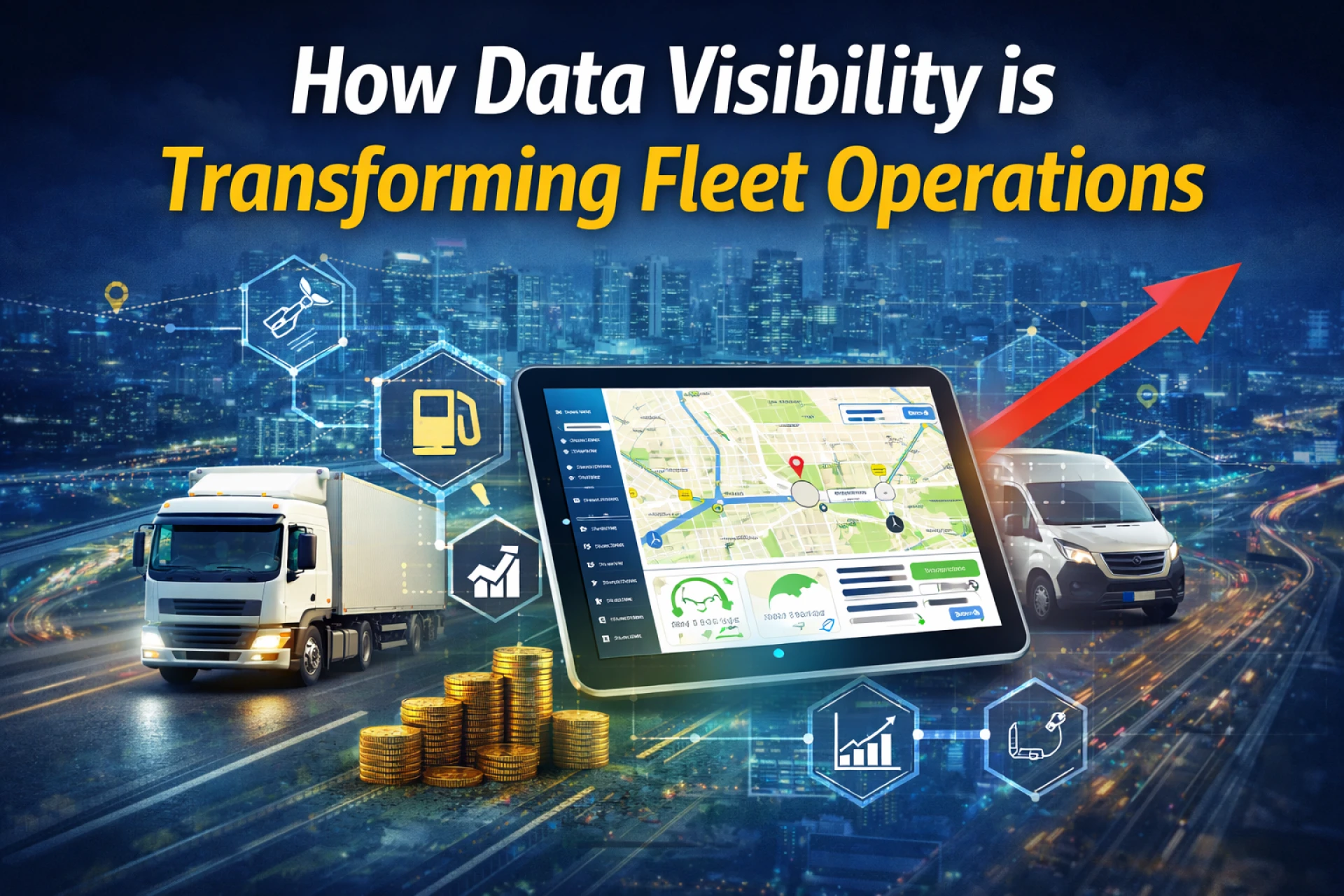

Fleet operations have become increasingly complex over the past decade. Rising fuel costs, tighter delivery schedules, growing compliance requirements, and customer expectations for real-time updates have forced organizations to rethink how they manage vehicles and drivers. Traditional fleet management approaches, which relied heavily on manual reporting and periodic oversight, are no longer sufficient in an environment where operational efficiency directly affects profitability.
One of the most significant shifts in fleet operations today is the growing reliance on data visibility. Rather than reacting to problems after they occur, businesses are now using real-time operational insights to prevent inefficiencies before they escalate.
The Challenge of Limited Operational Visibility
For many fleet operators, decision-making has historically depended on fragmented information. Vehicle logs, fuel receipts, and driver reports provided only partial insights into daily operations. Without continuous monitoring, managers often struggled to identify issues such as inefficient routes, excessive idling, or inconsistent driving behavior.
These small inefficiencies may appear insignificant individually, but when multiplied across dozens or hundreds of vehicles, they can lead to substantial operational costs.
Modern fleet management increasingly focuses on replacing assumptions with measurable data.
Real-Time Tracking and Operational Awareness
Real-time vehicle tracking has changed how organizations understand fleet movement. Instead of relying on scheduled updates, managers can now view vehicle locations, trip histories, and route performance instantly.
This visibility enables teams to:
- Identify delays early
- Optimize dispatch decisions
- Improve route planning
- Reduce unnecessary mileage
Better awareness also improves communication between dispatchers, drivers, and customers, creating a more predictable operational workflow.
The Role of Driver Behavior Insights
Driver behavior plays a critical role in fleet efficiency and safety. Actions such as rapid acceleration, harsh braking, and prolonged speeding can increase fuel consumption and vehicle wear. However, without objective data, identifying patterns across multiple drivers is difficult.
Data-driven monitoring allows fleet managers to analyze driving trends over time rather than focusing on isolated incidents. This approach supports coaching initiatives that encourage safer and more efficient driving habits while maintaining accountability in a constructive way.
Fuel Efficiency Through Better Decision-Making
Fuel expenses remain one of the largest operational costs for fleet-based businesses. While fuel prices are influenced by external market factors, internal operational practices significantly affect total consumption.
Data insights help organizations understand:
- Where fuel usage is highest
- Which routes consume more fuel
- How idling impacts overall efficiency
- Which vehicles operate below optimal performance
With clearer insights, fleet managers can implement gradual improvements that reduce waste without disrupting operations.
Maintenance as a Preventive Strategy
Vehicle maintenance is another area where data visibility creates measurable benefits. Instead of relying solely on fixed service schedules, fleets can monitor vehicle health indicators and address issues proactively.
Preventive maintenance reduces unexpected downtime, improves vehicle lifespan, and supports consistent fuel efficiency. Over time, this approach contributes to more stable operating costs and fewer operational disruptions.
Technology as an Operational Enabler
The growing adoption of telematics platforms reflects a broader trend toward data-driven operations. These systems integrate tracking, analytics, and reporting into a single interface, allowing organizations to understand fleet performance holistically.
Solutions such as Yatis Telematics provide fleet operators with insights into vehicle activity, fuel usage, and driver behavior, helping organizations transition from reactive management to proactive decision-making.
Looking Ahead: The Future of Fleet Management
As logistics networks expand and operational expectations increase, fleet management will continue evolving toward greater automation and analytics-driven decision-making. Organizations that adopt data visibility early are better positioned to adapt to regulatory changes, sustainability goals, and market demands.
Rather than replacing human decision-making, technology enhances it by providing accurate and timely information. The result is a more efficient, safer, and predictable fleet operation.
Conclusion
Modern fleet management is no longer defined solely by vehicles and routes—it is increasingly shaped by data. Real-time visibility, behavioral insights, and proactive maintenance strategies allow organizations to identify inefficiencies that were previously difficult to detect.
By transforming operational data into actionable insights, fleet operators can improve efficiency, control costs, and build more resilient transportation systems in an increasingly competitive environment.










Sign in to leave a comment.