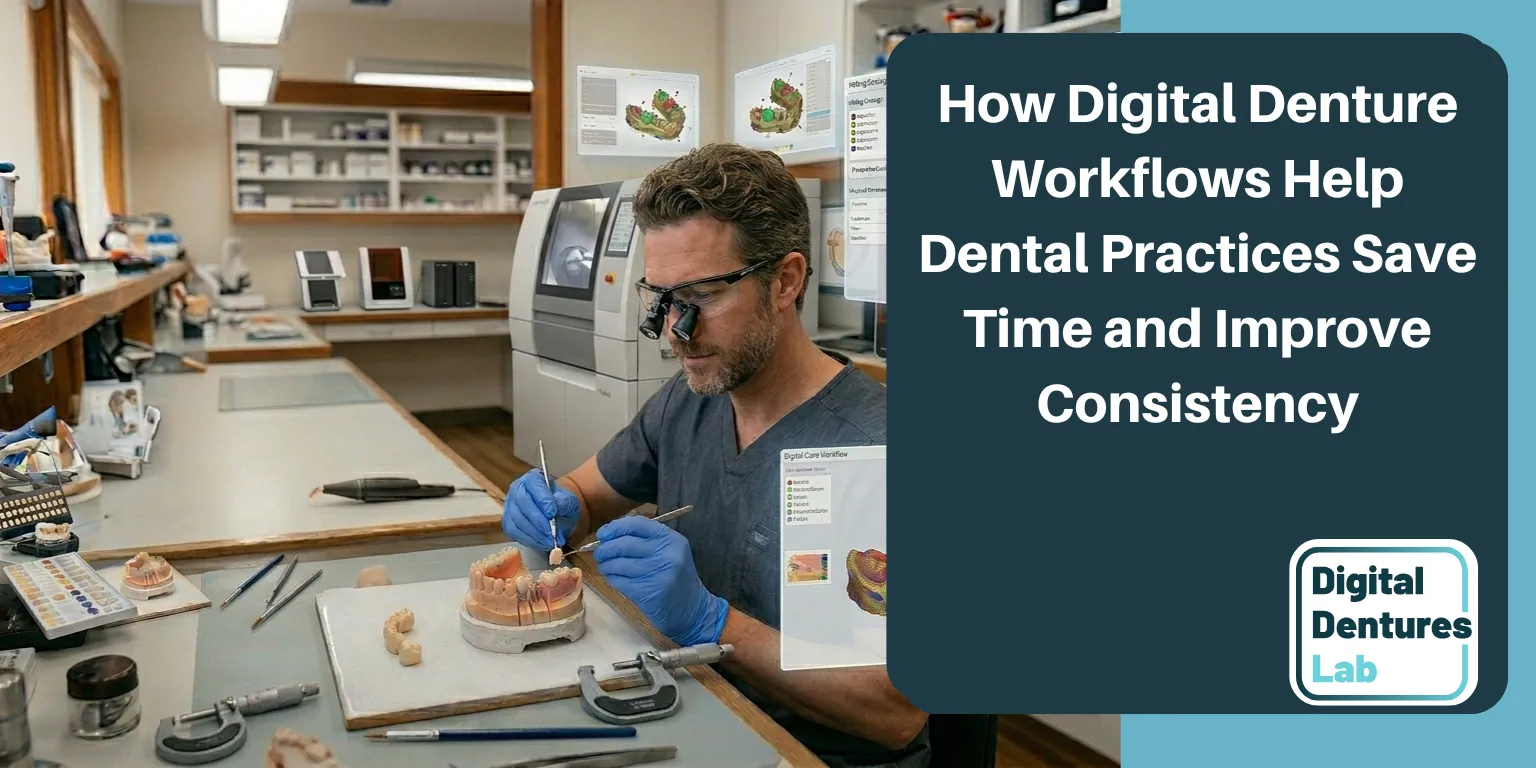

Dentures have traditionally required several manual steps, from taking impressions and creating models to setting teeth and making repeated adjustments. Although skilled craftsmanship remains essential, digital technology is making the process more efficient and predictable for dental practices and laboratories.
A digital denture workflow uses intraoral scans or scanned impressions, computer-aided design, 3D printing, and precision milling to support the fabrication of full and partial dentures. These technologies help dentists and laboratory technicians collaborate more effectively while maintaining greater consistency throughout the case.
Here is how adopting a digital denture workflow can benefit modern dental practices.
More Consistent Case Information
The quality of a denture case depends heavily on the information communicated between the dental practice and the laboratory. Missing measurements, unclear instructions, or changes made during different production stages can lead to delays and additional appointments.
Digital workflows allow important case information to be stored and shared in a more consistent format. Dentists can send intraoral scans, digital prescriptions, photographs, bite information, and case notes directly to the laboratory.
Because these records remain available throughout the process, the laboratory can refer to the same information during design, approval, and fabrication. This reduces the risk of details being lost or interpreted differently at various stages.
Easier Communication With the Dental Laboratory
Traditional cases often require multiple phone calls or physical shipments before fabrication can begin. Digital collaboration can make this process more direct.
Once the case files have been submitted, the laboratory can create a digital design for the dentist to review. The dentist may then check tooth position, arrangement, occlusion, and other relevant details before approving the case.
If a change is needed, it can often be communicated during the design stage rather than after the restoration has already been produced. This gives the practice greater visibility into the case and helps the laboratory proceed with clearer approval.
Practices working with a USA-based digital dental lab may also benefit from more direct communication and fewer complications associated with extended international shipping.
Fewer Avoidable Chairside Adjustments
Chairside adjustments are sometimes necessary, regardless of how the denture is produced. However, inconsistencies during impression handling, model preparation, or fabrication can increase the amount of adjustment required.
Digital design and manufacturing provide laboratories with greater control over dimensions and production. Computer-aided design allows the technician to assess the restoration before fabrication, while milling and 3D printing reproduce the approved design with a high level of consistency.
A better-controlled production process may help reduce avoidable adjustments involving fit, tooth position, or occlusion. This can make delivery appointments more efficient for both the dentist and the patient.
Flexible Case Submission Options
A practice does not necessarily need to operate completely digitally to benefit from a digital denture workflow.
Many digital laboratories accept both intraoral scans and traditional impressions. When a conventional impression is submitted, it can be scanned at the laboratory and incorporated into the digital design process.
This flexibility allows practices to transition at their own pace. A dentist can use digital scans for suitable patients while continuing to submit traditional impressions when the clinical situation requires them.
The ability to accommodate both methods is particularly useful for practices that are gradually introducing digital dentistry into their existing workflow.
Repeatable Results for Replacement Cases
Dentures may eventually need to be replaced because of wear, damage, material changes, or changes in the patient’s oral condition. With a fully manual process, recreating a previous restoration can require many of the original steps to be repeated.
Digital case records can provide the laboratory with a useful starting point. The previous design may help preserve important features such as tooth arrangement, general appearance, or established dimensions, subject to the patient’s current clinical needs.
The dentist must still evaluate the patient and determine whether changes are necessary. Nevertheless, access to the earlier design can simplify communication and reduce the need to rebuild every element from the beginning.
Support for Different Restorative Solutions
Digital dental technology is not limited to conventional full dentures. Depending on the laboratory’s capabilities, it can support a broader range of restorations, including:
- Full digital dentures
- Acrylic and flexible partial dentures
- Metal partial denture frameworks
- Implant-supported overdentures
- Fixed implant dentures
- All-on-X full-arch restorations
- Denture try-ins
- Splints and nightguards
- Crowns and bridges
Using one laboratory for several types of restorations may also make case management easier. The practice can become familiar with a consistent submission, design approval, and communication process.
More Predictable Production and Delivery
Laboratory delays can affect more than one appointment. If a case does not arrive as expected, the practice may need to contact the patient, rearrange the schedule, and find another appointment time.
A streamlined digital workflow can reduce some of the manual handling involved in production. Digital files can be transmitted immediately, designs can be reviewed remotely, and approved cases can move directly into milling or printing.
Turnaround time will still depend on the complexity of the case, the laboratory’s workload, and shipping requirements. Dental practices should therefore confirm production estimates before scheduling the delivery appointment.
What Should a Practice Consider When Selecting a Digital Denture Lab?
Technology alone does not guarantee a successful laboratory relationship. Dentists should also consider the laboratory’s communication, quality control, material options, turnaround times, remake policy, and ability to support complex cases.
Before submitting a case, ask the laboratory:
- Does it accept both digital scans and traditional impressions?
- Which intraoral scanning systems and file formats are supported?
- Can the dentist review and approve the design before fabrication?
- What materials are used for try-ins and final restorations?
- What is the expected turnaround time?
- Is case planning support available?
- What warranty or remake policy applies?
- How are urgent adjustments and repairs handled?
Clear answers to these questions can help the practice choose a laboratory that fits its clinical and operational needs.
Digital Technology Still Requires Human Expertise
Digital dentistry does not eliminate the importance of clinical judgment or laboratory craftsmanship. Accurate records, appropriate treatment planning, material selection, and communication remain essential.
The technology supports these skills by making information easier to share and approved designs easier to reproduce. The strongest outcomes come from combining digital precision with an experienced dental team and laboratory technicians who understand the clinical objectives of each case.
Building a More Efficient Denture Workflow
For dental practices, digital denture production is not simply about replacing traditional techniques with new equipment. Its practical value lies in improving collaboration, supporting consistency, and reducing avoidable steps throughout the restorative process.
Practices can begin by evaluating their current case-submission process, identifying common sources of delays, and discussing available digital options with their laboratory. Even a gradual transition can help establish a more organized and predictable denture workflow.
Frequently Asked Questions
What is a digital denture workflow?
A digital denture workflow uses scans, computer-aided design, 3D printing, or precision milling to support the design and fabrication of dentures.
Can traditional impressions be used for digital dentures?
Yes. Many digital laboratories can scan conventional impressions or models and incorporate them into a digital production workflow.
Do digital dentures eliminate chairside adjustments?
No. Some clinical adjustments may still be required. However, consistent digital design and manufacturing may help reduce adjustments caused by avoidable production variations.
What restorations can a digital dental lab produce?
Capabilities vary by laboratory but may include full and partial dentures, implant-supported restorations, frameworks, crowns and bridges, splints, guards, try-ins, and replacement prosthetics.
What should dentists look for when choosing a digital dental lab?
Important considerations include material quality, design approval options, turnaround time, technical support, quality control, scan compatibility, warranty coverage, and communication.






















Sign in to leave a comment.