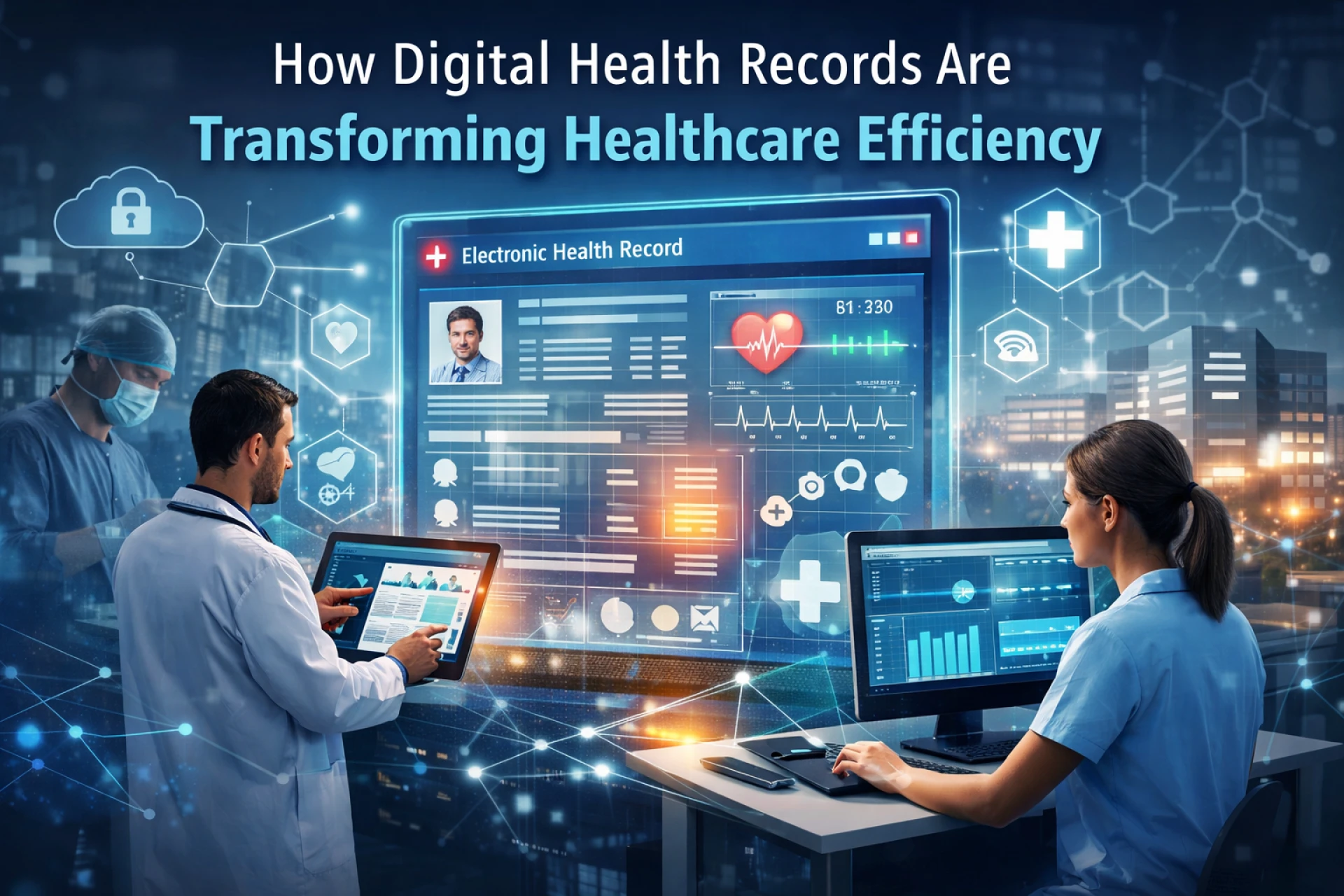
The healthcare industry is undergoing a profound digital shift. At the center of this transformation are Digital Health Records (DHRs), often referred to as Electronic Health Records (EHRs) or Electronic Medical Records (EMRs). These systems are redefining how medical information is stored, accessed, and shared, ultimately transforming healthcare efficiency on a global scale.
As patient demands increase and healthcare systems face mounting pressure to deliver faster, safer, and more cost-effective care, digital health records have become a critical solution. This article explores how digital health records are revolutionizing healthcare workflows, improving patient outcomes, and shaping the future of medical services.
What Are Digital Health Records?
Digital Health Records are electronic versions of patients’ medical histories that are securely stored and accessible across healthcare systems. They include essential information such as:
- Patient demographics
- Medical history and diagnoses
- Medications and allergies
- Lab results and imaging reports
- Treatment plans and clinical notes
Unlike traditional paper records, digital records provide real-time access to accurate data, enabling healthcare providers to make informed decisions quickly and efficiently.
The Shift from Paper Records to Digital Systems
For decades, paper-based records dominated healthcare settings. While familiar, these systems were prone to errors, misplacement, and inefficiency. Retrieving a single patient file could take hours or even days, delaying care and increasing administrative burden.
Digital health records eliminate these limitations by centralizing patient data in secure, cloud-based or on-premise systems. This shift is a major driver in Transforming Healthcare, allowing organizations to modernize operations and improve service delivery.
Improving Healthcare Efficiency Through Digital Health Records
1. Faster Access to Patient Information
One of the most significant benefits of digital health records is instant access to patient data. Clinicians can retrieve complete medical histories within seconds, regardless of location.
This rapid accessibility:
- Reduces waiting times
- Supports quicker diagnoses
- Enhances emergency care responses
By eliminating delays, healthcare providers can focus more on patient care and less on administrative tasks.
2. Reducing Medical Errors
Medical errors are a major concern worldwide. Illegible handwriting, missing files, and incomplete records often contribute to incorrect treatments or prescriptions.
Digital health records improve accuracy by:
- Standardizing data entry
- Providing medication alerts and allergy warnings
- Reducing duplicate or conflicting information
These features play a crucial role in Transforming Healthcare safety and reliability.
3. Enhanced Care Coordination
Modern healthcare often involves multiple specialists, labs, and facilities. Digital health records allow seamless communication between different providers, ensuring everyone involved in a patient’s care has access to the same information.
This improved coordination:
- Prevents repeated tests
- Reduces conflicting treatment plans
- Ensures continuity of care
As a result, patients receive more consistent and effective treatment.
Streamlining Administrative Workflows
4. Automating Documentation and Billing
Administrative tasks are a major drain on healthcare resources. Digital health records automate many of these processes, including documentation, coding, and billing.
Automation helps by:
- Minimizing manual data entry
- Reducing billing errors
- Accelerating insurance claims processing
This efficiency not only saves time but also lowers operational costs for healthcare organizations.
5. Optimizing Appointment and Resource Management
Digital systems integrate scheduling tools that help manage appointments, staff availability, and facility resources more effectively.
Benefits include:
- Fewer missed appointments
- Better utilization of staff and equipment
- Reduced patient wait times
Such optimization is essential for Transforming Healthcare delivery in busy clinical environments.
Enhancing Patient Engagement and Experience
6. Empowering Patients Through Portals
Patient portals linked to digital health records allow individuals to access their own medical information, test results, and treatment plans online.
This transparency:
- Encourages patient involvement
- Improves health literacy
- Builds trust between patients and providers
Engaged patients are more likely to follow treatment recommendations, leading to better outcomes.
7. Supporting Telehealth and Remote Care
Digital health records are a backbone of telemedicine services. They enable clinicians to review patient histories and update records during virtual consultations.
This integration:
- Expands access to care
- Supports chronic disease management
- Reduces unnecessary hospital visits
Remote care solutions are a key element in Transforming Healthcare for rural and underserved populations.
Data-Driven Decision Making in Healthcare
8. Leveraging Analytics for Better Outcomes
Digital health records generate vast amounts of structured data that can be analyzed to identify trends, predict risks, and improve clinical decisions.
Healthcare organizations can use this data to:
- Monitor population health
- Identify high-risk patients
- Improve treatment protocols
Data-driven insights are essential for building smarter, more efficient healthcare systems.
9. Supporting Preventive and Personalized Care
With access to comprehensive patient histories, clinicians can shift from reactive treatment to preventive care.
Digital records enable:
- Early disease detection
- Personalized treatment plans
- Better management of chronic conditions
This proactive approach is a powerful way of Transforming Healthcare from treatment-focused to wellness-focused models.
Ensuring Security and Compliance
10. Strengthening Data Security and Privacy
While digital records raise concerns about data security, modern systems use advanced protections such as encryption, access controls, and audit trails.
These safeguards:
- Protect sensitive patient information
- Ensure compliance with healthcare regulations
- Reduce the risk of data breaches
Secure digital systems build confidence among patients and providers alike.
Challenges in Implementing Digital Health Records
Despite their advantages, digital health records come with challenges, including:
- High initial implementation costs
- Staff training and adoption issues
- Interoperability between different systems
However, with proper planning and ongoing support, these challenges can be overcome. The long-term benefits far outweigh the initial hurdles.
The Future of Digital Health Records
The evolution of digital health records is far from complete. Emerging technologies such as artificial intelligence, machine learning, and blockchain are set to further enhance their capabilities.
Future developments may include:
- Predictive diagnostics powered by AI
- Greater interoperability across global systems
- Enhanced patient-controlled data sharing
These innovations will continue transform healthcare, making it more efficient, accessible, and patient-centered.
Why Digital Health Records Matter More Than Ever
In an era of rising healthcare demands and limited resources, efficiency is no longer optional it is essential. Digital health records provide the foundation for modern healthcare systems by improving accuracy, reducing costs, and enhancing patient experiences.
Platforms like ExpertMinds emphasize the importance of digital innovation in healthcare, highlighting how technology-driven solutions can support better outcomes for both providers and patients.
Conclusion
Digital health records are revolutionizing the way healthcare is delivered. From reducing medical errors and streamlining workflows to empowering patients and enabling data-driven decisions, their impact is undeniable.
As technology continues to evolve, digital health records will remain at the core of Transforming Healthcare, driving efficiency, quality, and innovation across the medical landscape. Healthcare organizations that embrace these systems today are better positioned to meet the challenges of tomorrow.









Sign in to leave a comment.