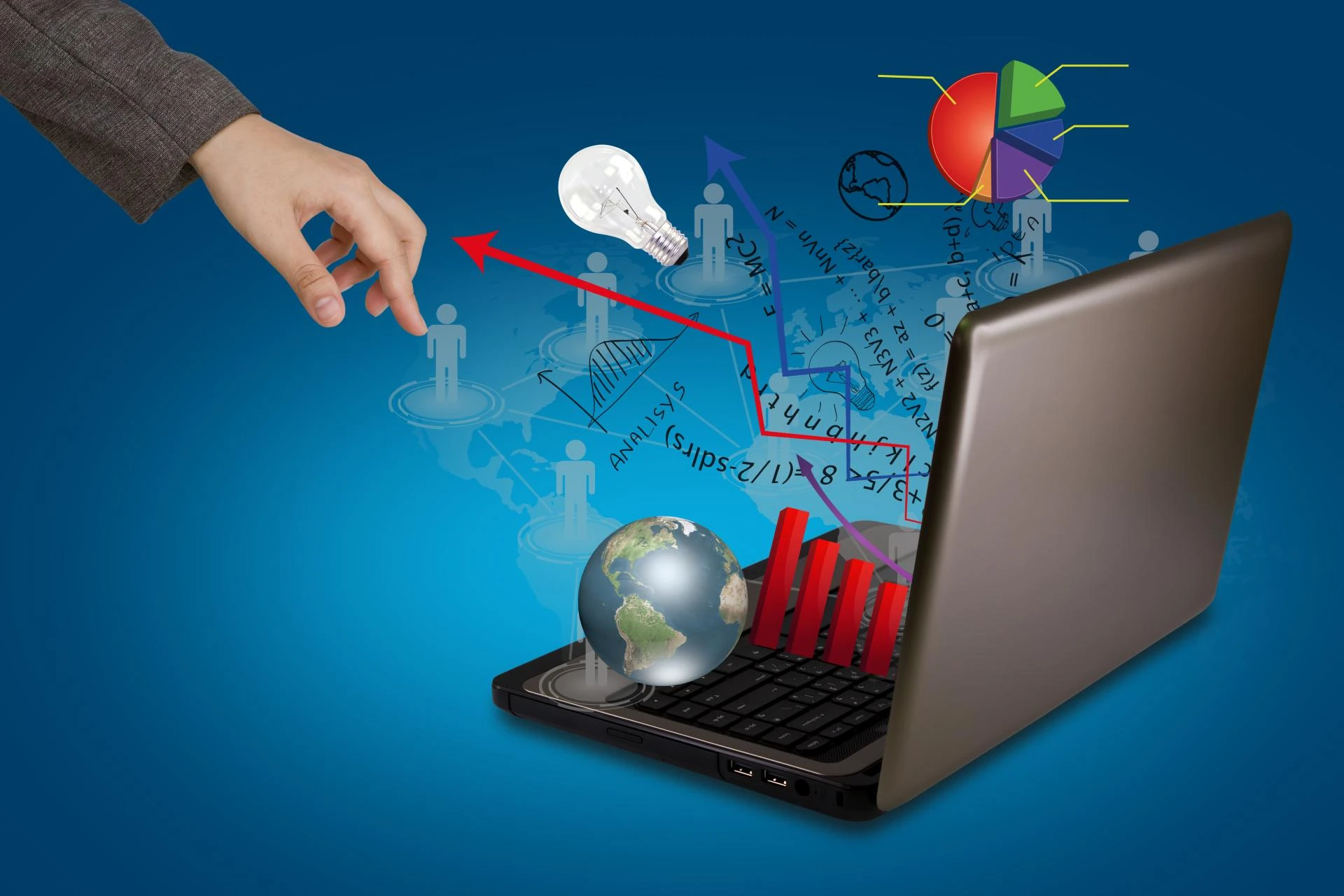

Introduction: The Digital Revolution in Business Growth
In today's hyperconnected world, the relationship between digital marketing and business growth is no longer optional; it is foundational. Businesses that leverage data-driven marketing strategies consistently outperform competitors who rely solely on traditional methods. According to recent industry reports, companies with robust digital marketing frameworks achieve 2.8 times the revenue growth of those without a structured online presence.
But what exactly makes digital marketing such a powerful growth engine? The answer lies in its ability to connect the right message with the right audience at the right time and measure every outcome with precision. From search engine optimization (SEO) and content marketing to artificial intelligence (AI)-powered personalization and social media advertising, modern digital marketing is a multidimensional ecosystem designed to scale businesses of any size.
This guide explores the key digital marketing techniques that are reshaping how businesses grow, attract customers, and build long-term brand authority in an increasingly competitive digital economy.
1. Search Engine Optimization (SEO): The Backbone of Online Visibility
Search engine optimization remains the single most sustainable driver of organic traffic and brand discoverability. When users search for products or services on Google, Bing, or other search engines, they are expressing high purchase intent and businesses that rank on the first page capture up to 75% of all clicks.
Effective SEO or digital marketing techniques in today's landscape goes beyond keyword stuffing. It encompasses a holistic set of practices:
On-Page SEO involves optimizing title tags, meta descriptions, header structures, internal linking, and semantic keyword usage. Search engines now use Natural Language Processing (NLP) and entity recognition to understand the context of content, not just isolated keywords. Writing content that satisfies search intent, whether informational, navigational, transactional, or commercial, is now the gold standard.
Technical SEO addresses website performance metrics like Core Web Vitals, mobile responsiveness, structured data markup (schema.org), crawlability, and HTTPS security. Google's algorithm rewards websites that deliver fast, secure, and accessible user experiences.
Off-Page SEO focuses on building domain authority through high-quality backlinks, digital PR, and brand mentions across authoritative platforms. These signals tell search engines that your content is trustworthy and relevant.
For businesses, strong SEO translates directly into lower customer acquisition costs, higher conversion rates, and compounding long-term returns, making it one of the highest-ROI investments in any digital marketing strategy.
2. Content Marketing: Building Authority Through Value-Driven Storytelling
Content is the fuel that powers every digital marketing channel. Content marketing is not just about publishing blog posts it is about creating a strategic ecosystem of educational, entertaining, and engaging material that positions your brand as the trusted authority in your niche.
Effective content marketing leverages topic clusters and pillar page strategies to build semantic relevance across an entire subject domain. When a brand consistently publishes content that answers real user questions, addressing pain points, providing problem-solving frameworks, and offering actionable insight,s it earns topical authority that translates into search rankings and audience loyalty.
Modern content strategies incorporate multiple formats: long-form blog articles, video content, infographics, podcasts, interactive tools, case studies, and white papers. Each format serves different stages of the customer journey from awareness and consideration to decision and retention.
One critical development is Google's emphasis on E-E-A-T (Experience, Expertise, Authoritativeness, and Trustworthiness) as a ranking factor. Content that demonstrates real-world experience, cites credible sources, and is authored by subject matter experts is increasingly favored in search results and AI-generated overviews. Businesses that invest in expert-driven content marketing build not just traffic, but genuine customer trust.
3. Social Media Marketing: Amplifying Reach and Community Engagement
With over 5 billion active social media users globally, platforms like Instagram, LinkedIn, Facebook, TikTok, and X (formerly Twitter) have become indispensable business growth channels. Social media marketing enables brands to reach highly targeted audiences, nurture relationships, and drive both brand awareness and direct conversions.
The real power of social media lies in audience segmentation and psychographic targeting. Platforms collect behavioral data that allows marketers to serve hyper-relevant content and advertisements to users based on their interests, behaviors, demographics, and purchase history.
Organic social media builds community and brand voice over time, while paid social advertising accelerates reach and delivers measurable performance metrics. The combination of both is often called a blended social strategy and produces the strongest results for business growth.
Beyond advertising, influencer marketing and user-generated content (UGC) have emerged as powerful trust-building mechanisms. Consumers trust peer recommendations significantly more than brand-generated advertising, and businesses that harness authentic advocacy from their community experience higher engagement, lower ad costs, and improved brand sentiment.
4. Pay-Per-Click Advertising (PPC): Precision-Targeted Demand Generation
Pay-per-click (PPC) advertising, particularly through Google Ads and Meta Ads, provides businesses with immediate visibility in front of high-intent audiences. Unlike organic SEO, PPC delivers results from day one, making it an essential component of any growth-focused digital marketing strategy.
The effectiveness of PPC lies in its granular targeting capabilities. Advertisers can target users based on specific keywords, geographic locations, device types, time of day, and audience behavior. Remarketing campaigns re-engage users who have already interacted with your website or brand, significantly improving conversion rates and reducing customer acquisition costs.
Advanced PPC strategies now incorporate AI-driven bidding algorithms like Google's Smart Bidding, which uses machine learning to optimize bids in real time based on predicted conversion probability. This shift toward automation has made PPC both more efficient and more competitive, requiring marketers to focus on compelling ad creative, landing page optimization, and conversion rate optimization (CRO) to maintain a strong return on ad spend (ROAS).
5. Email Marketing and Marketing Automation: Nurturing Relationships at Scale
Despite being one of the oldest digital marketing channels, email marketing consistently delivers one of the highest ROIs, averaging $36 for every $1 spent. Its power lies in the ability to communicate directly with an engaged, permission-based audience.
Modern email marketing is powered by marketing automation platforms that enable businesses to send personalized, behavior-triggered communications at scale. Customer segmentation, dynamic content personalization, and automated drip campaigns allow brands to deliver the right message at every stage of the customer lifecycle, from welcome sequences and abandoned cart recovery to post-purchase follow-ups and re-engagement campaigns.
The integration of predictive analytics and AI personalization has elevated email marketing beyond simple newsletters. Today, sophisticated email strategies analyze user behavior patterns to anticipate needs and deliver contextually relevant content that drives action.
6. Data Analytics and AI: The Intelligence Behind Smart Marketing Decisions
The most significant differentiator between businesses that grow and those that stagnate in the digital age is their ability to collect, analyze, and act on data. Digital analytics tools, including Google Analytics 4, heatmapping software, CRM platforms, and attribution modeling system,s provide marketers with a comprehensive view of user behavior, campaign performance, and revenue attribution.
Artificial intelligence (AI) and machine learning (ML) are transforming digital marketing across every dimension. AI powers predictive customer segmentation, dynamic ad creative generation, chatbot-driven customer support, sentiment analysis, and real-time personalization engines. Businesses that embrace AI-enhanced marketing gain a significant competitive advantage in targeting efficiency, content relevance, and customer experience quality.
The ability to move from vanity metrics to meaningful business KPIs like customer lifetime value (CLV), cost per acquisition (CPA), and revenue attribution is what separates data-driven marketing organizations from those operating on guesswork.
7. Local SEO and Voice Search Optimization: Capturing Intent-Rich Micro-Moments
As mobile usage continues to dominate, local SEO and voice search optimization have become critical growth levers for businesses with physical locations or region-specific services. Google's local search algorithm prioritizes proximity, relevance, and prominence meaning that optimizing your Google Business Profile, gathering positive customer reviews, and maintaining consistent NAP (Name, Address, Phone) data across directories directly impacts local discoverability.
Voice search, powered by AI assistants like Google Assistant, Siri, and Alexa, is reshaping how users find information. Voice queries tend to be conversational, question-based, and long-tail, which means businesses that optimize for natural language queries and featured snippets are best positioned to capture this growing traffic segment.
Building a Cohesive Digital Marketing Ecosystem for Sustainable Growth
The businesses experiencing the most dramatic growth in today's world are not those relying on a single tactic they are building integrated digital marketing ecosystems where SEO, content, social media, paid advertising, email, and analytics work together in strategic alignment.
A cohesive digital marketing strategy begins with clear business objectives, followed by audience persona development, competitive landscape analysis, and a multi-channel execution plan with defined KPIs at every stage of the funnel. Regular performance audits, A/B testing, and iterative optimization ensure that your marketing investment continues to generate compounding returns over time.
For businesses looking to implement these strategies effectively with expert-level guidance and measurable outcomes, digital marketing agency like QudratX Digital exemplify the kind of results-driven, data-informed approach that modern brands need to compete and grow in today's fast-evolving digital environment.
Conclusion: Digital Marketing Is the Growth Engine of the Modern Business Era
Digital marketing is no longer a supplementary business function; it is the primary growth infrastructure of modern organizations. Whether you are a startup scaling from zero or an established enterprise expanding into new markets, the techniques explored in this guide provide a proven, measurable framework for sustainable growth.
The digital landscape will continue to evolve with AI, voice search, immersive experiences, and first-party data strategies reshaping the rules of engagement. But the foundational principle remains unchanged: businesses that understand their audience, deliver genuine value, and optimize continuously will always win.
Start with strategy. Execute with excellence. Measure everything. That is how digital marketing drives business growth in today's world.
Tags: digital marketing strategy, SEO techniques, content marketing, social media marketing, PPC advertising, business growth online, AI in digital marketing, email marketing ROI, local SEO, voice search optimization, digital marketing trends 2025

Sign in to leave a comment.