Human Resources today faces one of its greatest challenges: creating teams that not only perform well but also work seamlessly together. As workplaces evolve—with remote teams, generational diversity, and cross-functional collaboration—understanding people’s behavioral styles has become a strategic necessity. One of the most powerful tools HR professionals can use is the DISC assessment for business, a proven method for decoding workplace behaviors and fostering stronger, more cohesive teams.
What Is the DISC Assessment?
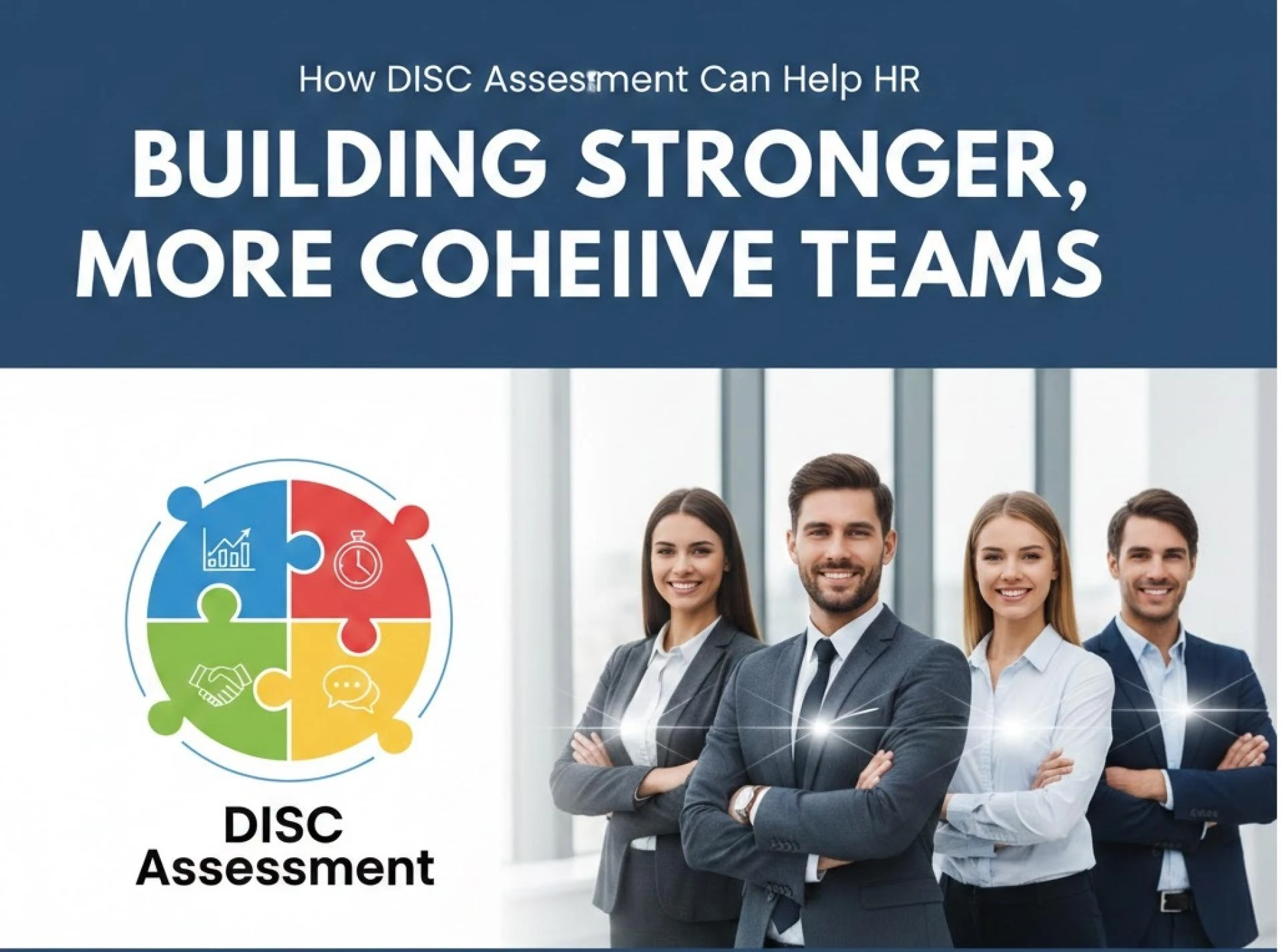
The DISC model categorizes human behavior into four key dimensions that describe how individuals act, communicate, and collaborate at work:
- D – Decisive: Results-driven, assertive, and focused on achieving goals. These individuals take charge and push for outcomes.
- I – Interactive: Outgoing, enthusiastic, and persuasive. They bring energy to teams and thrive on recognition and collaboration.
- S – Stabilizing: Reliable, patient, and supportive. They value consistency, harmony, and team balance.
- C – Cautious: Analytical, detail-oriented, and precise. They ensure processes are followed and standards are met.
Together, these styles form the foundation for understanding team dynamics. In HR terms, DISC helps identify what motivates each employee, how they respond to challenges, and how they contribute to a group’s success.
Why DISC Matters in HR Today
The modern HR landscape demands more than just hiring talent—it requires building chemistry. Even the most skilled employees can struggle to collaborate effectively if their communication styles clash or if they feel misunderstood. DISC helps HR professionals bridge these gaps by offering a framework to understand people’s natural tendencies and behavioral preferences.
By integrating DISC insights into hiring, training, and leadership development, HR can move from managing people reactively to developing teams proactively and strategically.
1. Smarter Hiring Decisions
Hiring goes beyond matching skills to job descriptions; it’s about finding the right personality fit for both the role and the team. DISC assessments help HR identify which behavioral traits align with specific positions.
For example:
- D (Decisive) types excel in roles requiring quick decisions and leadership, such as sales or operations management.
- I (Interactive) types shine in marketing, customer relations, or community-building positions.
- S (Stabilizing) types thrive in support, HR, or administrative roles where patience and reliability are key.
- C (Cautious) types fit best in analytical roles such as finance, quality assurance, or compliance.
By incorporating DISC assessments during recruitment, HR professionals can predict workplace fit, reduce turnover, and ensure that new hires complement the existing team’s dynamic.
2. Enhancing Team Collaboration and Communication
One of the biggest barriers to teamwork is misunderstanding—especially when people communicate in different ways. DISC provides a shared language that HR can use to promote empathy and effective communication among team members.
For example:
- A Decisive leader might prefer short, goal-oriented updates.
- An Interactive team member might want brainstorming sessions and open dialogue.
- A Stabilizing employee values predictability and structured communication.
- A Cautious person prefers detailed written communication with clear expectations.
When HR educates teams about these differences, individuals start recognizing—not judging—each other’s styles. The result is fewer conflicts, smoother collaboration, and a culture of respect.
3. Building Balanced and Complementary Teams
Cohesion isn’t about everyone thinking alike—it’s about balancing diverse strengths. DISC helps HR analyze team composition to ensure an optimal mix of personality types.
For instance, a team full of D personalities might be great at taking initiative but could struggle with patience or empathy. Conversely, a team heavy in S types might excel at cooperation but hesitate to take risks.
By reviewing DISC data, HR can identify strengths, spot blind spots, and assign roles accordingly. This balance ensures teams function smoothly, handle pressure better, and perform consistently.
4. Improving Leadership Development
Strong leaders adapt to the needs of their people. DISC gives HR the tools to train managers in flexible leadership—showing them how to motivate, coach, and communicate based on each employee’s behavioral profile.
For example:
- With a Decisive employee, a leader might focus on autonomy and challenge.
- With an Interactive employee, they could use recognition and collaboration.
- With a Stabilizing team member, reassurance and consistency are key.
- With a Cautious worker, clarity and logic matter most.
When leaders adjust their approach this way, employees feel understood, valued, and empowered—creating stronger loyalty and performance across the board.
5. Enhancing Conflict Resolution
Conflict often arises not from disagreement itself but from differences in communication and priorities. DISC gives HR a neutral framework to address these issues constructively.
Instead of labeling someone as “difficult” or “uncooperative,” HR can facilitate discussions by referencing DISC styles:
- “It seems your D style focuses on fast decisions, while your colleague’s C style values thorough analysis—how can we meet in the middle?”
This approach replaces blame with understanding, turning conflict into a chance for growth and collaboration.
6. Driving Engagement and Retention
Employee engagement thrives when people feel seen and supported. DISC enables HR to personalize engagement strategies according to what motivates each type:
- D types appreciate measurable goals and challenges.
- I types love recognition and social interactions.
- S types value stability and appreciation for their reliability.
- C types prefer clear processes and recognition of their accuracy.
By applying these insights, HR can design reward systems, development plans, and team activities that resonate deeply—leading to higher satisfaction and lower turnover.
7. Creating a Culture of Understanding and Inclusion
Cohesive teams don’t just communicate well—they respect diversity of thought and behavior. DISC fosters this inclusivity by showing employees that every style contributes unique value.
A Decisive team member drives results.
An Interactive one energizes collaboration.
A Stabilizing person maintains balance.
A Cautious colleague ensures excellence and precision.
HR’s role is to champion this awareness so that diversity becomes a strength, not a source of division.
How HR Can Implement DISC Successfully
To embed DISC into your HR strategy, follow these steps:
- Start with training – Educate HR professionals and managers on interpreting DISC profiles.
- Assess current teams – Use DISC tools to identify behavioral patterns and potential gaps.
- Integrate insights – Apply DISC findings to hiring, onboarding, performance reviews, and development programs.
- Encourage dialogue – Host workshops where employees share their DISC profiles and learn how to collaborate effectively.
- Review annually – Reassess to track growth and adjust strategies as the organization evolves.
Conclusion: HR’s Secret to Team Harmony
In 2026 and beyond, the most successful HR teams will be those that understand people—not just their skills, but their behaviors, motivations, and communication styles. The DISC assessment for business is more than a personality test—it’s a roadmap to harmony, productivity, and long-term team success.
By using DISC as part of your HR toolkit, you can create teams that don’t just work together, but thrive together—driven by understanding, balance, and shared purpose.










Sign in to leave a comment.