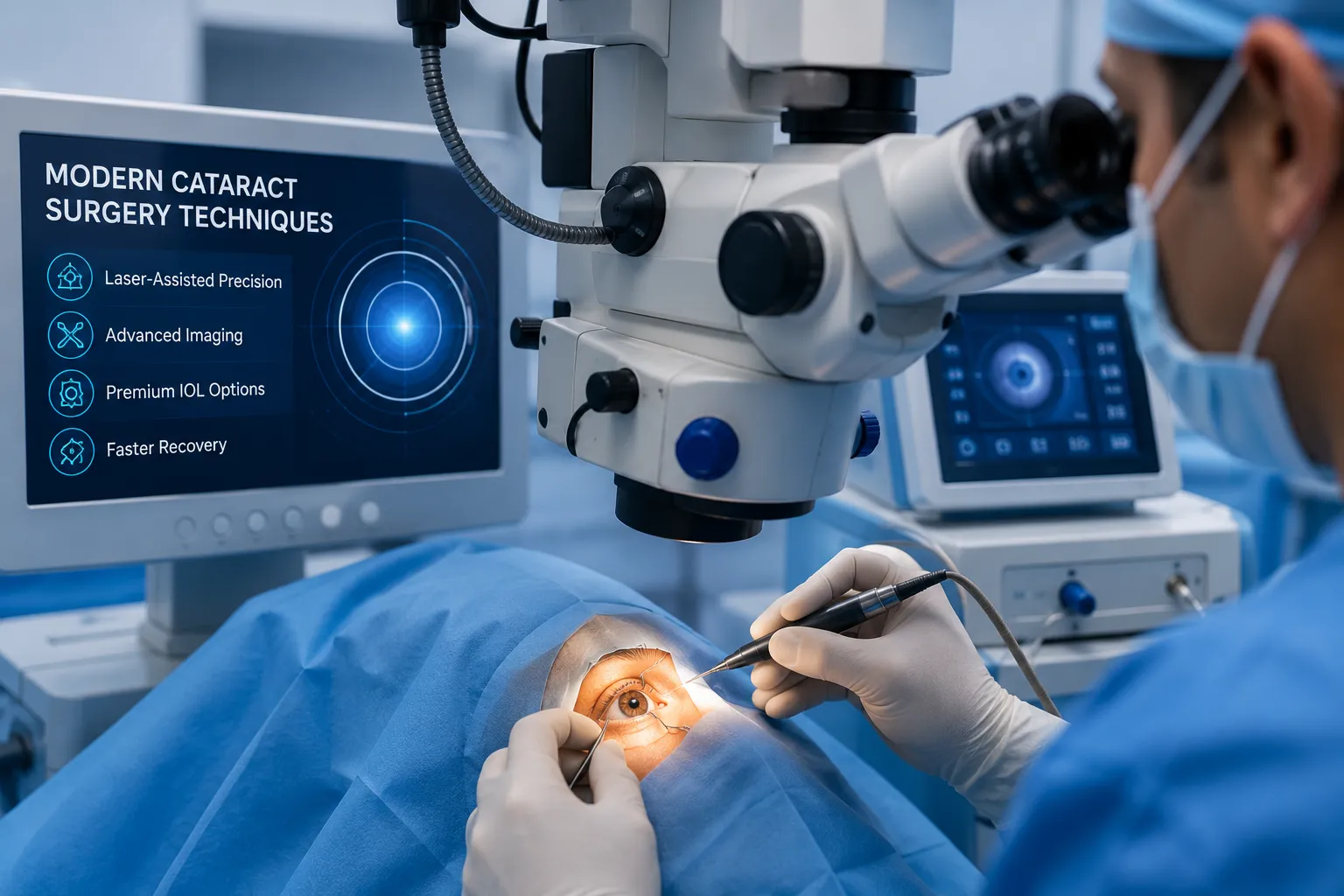

Cataracts can gradually reduce the clarity of vision, making everyday activities such as reading, driving, and recognizing faces increasingly difficult. Fortunately, eye care has advanced significantly over the years, allowing patients to experience safer procedures and improved visual outcomes.
Modern cataract surgery techniques focus on precision, personalized treatment planning, and quicker recovery rather than simply removing the cloudy lens. Today's approach helps patients regain confidence in daily life while reducing dependence on glasses in many cases. Understanding these advancements allows patients to make informed decisions and discuss suitable treatment options with their eye specialist.
Why Has Cataract Surgery Improved So Much?
Over the past decade, cataract surgery has evolved from a standard vision-restoring procedure into a highly customized treatment. Doctors now evaluate the shape of the eye, lifestyle needs, and visual expectations before recommending the most suitable solution.Modern improvements include:
- Highly detailed eye measurements before surgery.
- Personalized intraocular lens selection.
- Better accuracy during lens placement.
- Reduced surgical trauma to surrounding eye tissues.
- Faster visual recovery for most patients.
- Greater emphasis on long-term visual quality.
These advancements provide a more comfortable experience while helping patients achieve clearer vision for everyday activities.
How Does Advanced Technology Improve Surgical Precision?
One of the biggest developments in eye care is the integration of femtosecond laser cataract surgery into selected treatment plans. Instead of relying entirely on manual techniques, laser-assisted planning allows certain critical steps to be performed with exceptional consistency.The advantages of technology-driven treatment include:
- More predictable corneal incisions.
- Accurate opening of the lens capsule.
- Improved fragmentation of the cloudy lens.
- Reduced stress on delicate eye structures.
- Better alignment for premium intraocular lenses.
- Enhanced confidence during complex cases.
Every patient is different, so the use of laser assistance depends on clinical findings and the recommendation of the treating ophthalmologist.
What Benefits Can Patients Expect After Treatment?
Successful cataract surgery is about much more than removing a cloudy lens. It aims to improve overall quality of life by restoring comfortable and functional vision. Many patients notice brighter colors, improved contrast, and greater confidence while performing routine tasks.
Depending on the chosen lens and the condition of the eye, benefits may include improved distance vision, better intermediate focus, and reduced dependence on spectacles. Recovery is generally smooth when post-operative instructions are followed carefully. Regular follow-up appointments also play an important role in ensuring proper healing and long-lasting visual outcomes.
Why Is Bladeless Surgery Becoming More Popular?
Many patients today are exploring bladeless cataract surgery because it combines precision with a minimally invasive treatment experience. While suitability varies from person to person, this approach has gained attention due to its ability to support accurate surgical planning and controlled execution.Some commonly discussed advantages include:
- Enhanced precision during selected surgical steps.
- Reduced manual variation.
- Gentle treatment approach.
- Consistent incision quality.
- Improved patient comfort.
- Support for premium lens implantation.
- Faster return to normal daily activities for many individuals.
Patients should always undergo a comprehensive eye examination to determine whether this approach aligns with their specific visual needs and overall eye health.
Learn More About Advanced Cataract Care
Choosing the right treatment begins with accurate diagnosis and expert guidance. If you would like to understand the latest cataract surgery technology and explore personalized treatment options, connect with experienced eye specialists for a comprehensive consultation. CataractRx
Website: https://www.cataractrx.com/
Phone: +91 9667770453
Email: [email protected]
Frequently Asked Questions
1. How do modern cataract procedures differ from older methods?
Today's procedures use advanced diagnostics, improved surgical planning, and premium lens options to provide greater precision, quicker recovery, and better visual outcomes compared with traditional approaches.
2. Who is a suitable candidate for advanced cataract surgery?
Most people diagnosed with cataracts can benefit from advanced treatment, although suitability depends on eye health, lifestyle needs, and the results of a comprehensive eye examination.
3. How long does recovery usually take?
Many patients notice vision improvement within a few days, while complete healing generally occurs over several weeks. Recovery time may vary depending on individual healing and the chosen treatment approach.
4. Can premium intraocular lenses reduce dependence on glasses?
Yes. Premium lenses may improve vision at multiple distances and reduce the need for spectacles, although results differ based on the patient's eye condition and selected lens type.
5. Is advanced cataract treatment considered safe?
Modern cataract surgery is widely regarded as one of the safest ophthalmic procedures when performed by experienced specialists using appropriate diagnostic evaluation and surgical planning.






















Sign in to leave a comment.